Riverbed Steelhead Mobile
WAN links don't have always be bigger, they often just need to smarter. Enter the Riverbed Steelhead 1010 network optimisation appliance.
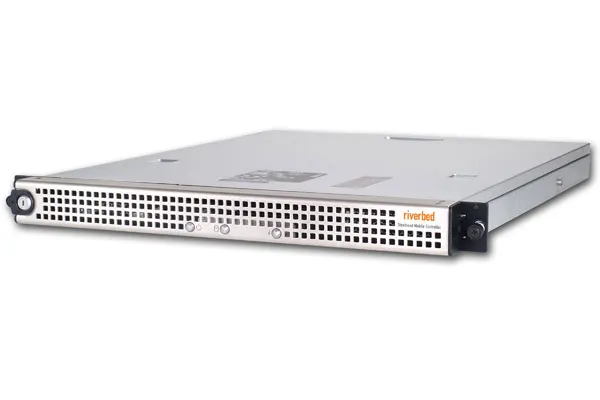
Mobile and remote workers can reap the benefits of WAN optimisation with a smart solution that's very easy to deploy. Our performance tests show what a difference the Steelhead Mobile can make, although this product is primarily aimed at existing users of Steelhead optimisation appliances.

Most businesses are well aware that throwing more bandwidth at underperforming WAN links is not the answer, as it's generally latency that's the fly in the ointment. As a result there are now plenty of WAN optimisation solutions on the market but most are designed to improve performance between headquarters and remote offices.
Mobile and remote workers get a raw deal with many having to put up with poorly performing connections but Riverbed's latest Steelhead Mobile has these very users firmly in its sights. It's designed to optimize WAN links for remote, mobile and home workers but also for smaller sites where it isn't practical to install an appliance.
A key point to remember is that this is not a standalone solution, but one that works alongside existing Steelhead optimisation appliances. If you don't have one already you'll need to consider the additional costs. Riverbed suggests the Mobile solution requires a minimum of a Steelhead 200 appliance, which will set you back around 2,470. We looked at a Riverbed Steelhead 1010 appliance a couple of years ago.
The Mobile appliance is deployed at the head office, whilst a client utility is installed on each remote system. Users are first directed to the appliance, which checks the license count and enforces acceleration policies. Once a client has been accepted it then automatically locates the most appropriate Steelhead appliance and from here on normal traffic optimisation occurs between the two. Essentially, the client is functioning as a basic Steelhead appliance, where it stores blocks of data locally in a Data Store.
The Steelhead appliances cover all key areas of WAN optimisation such as wide area file services, application acceleration, compression, traffic shaping and QoS. Coined WDS (wide-area data services), the Steelheads function as transparent TCP proxies that intercept and optimise all TCP traffic and they use a couple of proprietary technologies to achieve this.
The first is Riverbed's SDR (scaleable data referencing) where the appliance stores all WAN traffic on its hard disk and uses proprietary algorithms to remove all repetition. This ensures that any traffic that has already passed over the WAN will not be sent again and the data stored on the appliance can be used by any application.
Next up is Riverbed's transaction prediction (TA), which is an application protocol specific solution aimed at reducing round trips over the WAN. Riverbed offers modules for applications such as Windows, MS SQL and MAPI, with the latter now supporting Exchange 2007. A new feature is the ability to accelerate HTTPS and SSL traffic and encrypt data stored on the appliances but note that the Mobile client does not yet support these functions.

-
 Atlassian introduces 'always-on' capabilities for agentic development workflows
News Customers can now adopt and scale governed agentic workflows right across the AI software development lifecycle
-
 Agents have hit the mainstream in software engineering, but security and governance practices aren’t evolving fast enough
News The number of agent-related security incidents is rising and shows no sign of slowing down, according to Harness
-
 Nebula appoints Jack Bell as strategic partner acquisition manager
News The new hire brings eleven years of telecoms industry experience to the vendor’s channel team


