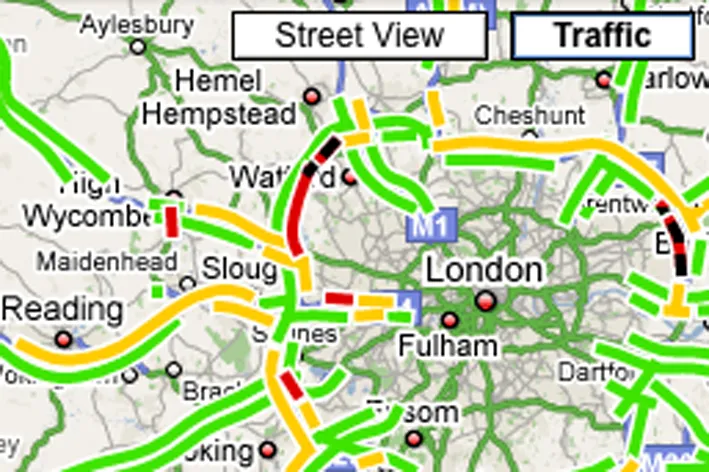
Google gets live traffic information from Highways Agency
The mash-up shows the speed of traffic on major roads across England.
Sign up today and you will receive a free copy of our Future Focus 2025 report - the leading guidance on AI, cybersecurity and other IT challenges as per 700+ senior executives
You are now subscribed
Your newsletter sign-up was successful
Google has teamed up with the Highways Agency to create a live traffic map.
The agency is providing its traffic data to the web firm, which is overlaying it onto its Google Maps to colour code all of England's motorways and major A road network by the speed of traffic.
"I'm delighted that we are the first country in Europe to work with Google and use our information for the benefit of road users across the country," Denise Plumpton, director of information at the Highways Agency, said.
"This sort of project is a key part of our information strategy aimed at getting traffic information out to motorists where and when they need it."
The data is sourced from the agency's own National Traffic Control Centre, based in Birmingham, and has previously been already available online via the Traffic England website - which has had its very own mapping system for some time.
To check out the traffic mash-up, go to the UK version of Google Maps and click the traffic' tab.
Sign up today and you will receive a free copy of our Future Focus 2025 report - the leading guidance on AI, cybersecurity and other IT challenges as per 700+ senior executives
Freelance journalist Nicole Kobie first started writing for ITPro in 2007, with bylines in New Scientist, Wired, PC Pro and many more.
Nicole the author of a book about the history of technology, The Long History of the Future.
-
How the rise of the AI ‘agent boss’ is reshaping accountability in ITIn-depth As IT companies deploy more autonomous AI tools and agents, the task of managing them is becoming more concentrated and throwing role responsibilities into doubt
-
Hackers are pouncing on enterprise weak spots as AI expands attack surfacesNews Potent new malware strains, faster attack times, and the rise of shadow AI are causing havoc