Acer Aspire One D250 review
Acer is the first manufacturer to offer Google's Android operating system on a netbook. Is this a turning point for the market? Or not? We review the Acer Aspire One D250 to find out.
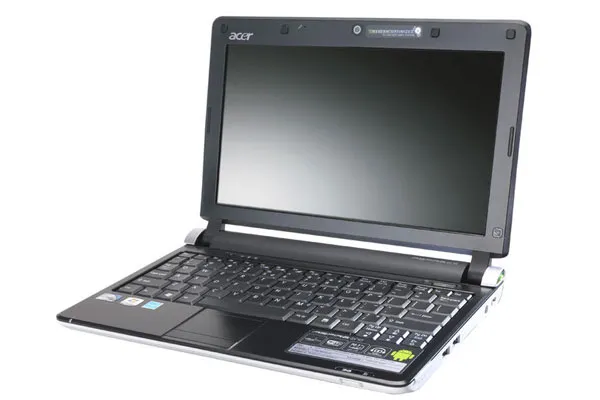
Judged on its own, the Aspire One is a decent netbook, with a great screen, and with a 6-cell battery as standard, it offers reasonable battery life. However, Android proves to be a somewhat disappointing experience, while Windows 7 feels a tad sluggish, leaving this as an interesting machine but not one we'd rush to recommend.

When we first reviewed the Acer Aspire One, we have to admit we were smitten. Yes, we were shallow enough for its looks to bowl us over.
But the summer of 2008 was a long time ago, at least in the world of netbooks, and our affections have certainly moved on since then. Therefore, rather than going to all that bother of actually designing a new model, Acer has simply done something to divert attention back onto its old one by making it the first netbook to run the Google Android operating system.

Android stretched wide on a netbook display. A bit odd really.
However, Acer has not been so left-field to ditch Windows support altogether. Instead the Aspire One dual boots between Android and Windows,with XP or Windows 7 as your choices. The latter adds 30 to the price and was what was supplied on our review sample.
So apart from the novelty factor, why has Acer decided to add Android to its netbook? The most immediate reason is its boot speed. Indeed, after 15 seconds you'll find yourself in the world Android and ready to connect and get online.

It feels strange at first using the keyboard and mouse to get to all the settings on Android.
Once there, you'll find the somewhat odd experience of seeing Android on a laptop, or at least, a netbook. You'll find the familiar clock on the desktop but other than that the Android desktop is nearly bare. Naturally, your instinct will be to touch the screen, but this isn't a touch-screen netbook, which considering the presence of Windows 7 is a shame.
As on a mobile you can scroll onto extended screens on the left and right of of the main display using the arrow keys. It can't be said though that the keyboard and mouse ever feel particularly natural to use with Android, but it gets the job done. Scroll to the left and you get a large Google search bar, and as soon as you start typing suggested searches appears.

-
 "Right now, your washing machine is subject to more safety rules than AI": Microsoft's Brad Smith wants more AI kill switches
News Brad Smith has called for more regulation, saying the UK is well-positioned to lead
-
 "The biggest change in ransomware is not simply that attacks are becoming more sophisticated, it's that AI is making them easier to scale and harder to predict": Two groups account for a third of UK ransomware attacks
News Data from Cohesity has revealed that Europe has become a primary target as the number of US ransomware attacks declines
-
 Overe targets MSP and SMB security gains with former Sophos CSO appointment
News Overe wants to bolster support for MSPs and small businesses after a “massive win” on the recruitment front


