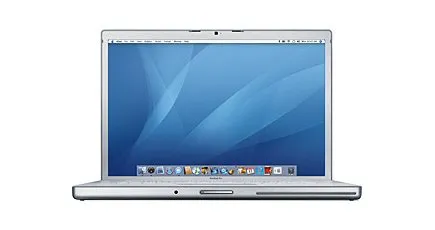
Apple has issued a global recall for faulty batteries in its 15 inch MacBook Pro range of laptops sold between February 2006 and May 2006.
The faulty batteries are being replaced free of charge and Apple says they pose no risk to the user. Faulty batteries have the model number A1175 on the base of the battery and a 12-digit serial number that ends with U7SA, U7SB or U7SC.
"We recently discovered that some 15-inch MacBook Pro batteries supplied to Apple do not meet our high standards for battery performance," warned the company in an advisory.
"To give our users the best experience possible, we will replace these batteries for customers free of charge. The affected batteries do not pose a safety risk. You may continue to use your current battery until a replacement arrives."
Users are being told not to take the faulty batteries to Apple stores but to register them via the company's web site. Replacements will be sent out in the next 3-5 days and the faulty batteries should be returned for recycling.
Apple has had other battery problems in recent years. Last year batteries for the 12-inch iBook G4, 12-inch PowerBook G4 and 15-inch PowerBook G4 were recalled after six users caused the batteries to overheat, creating a fire hazard for users.
 Microsoft's new code of conduct promises more control over AI development
 Trump says AI concerns a "hoax" in on stage call with Nvidia CEO
