

Data storage used to be a simple part of an organization’s IT infrastructure. It was a case of collecting and storing data, only retrieving what was needed as and when. But the importance of data storage has changed dramatically - alongside the criticality of the data itself - largely because it’s a foundational element of many AI systems.
Our storage systems also now play a decisive role in ensuring service continuity, inference efficiency, data security, and even compliance. As a result of this shift, global storage prices are rising. As such, carriers now face higher procurement costs and greater supply chain resilience risks. As the telecom industry accelerates its own digital transformations, carriers are shifting from traditional network services to cloud, big data, and AI services.
Qiangqiang Xie, the president of Huawei’s Carrier Domain Data Storage Product Line, has a 17-year career that spans data infrastructure and cloud transformation. He has extensive data storage knowledge and experience in shaping storage strategies and carrier network plans.
“When I visited the Middle East customers in the past, they always thought that data storage is just a box,” Xie says. “And how could you come to meet me, the CIO, and discuss strategic issues? However, now everything has changed. After 2025, they are all eager to discuss digital transformation with Huawei.”
Xie has also reviewed the technical practices, cost optimization results, and ecosystem collaboration strategies in the carrier market over the past year.
“Operators have gradually transitioned from being traditional ‘Telcos’ to becoming innovation-driven ‘Techcos’, with an increasingly rapid transformation trend supported by AI,” Xie explains.
“In the past, carriers only cared about basic telecom things like wireless, fiber, and how many subscribers they had,” Xie says. “But now, everything is changing. They have new teams for Cloud and AI, and their focus for investment has shifted, too. It’s no longer just about building more sites; it’s about how to use data. Before, data was just for a database to support CRM, but now it's much more. We are looking at how to turn this data into new services to get more revenue and provide an enhanced business experience. This transformation is helping them move from just providing connection to really creating new value from their data."
To meet these needs, Huawei has proposed “IT Everywhere”, a target network architecture to help customers achieve an ultra-fast time to market strategy, address growing security threats, and enable rapid implementation of AI.
IT everywhere
To help carriers accelerate digital and intelligent AI-based transformations, Huawei has upgraded the storage architecture in its Huawei Data Storage. The service has been upgraded from OneStorage to a three-pronged package sectioned as ‘one storage pool, one AI data lake, and two bases’. This new architecture falls into its IT Everywhere strategy and addresses the key requirements of modern data infrastructure.
“The most important thing, when we go to the customer, is edge computing, which is a hot topic,” Xie explains. “But when we go to the customers, they always ask what the target architecture is. And what we say is: ‘one pool, one lake, the two bases’. This is what we call the IT-everywhere target architecture.
“This architecture is not only for one customer or one scenario. It can also be applied to the big data center, even the edge data center. I think this is what we think about; the data itself is not just a warehouse. It's like a foundation to support the customer. If the customer wants to utilize the AI, the benefit has to be for the internal operation efficiency or to make more money from the outside.”
‘One storage pool’ is a core storage pool platform that delivers a resilient, secure, and high-performance data foundation for carriers and their mission-critical services. This houses data with priority on reliability and efficiency.
One AI data lake, as its name suggests, is an AI data lake designed to support a carrier’s specific AI datasets. Here, there is more availability for the storage of massive datasets, with controls for diverse data governance tools, and support for data mobility across different data centers. Finally, two bases are the knowledge base and the memory bank. Together, Huawei’s framework allows storage to enhance computing, improving inference accuracy, and also helps its customers fully use their inference resources.
Enhanced service experience
Managing different types of data presents more complexity, and the performance of traditional HDDs no longer meets the demands of AI and big data. A potential solution to this issue is all-flash data storage, which offers fast, efficient, and crucially, compact data storage.
Huawei's new-gen Dorado storage is a prime example of modern all-flash storage for core services. It adopts a new architecture that separates the control and data planes, doubling performance. Its full-mesh connectivity between controller enclosures and back-end disk enclosures provides a 10x increase in reliability, with zero congestion or service interruptions during peak hours.
What’s more, the storage system supports access through multiple protocols, like SAN, NAS, and object, which meets the AI service's requirements for multi-modal data support.
Backups are also growing in importance in this new age of AI and data centers; there are diverse failure challenges to contend with at every layer of a data center’s operation.
This is why Huawei provides dedicated backup storage through its OceanProtect X series and also backup appliances with its OceanProtect E series, specifically for carriers. Both products help customers build an end-to-end data protection solution to improve resilience. These services enable unified management of disaster recovery from primary storage to backup and archiving. They also offer compression ratios and ransomware protection.
More Intelligent
The increase in data and the rise of AI models haven’t been thoroughly integrated into the core services of carriers due to a greater focus on training than inference, which is the key to model adoption. For Huawei, this challenge can be addressed by improved data processing.
At MWC 2026, during the Huawei Product & Solution Launch, the company’s president of scale-out storage domain, Yuan Yuan, launched the “3+1” AI Data Platform (also known as AIDP). The platform integrates three key technologies of knowledge generation and retrieval, memory extraction and recall, KV cache for inference acceleration, as well as Unified Cache Manager (UCM) for inference memory. Bridging the gap between models and business value.
The Huawei AI Data Platform provides the appliance mode for greenfield deployment and the independent mode for evolving deployment. The appliance mode uses the OceanStor A800 system that integrates three key technologies: computing power, and applications. This ensures ultimate performance and flexible scalability. The independent mode uses the architecture of AI data engine nodes + OceanStor Dorado storage. Data engine nodes can be added to upgrade existing systems, protect prior investments, and enable smooth AI transformation for businesses.
"Huawei is shifting from lowering storage prices to helping carriers achieve data monetization through innovations in chipsets and architecture. By optimizing storage performance, we prevent investment waste in AI training and inference. Because AI moves so fast, we must collaborate with carriers to identify new use cases for their enterprise and government clients. Ultimately, we aim to transform data into a strategic asset, driving technical transformation and commercial success for our partners through continuous investment," Xie concluded.

-
 How resellers can turn hybrid meeting pain into repeatable revenue
Industry Insights Reliable technology turns hybrid work frustrations into recurring reseller revenue opportunities
-
 Asus Zenbook 14 (Snapdragon X UX3480Q) review
Reviews Poor battery performance and an older Snapdragon chip, but still a good choice for the office


-
 The Huawei MatePad Pro Max is incredibly thin, superbly built, and ready to power your creative potential
Reviews A bona fide creative powerhouse and arguably one of the best around for creators
-
 The Huawei MatePad 11.5 S is a small and beautiful tablet with possibly the best stylus we've ever tested
Reviews Another top-notch PaperMatte display from Huawei, and its M-Pencil is better than ever
-
 The Huawei MateBook Fold Ultimate Edition is a unique take on what it means to be a laptop – but good luck getting it outside of China
Reviews This laptop-tablet hybrid offers business travellers a lightweight alternative to the standard fare – but there's a catch
-
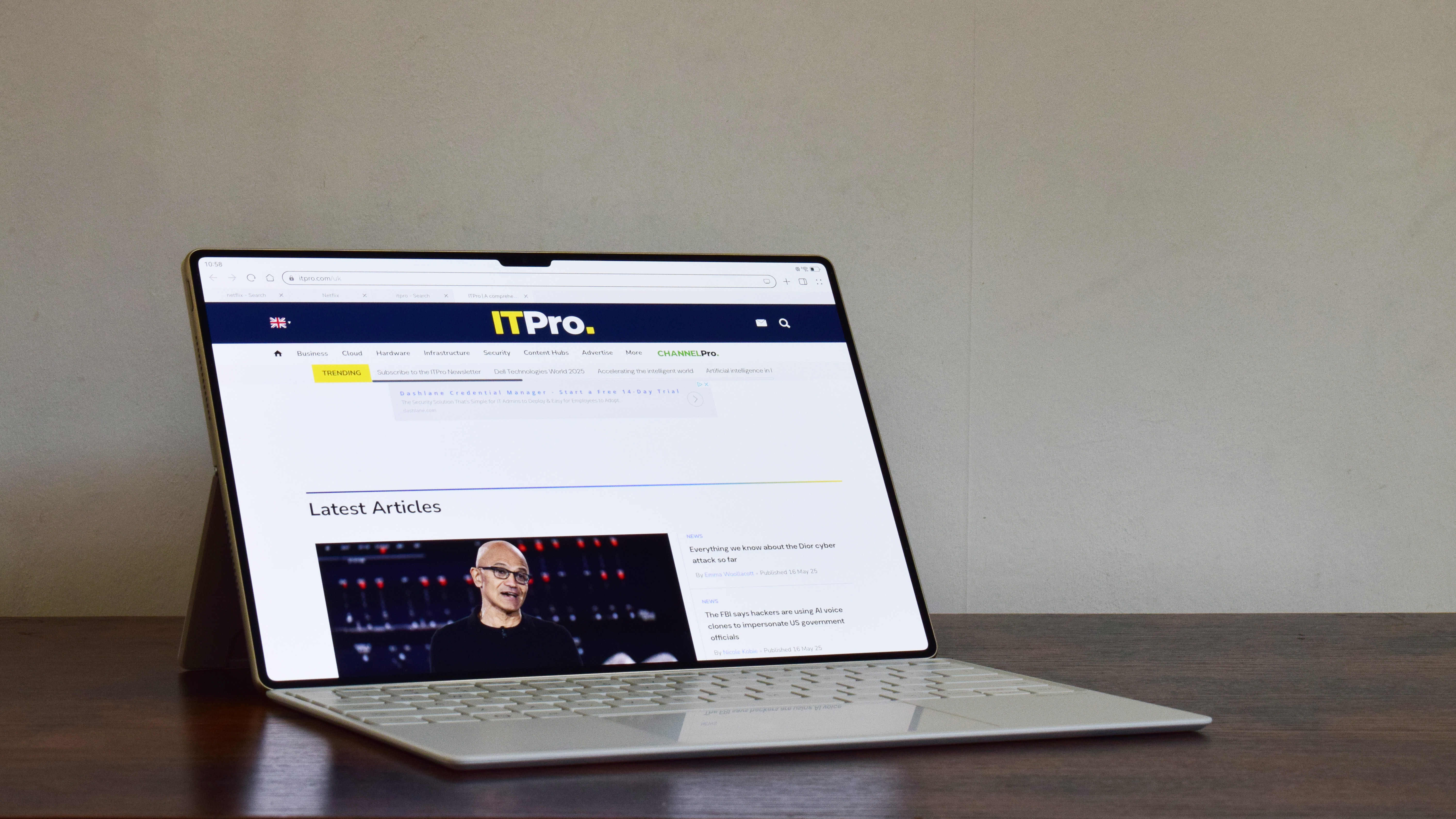 The Huawei MatePad Pro 13.2 PaperMatte edition is an illustration powerhouse – but you'll have to put up with an awkward keyboard and its Google-free OS
Reviews No Google, an awkward keyboard, and an AI-heavy camera are the only issues with Huawei's beautiful MatePad Pro
-
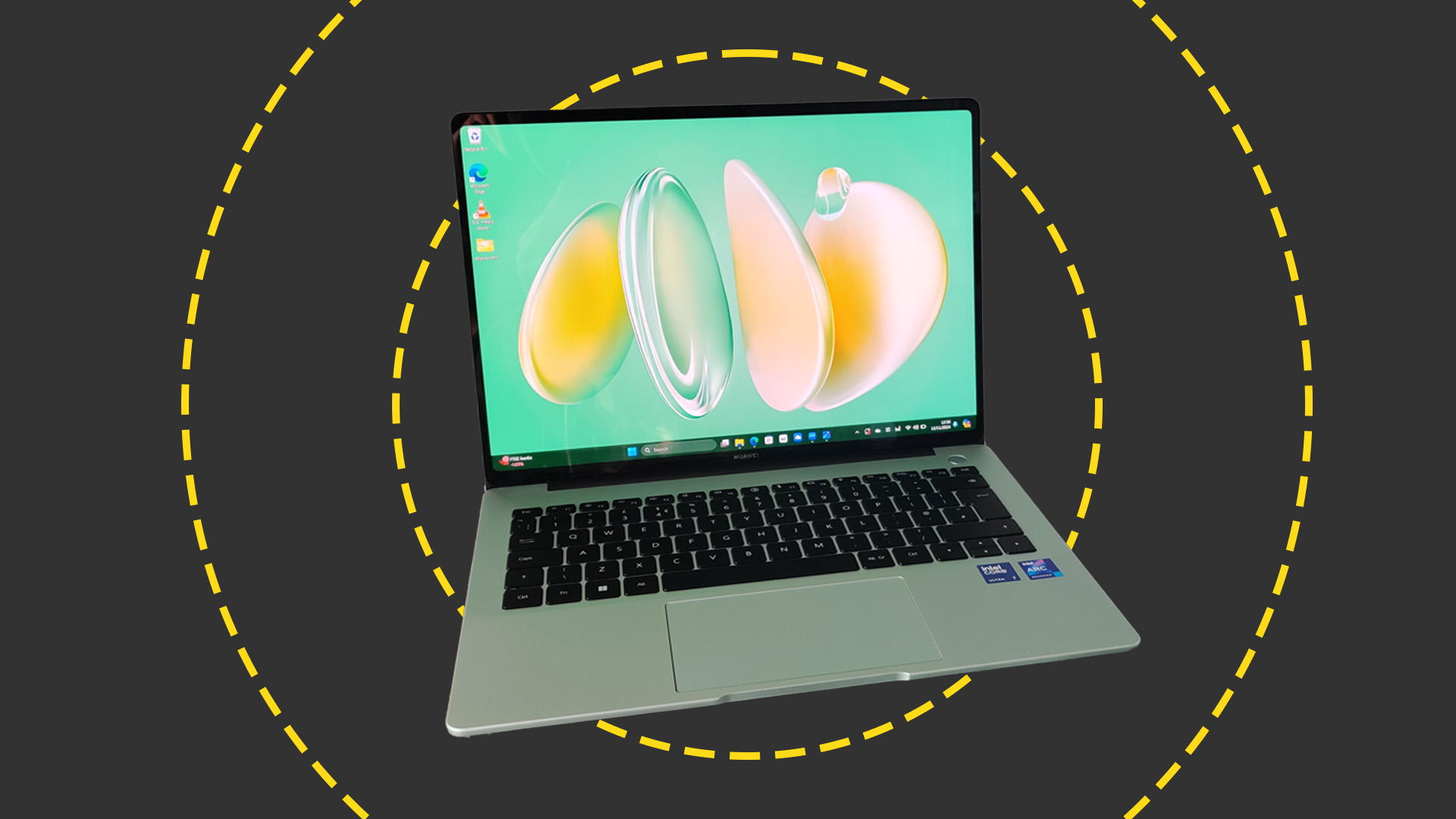 Huawei MateBook 14 (2024) review: A solid all-rounder with a stunning display
Reviews An attractive, well-rounded device with a spectacular OLED display, but newer ARM-based Windows laptops offer that little bit more
-
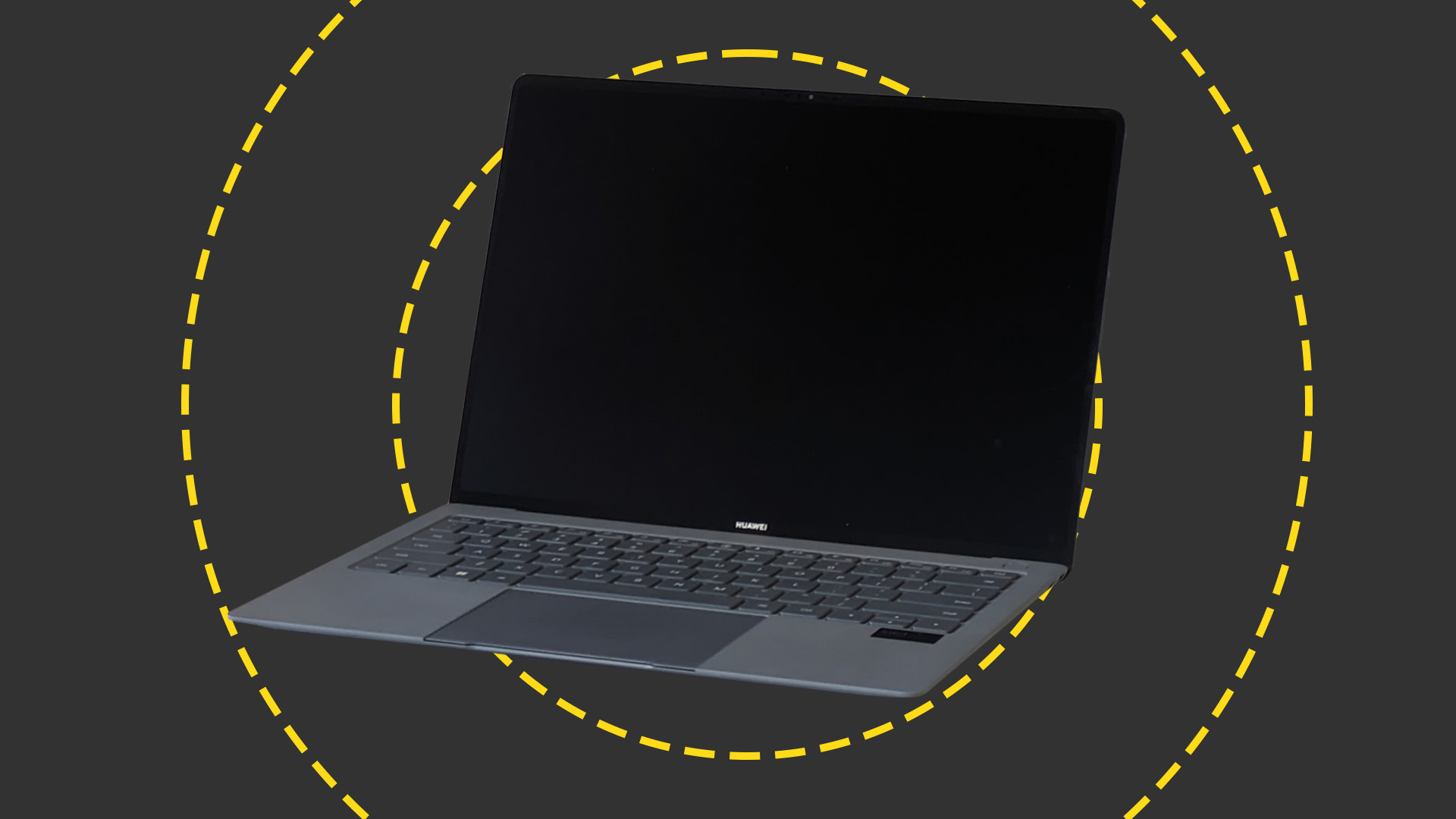 Huawei MateBook X Pro (2024): Executive elegance with the performance to match
Reviews An elegant Windows machine that can do it all and looks good doing it, with a display that will keep you coming back
-
 New Huawei Mate 50 phone can link up with Chinese satellite system
News This makes it the first smartphone maker to bring satellite communication technology to the consumer market
-
 Huawei MateBook X Pro (2021) review: Battery woes plague the evergreen ultraportable
Reviews A sleek and stylish MateBook once again undermined by battery life


