TPUs: Google's home advantage
How does TPU v7 stack up against Nvidia's latest chips – and can Google scale AI using only its own supply?


-
 PHP vulnerabilities spark global scramble as websites taken down
News The impact of critical PHP vulnerabilities has been felt worldwide
-
 Veeam launches new global program for sovereign service providers
News The initiative introduces a new competency to help customers identify local providers with the expertise to address data sovereignty requirements


-
 The Google Cloud outage explained: What happened, who was affected, and what can we learn from the incident?
News The eight-hour Google Cloud outage hit a range of organizations including banks and delivery services
-
 SPECIAL EDITION: What enterprises need from a modern data center
Podcast We talk to Dell Technologies about the evolution of the modern data center
-
 Why mobile connectivity still matters
For connected devices, IoT, and resiliency, WiFi alone isn't always enough.
-
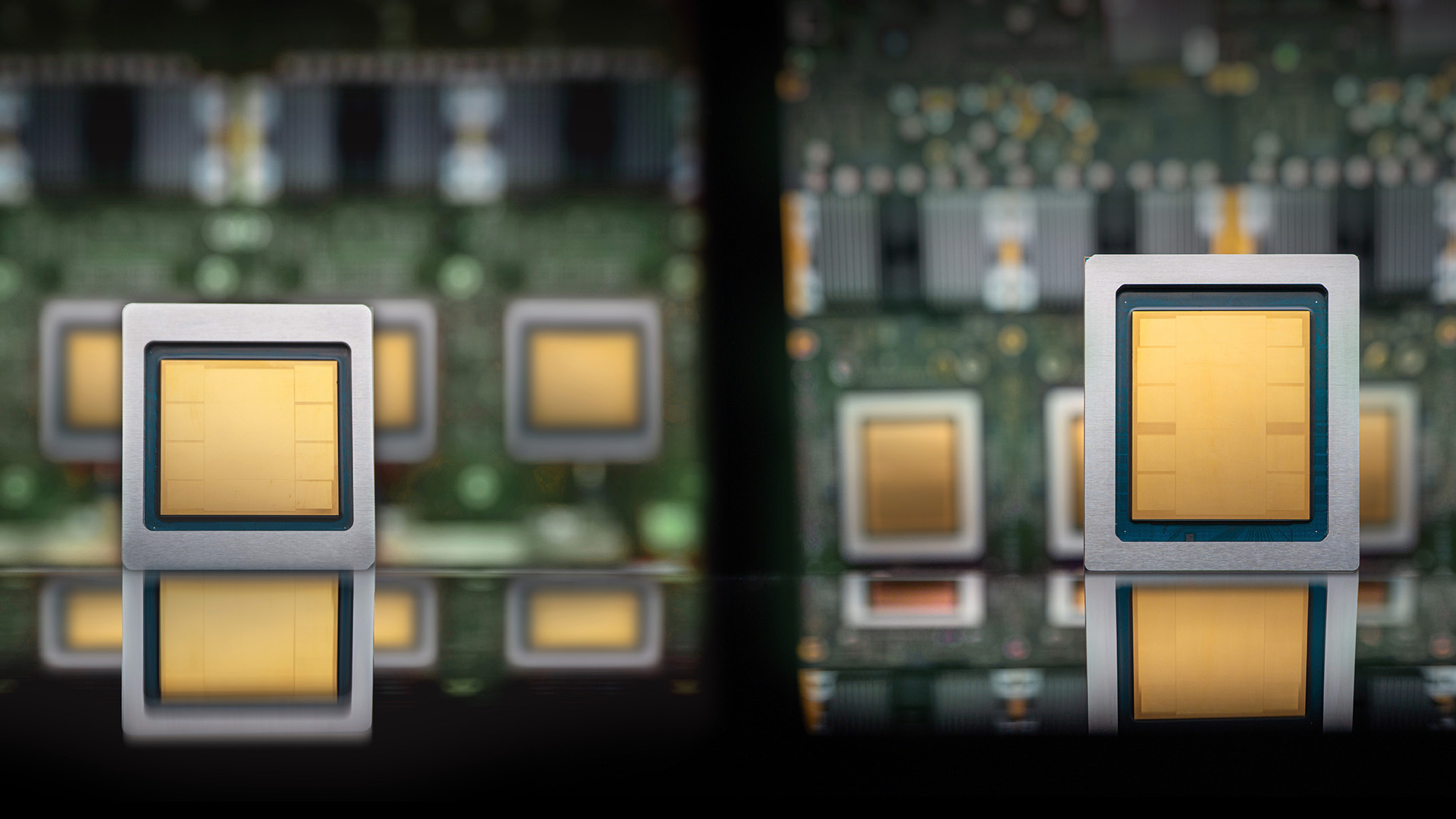 Google Cloud announces eighth-generation TPUs, boasting AI training and inference leaps
News Alongside chip improvements, Google Cloud has overhauled its data center fabric and file systems to support enterprise-scale AI deployment
-
 Going all-in on digital sovereignty
ITPro Podcast Geopolitical uncertainty is intensifying public and private sector focus on true sovereign workloads
-
 On the ground at HPE Discover Barcelona 2025
ITPro Podcast This is a pivotal time for HPE, as it heralds its Juniper Networks acquisition and strengthens ties with Nvidia and AMD
-
 What is a tensor processing unit (TPU)?
Explainer Google's in-house AI chips are the most notable alternative to Nvidia at the enterprise scale
-
 Inside a cloud outage
ITPro Podcast Businesses must adopt proactive planning for cloud outages – but what does that look like?


