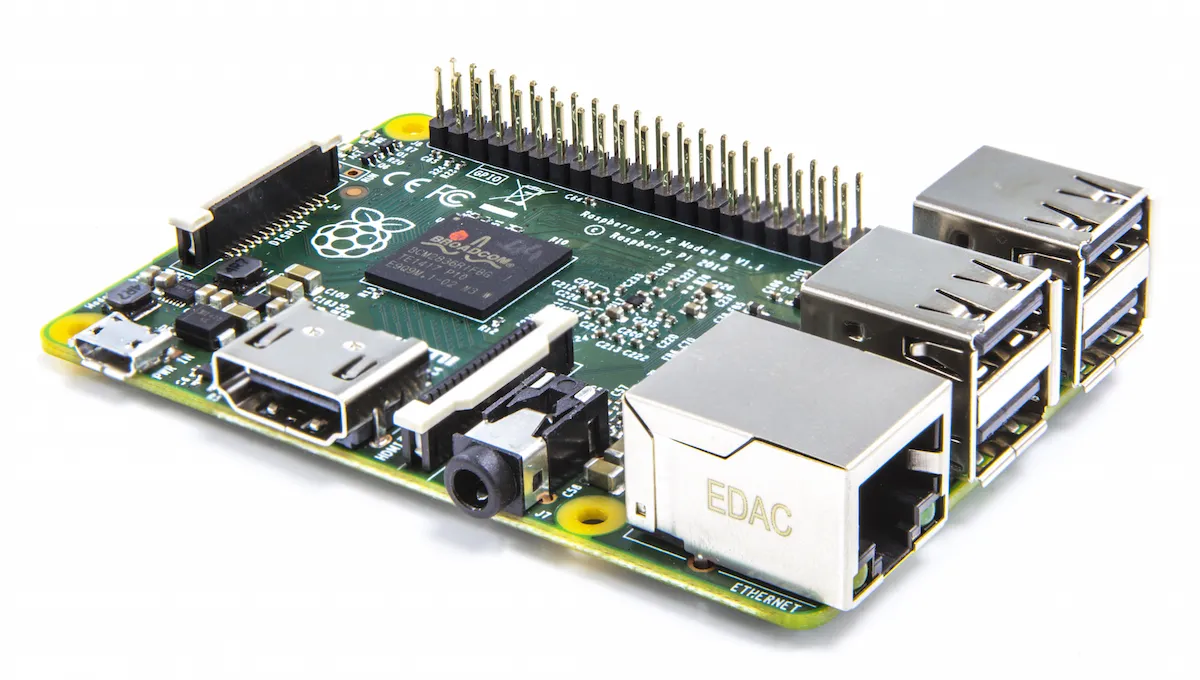
The Raspberry Pi 2 has been unveiled, packing more processing power, RAM and support for the upcoming Windows 10 operating system.
Two key hardware upgrades have been introduced with the Pi 2. The board is powered by a 900MHz quad-core ARM Cortex-A7 CPU - which the Raspberry Pi Foundation claims will provide up to 6x performance compared to its predecessor. RAM has also been doubled to 1GB.
"This has an identical form-factor to the existing Raspberry Pi 1 Model B+, but manages to pack in both the new BCM2836 and a full 1GB of SDRAM from our friends at Micron," Raspberry Pi founder Eben Upton said on the official blog.
"All of the connectors are in the same place and have the same functionality, and the board can still be run from a 5V micro-USB power adapter."
In surprise news, it was also announced that the Raspberry Pi 2 will support a version of Windows 10 as well as traditional open sourced Linux distributions.
"For the last six months we've been working closely with Microsoft to bring the forthcoming Windows 10 to Raspberry Pi 2. Microsoft will have much more to share over the coming months. The Raspberry Pi 2-compatible version of Windows 10 will be available free of charge to makers."
The Raspberry Pi 2 is available to buy now via element14 and RS Components, priced at $35. The original Raspberry Pi will also continue to be sold as long as there is demand for it.
In 2012, Upton told IT Pro the Foundation was planning to release a sequel to the Raspberry Pi in 2015, and that the existing devices would likely continue to be shipped until 2020.
 UK SMBs are the most vulnerable to cyber attacks
 Workers are so keen on using AI at work that they're paying for it themselves
