

Nearly four years after ChatGPT introduced the world to generative AI and overturned many decades of business assumptions, the nature of AI and what it means for businesses is changing.
While the first several years of the generative AI revolution were focused on ever faster GPUs and training increasingly large models, now the focus is on inference and agentic AI.
This shift in use requires a change in perspective. High-performance chips aren’t enough – in the world of agentic AI, data again forms the foundation of business intelligence, which means an increased need for storage in the data center.
As Forrester analyst Noel Yuhanna points out in an August 2026 blog post: “The enterprise data lakehouse is evolving. Once designed primarily to consolidate data for analytics, today’s lakehouse has become the operational foundation for agentic AI, delivering the trusted, governed, and real-time data that intelligent agents require to reason and act.”
“This evolution redefines vendor evaluation, prioritizing AI readiness, trust, openness, and operational intelligence over storage and query performance,” Yuhanna adds.
The growing need for storage to enable this new phase of AI in business is reflected in market predictions, too.
Mordor Intelligence predicts that the enterprise flash storage market will swell from $29 billion in 2025 to $49.9 billion in 2030. By 2034, The Insight Partners expects the data center flash storage market to reach $31 billion from a starting point of $12.1 billion in 2025.
Rethinking data storage
Collecting together a lot of high-performance storage and hoping for the best isn’t enough, though. As Yuhanna points out: “The data lakehouse is no longer limited to storing and serving data for analytics. Instead, it must continuously provide trusted, governed, real-time context that AI agents can use to reason, decide, and act.”
“Rather than prioritizing storage-centric capabilities alone, buyers should assess how effectively a lakehouse supports AI-native workloads, real-time operations, and integration with enterprise AI ecosystems,” he adds.
Speaking at Huawei Connect 2026 Data Storage Summit, IDC’s SVP of worldwide and EMEA research, Thomas Meyer, struck a similar note. “In the conversations I have with the CIO community … what’s coming to the fore is that, in terms of AI, they just don’t feel data ready yet,” he told delegates.
Meyer said that companies need to invest in infrastructure and identify which data sources will be needed, as well as consider which parts of the business are actually ready for agentic AI.
“This isn’t necessarily thinking about the world in terms of data storage,” Meyer said. “If you think about token lengths getting longer and longer and longer, you now need to start thinking about what you’re doing about your external storage acceleration in terms of being able to maintain your inferencing level and quality.”
“If you also think about what you need to do in terms of the future, where knowledge, memory, and context play a massive role in terms of what you’re doing, you need that external storage to be able to keep persistency and performance at that level,” he added.
Huawei is a proven integrated infrastructure partner
Huawei is one company that’s able to offer the kind of integrated solutions that Yuhanna and Meyer describe.
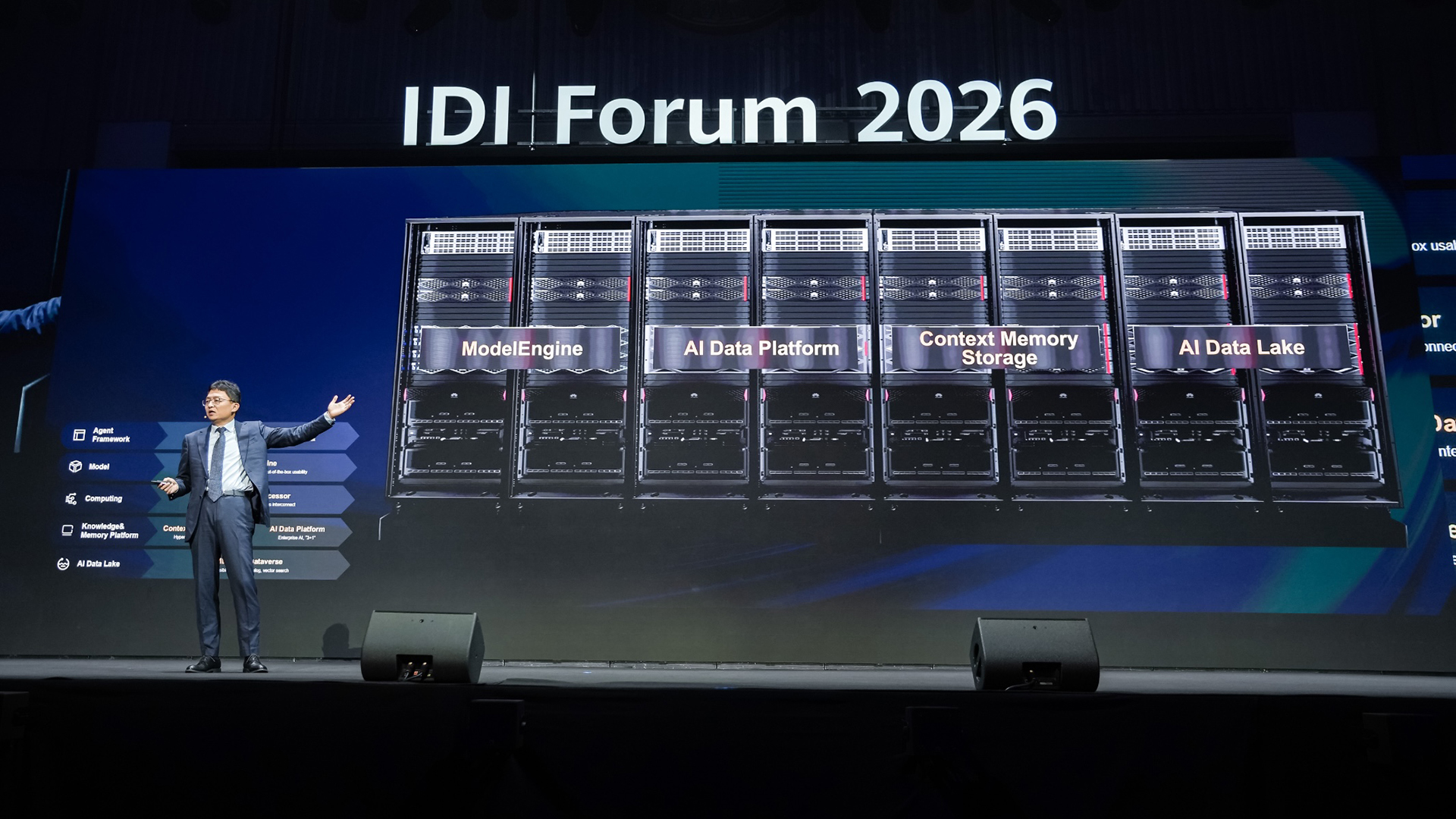
For high-quality data aggregation and supply, its AI Data Lake Solution, based on Huawei OceanStor Pacific all-flash scale-out storage and DME Omni-Dataverse, offers such high-density storage that 100PB data can be contained in just one rack, whereas the industry generally requires 5 racks, and supports multimodal, cross-site, and real-time data import, global data visibility and manageability.
The company also offers two options specifically crafted for AI inference: Huawei OceanStor M900 Content Memory Storage, officially introduced at Huawei Connect 2026, and Huawei AI Data Platform.
It also has enterprise software that reflects the new world of enterprise AI and agentic IT, including Huawei ModelEngine Nexent Agent Platform.
Achieving transformation aims with Huawei storage
Huawei customer, Auchan, gave a real-life example of how Huawei’s storage products have been able to help their digital transformation projects at Huawei Connect 2026 Data Storage Summit.
Auchan is a French supermarket chain founded in 1960 that now has almost 3,000 shops in countries across Europe, Central Asia, the Middle East, and Africa.
The company wanted to create a more innovative business model that could react to buying trends and offer customers greater choice or new deals. It also, according to CTO Pierre François Rudant, wanted to offer an easier and more personalized experience, while also optimizing the allocation of investments.
“We were facing a digital transformation challenge because at Auchan we had a very large lack of streamlining,” Rudant said. “We had very fragmented use of infrastructure, using two times more cloud providers than [competitors], leading to very high TCO with a 100% price increase for our infrastructure.”
The aim of the project, Rudant said, was to rationalize the number of suppliers it used and replace the existing infrastructure with a more cost-effective solution.
The company started by decommissioning a data center in Lyon that was running primarily on VMware. The data was migrated to a new data center in Lille that runs Huawei Full-Stack Data Center Solution (DCS) and Huawei OceanStor storage.
“The second phase of the project was to create and deliver some improvements in terms of data center residency,” Rudant said. “We created a three-data-center setup with high availability between our two data centers in [Lille] and have a third data center in the Paris region for disaster purposes.”
The data backup service uses Huawei OceanProtect as well as third-party backup software.
The third and final phase is creating a single DCS-based private cloud architecture to allow the company to refactor and redeploy its applications in a modern way. This allowed the company to better allocate resources and, according to Rudant, reduce costs by nearly 50%.
The company is now moving towards a “data-driven, AI-enabled smart retail model”.
Within the business, this includes:
- Deploying AI across employee services, IT operations and internal processes, as well as employee copilots
- AI-powered store loss reduction and near-expiry product management
- AI/ML-powered supply chain management, including demand forecasting, inventory, and replenishment
“The data center residency … can also ensure zero data loss because it’s absolutely mandatory to have accurate data if you want to run retail activity through the AI innovation I mentioned, improving the customer experience as well as operational efficiency,” Rudant concluded.

-
 The real role of UK channel partners in turning AI ambition into action
Industry Insights UK channel partners are the missing link between AI ambition and AI execution
-
 The great data center backlash threatens to disrupt the future – can businesses get around it, or is this a long-overdue reckoning?
The pace of AI innovation is dizzying – can regulators, investors, and communities wrestling with data centers in their area keep up?


-
 Huawei is positioning itself as a viable alternative to big US tech companies. Can it pull it off?
Opinion With Nvidia and AMD excluded from the Chinese AI market, Huawei is building a powerful reputation at home and abroad
-
 AI Data Lake 2.0: how one-stop data-ready infrastructure accelerates high-quality data supply
How Huawei’s AI data lake solutions generate value across industries
-
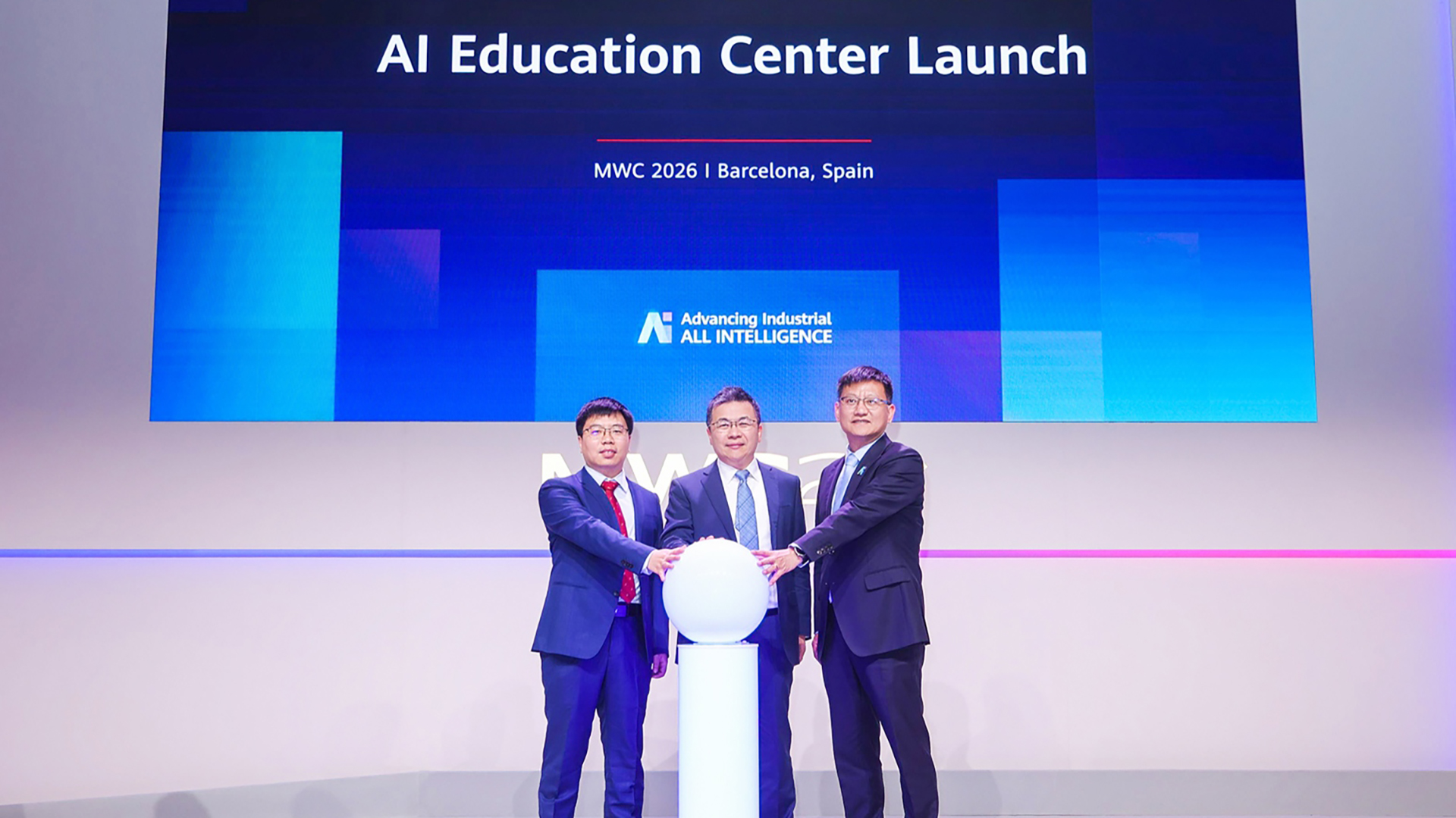 How practical-based learning for AI can close the digital skills gap
Equipping the next generation of AI-engineers, developers, and leaders with hands-on experience and practical teaching resources is key
-
 Huawei executive says 'we need to embrace AI hallucinations’
News Tao Jingwen, director of Huawei’s quality, business process & IT management department, said firms should embrace hallucinations as part and parcel of generative AI.
-
 Application enablement in an AI world
How enterprises can tap into AI-fueled application enablement to build apps faster and deploy them while consuming fewer resources
-
 6G: Pioneering a new era of innovation and business value
Sponsored Content Discover how 6G will redefine the wireless industry through innovation, AI integration, and groundbreaking technology to drive new business value
-
 Huawei at Gitex Global 2024: driving innovation in industrial digitalization and intelligent transformation
Sponsored Content Huawei showcased its latest advancements at Gitex Global 2024, focusing on accelerating digital transformation through innovative product launches, partnerships, and AI-ready ICT infrastructure
-
 Huawei Cloud: enabling business and industry growth
Sponsored Content Huawei Cloud is transforming industries with innovative cloud, AI, and digital solutions, empowering enterprises to achieve growth and success in the digital age


