
TL;DR
- The Dell Pro Max with GB10 workstation can handle AI models up to 200 billion parameters
- Local compute capabilities enable developers, researchers, and data scientists to supercharge innovation
- Running agents locally allows enterprises to innovate securely and protect mission-critical data
While the early generative AI race centered predominantly on advances in large language models (LLMs), the focus has increasingly changed toward small language models (SLMs) and, more recently, agents.
Crucially, localized, on-device AI capabilities are also growing in appeal for enterprises. PCs, tablets, and smartphones now have AI capabilities embedded directly, creating new opportunities in how users leverage the technology.
This is a key growth area for enterprises and OEMs in 2026 and beyond, as enterprises look to equip workers with tools hosted directly on AI-powered workstations.
The result is that traditional workstations are changing, evolving from traditional tower form factor into compact, near-user AI systems built to sit closer to the people using them.
Looking ahead, this shift marks a notable turning point in how we work with AI, but also how the technology is built and deployed. Rather than functioning purely as a productivity tool, the workstation will increasingly become a core design consideration during the development and deployment of AI models.
What are the benefits of AI workstations?
AI workstations have a number of benefits for enterprises, spanning areas like cost-efficiency and simplicity.
First and foremost, the fact AI workstations provide individual workers with local AI compute capabilities is a relative game-changer, allowing them to run LLMs and orchestrate agents through their device.
What’s more, deskside AI workstations work alongside existing cloud-based approaches, adding capacity to how businesses already run their existing AI workloads. Other advantages include tighter data control and more responsive performance for the kind of workflows next-generation AI demands.
A host of providers worldwide are rolling out AI workstations, including Dell Technologies with its Pro Max series. The devices form a key component of the company’s Deskside Agentic AI product offering, which aims to provide frontline compute capabilities for AI development teams.
Here’s what to expect.
1. Dell Pro Max with GB10 is hardware made for AI innovation
Powered by NVIDIA Grace Blackwell Superchips, these workstations are designed specifically for AI developers, researchers, and data scientists, allowing users to supercharge agent prototyping, fine-tune LLMs, and streamline inference processes.
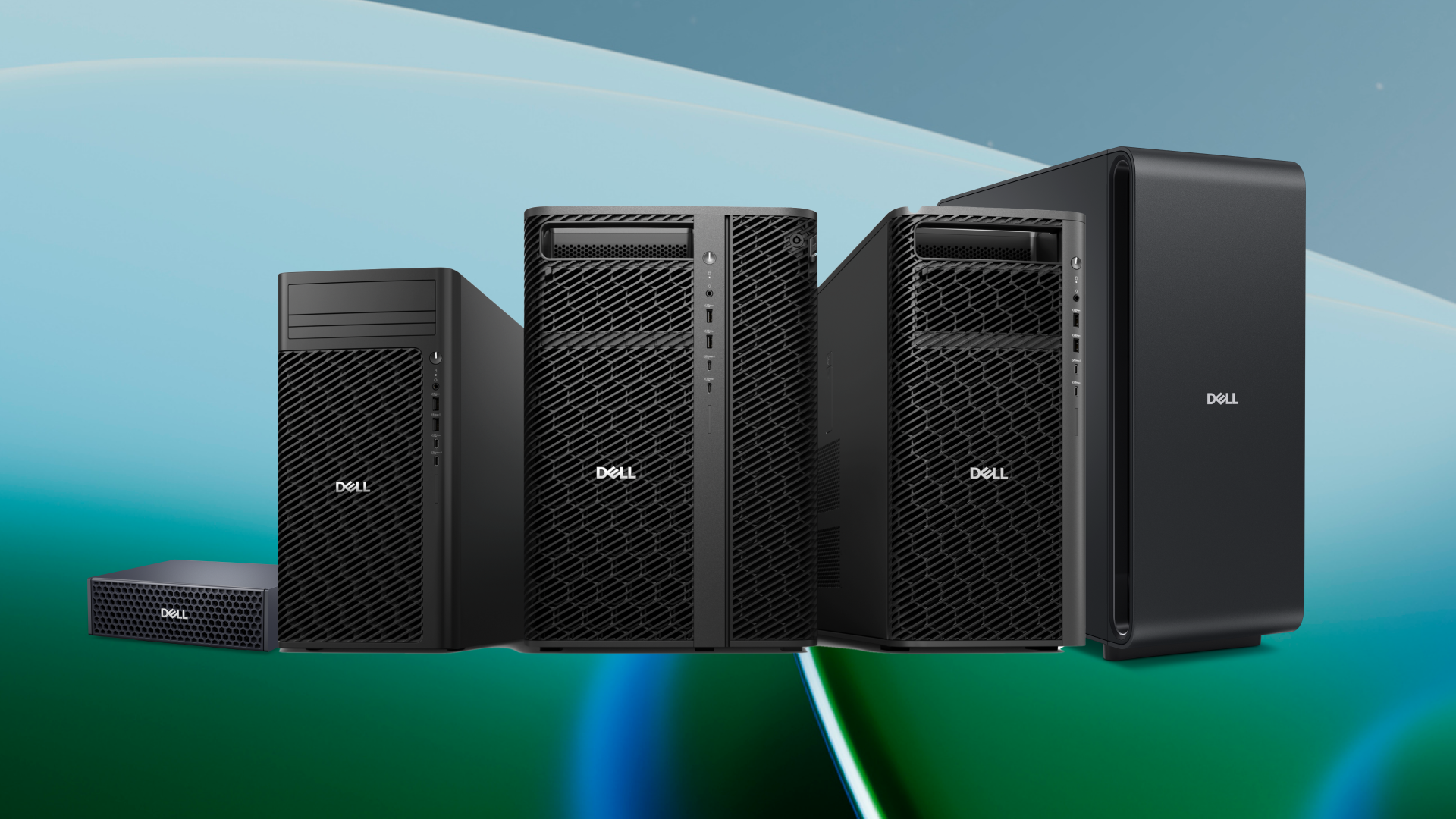
Dell’s Deskside Agentic AI hardware portfolio spans three complementary product families: Dell Pro Max with GB10 for individual prototyping and exploration, Dell Pro Precision 9 T2, T4, and T6 desktop workstations for team-level scaling, and Dell Pro Max with GB300 for both team-level and production-grade, multi-agent workloads at the deskside.
Within this portfolio, Dell Pro Max with GB10 and Dell Pro Max with GB300 are powered by NVIDIA Grace Blackwell technology.
Dell Pro Max with GB300 provides:
- Data-center-class AI development capabilities in a compact form factor
- Supports models ranging from 120 billion to one trillion parameters and up to 150 concurrent agents.
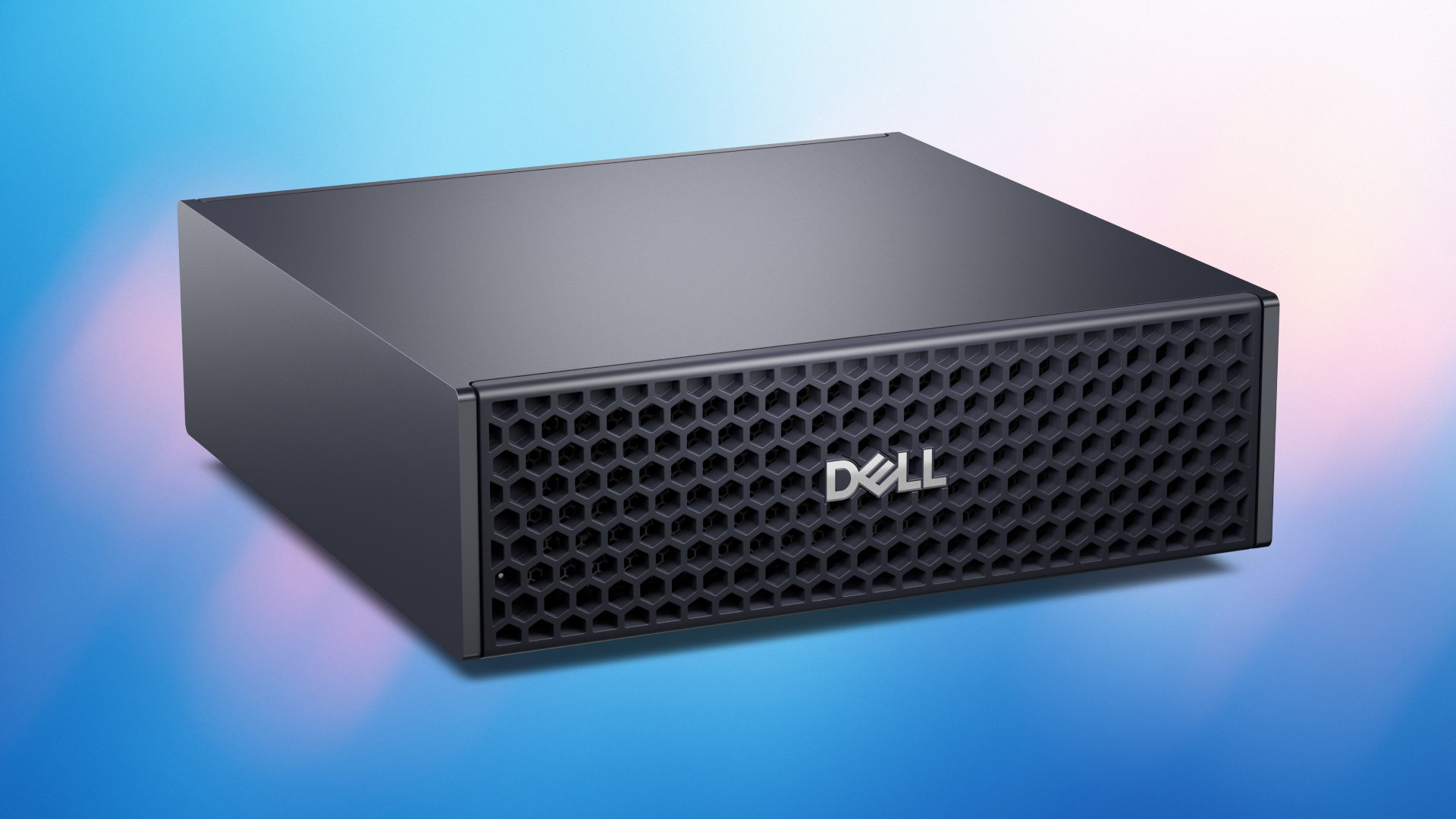
The Dell Pro Max with GB10 still packs a serious punch, though. Indeed, this workstation is the perfect entry-level device for organizations seeking to bring AI closer to home for workers.
2. It delivers high-performance on your desk
You’ll have noticed by now that the Dell Pro Max with GB10 is packing an NVIDIA chipset. The workstation boasts a Grace Blackwell Superchip and is designed for smaller workloads compared to its sister device.
This is a 20-core Arm processor which leverages 10 Cortex-X925 performance cores alongside 10 Cortex-A725 efficiency cores.
The workstation is capable of handling AI models up to 200 billion parameters, and can run up to eight agents concurrently. Elsewhere, users can expect up to 128GB LPDDR5x unified memory, as well as a number of storage options ranging up to 4TB.
This makes the Pro Max GB10 a powerful piece of equipment in the hands of developers, allowing them to experiment and tinker with agentic AI in an efficient, and safe, manner.
3. Improved cost efficiency and safety
While performance is a key focus for the Pro Max series, cost efficiency is equally important given the rising costs associated with agentic AI.
Rising token costs over the past 12 months have become a recurring pain point for organizations, with some forced to implement limits for ‘power users’ racking up significant bills.
According to Signal65 analysis, agentic AI can dramatically increase infrastructure costs as organizations move from simple chat interactions to autonomous, multi-step workflows. Signal65 reports that agentic workloads may consume 4x to 15x more tokens than traditional AI applications, making cost efficiency a critical consideration at scale.
Dell AI Factory with NVIDIA infrastructure reduces the cost of persistent AI-agent deployments by 28% to more than 90% compared with public cloud APIs. For the Dell Pro Max with GB10 specifically, modeled two-year costs were up to 28% lower for low-complexity knowledge-worker deployments supporting eight agents, and up to 76% lower for medium-complexity sales-agent deployments supporting four agents.
Actual savings vary according to workload complexity, utilization, scale, and deployment assumptions.
4. It reduces strain
A key advantage of Dell Pro Max with GB10 is its ability to operate either as a standalone AI development system or as a connected AI accelerator alongside an existing workstation.
This enables developers to redirect tasks and workflows to the Dell Pro Precision towers while maintaining performance capabilities on the workstation.
GB10 systems can also be connected to create a virtual compute cluster, according to official Dell materials, allowing users to scale capacity and performance.
Developers can offload AI-specific workloads—such as fine-tuning, retrieval-augmented generation (RAG), and inference—from their primary workstation to GB10. This allows design, coding, and content-creation work to continue on the main system without being slowed by demanding AI tasks.
For organizations that need greater capacity, Dell Pro Precision tower workstations provide a pathway to team-level workloads on the same software stack. Two Dell Pro Max with GB10 systems can also be connected using ConnectX-7 networking to tackle models containing up to 400 billion parameters.
5. It offers better security
Because the Dell Pro Max with GB10 range allows users to run agents locally, this offers marked advantages, providing enterprises with greater control over data, privacy, and security.
Moreover, using the NVIDIA NemoClaw and OpenShell software stack, users can also integrate cybersecurity solutions such as CrowdStrike’s Falcon endpoint protection.
According to Dell, an air-gapped Dell Pro Max with GB10 variant will be made available, designed primarily for federal workers. This will feature no Wi-Fi or Bluetooth radio hardware.
If you think the Dell Pro Max with GB10 is the right solution for your AI development workflows, find out more on the Dell website.
-
 Microsoft's Brad Smith wants more AI kill switches
News Brad Smith has called for more regulation, saying the UK is well-positioned to lead
-
 Two groups account for a third of UK ransomware attacks
News Data from Cohesity has revealed that Europe has become a primary target as the number of US ransomware attacks declines


-
 8 reasons the NVIDIA-powered Dell Pro Precision with GB10 could become every AI developer’s favorite tool
Sponsored How Dell Pro Precision with GB10 puts frontier-level AI compute on your desk (and could save you money on token spend)
-
 $3k a day on tokens? Dell’s deskside agentic AI Accelerators will save you money on AI development
Sponsored Enterprises are facing rising AI bills, but it doesn’t have to be that way
-
 Dell Pro 5 or Dell Pro 7? How to choose the right laptop for your employees
Sponsored Office powerhouse or master of mobile working? The choice is yours. Find out if you should buy the Dell Pro 5 or Dell Pro 7 for your business
-
 How the Dell Pro 5 & Dell Pro 7 laptops add a layer of security for better hybrid working
Sponsored Secure your hybrid workforce with Dell Pro laptops, featuring robust silicon-level hardware protection that safeguards critical data below the operating system
-
 5 reasons every AI team needs a deskside agentic AI accelerator like the Dell Pro Max with GB10
Sponsored The Dell Pro Max with GB10 can help enterprises kickstart and scale their agentic AI adoption journey
-
 Dell’s NVIDIA-based AI powerhouses compared: The Dell Pro Max with GB10 versus the Dell Pro Max with GB300
Sponsored The Dell Pro Max with GB10 and GB300 workstations are the perfect devices to help supercharge AI innovation
-
 Which form factor? When to choose the Dell Pro 7 in 13in, 14in, or 2-in-1 design
Sponsored The Dell Pro 7 laptop is available in a range of form factors designed to suit different ways of working. Which should you choose?
-
 The Dell XPS 14 is back with a vengeance – but is this high-end laptop worth the premium price tag?
Reviews One of the greatest enterprise laptops has been brought in from the cold and makes a solid start to life once again


