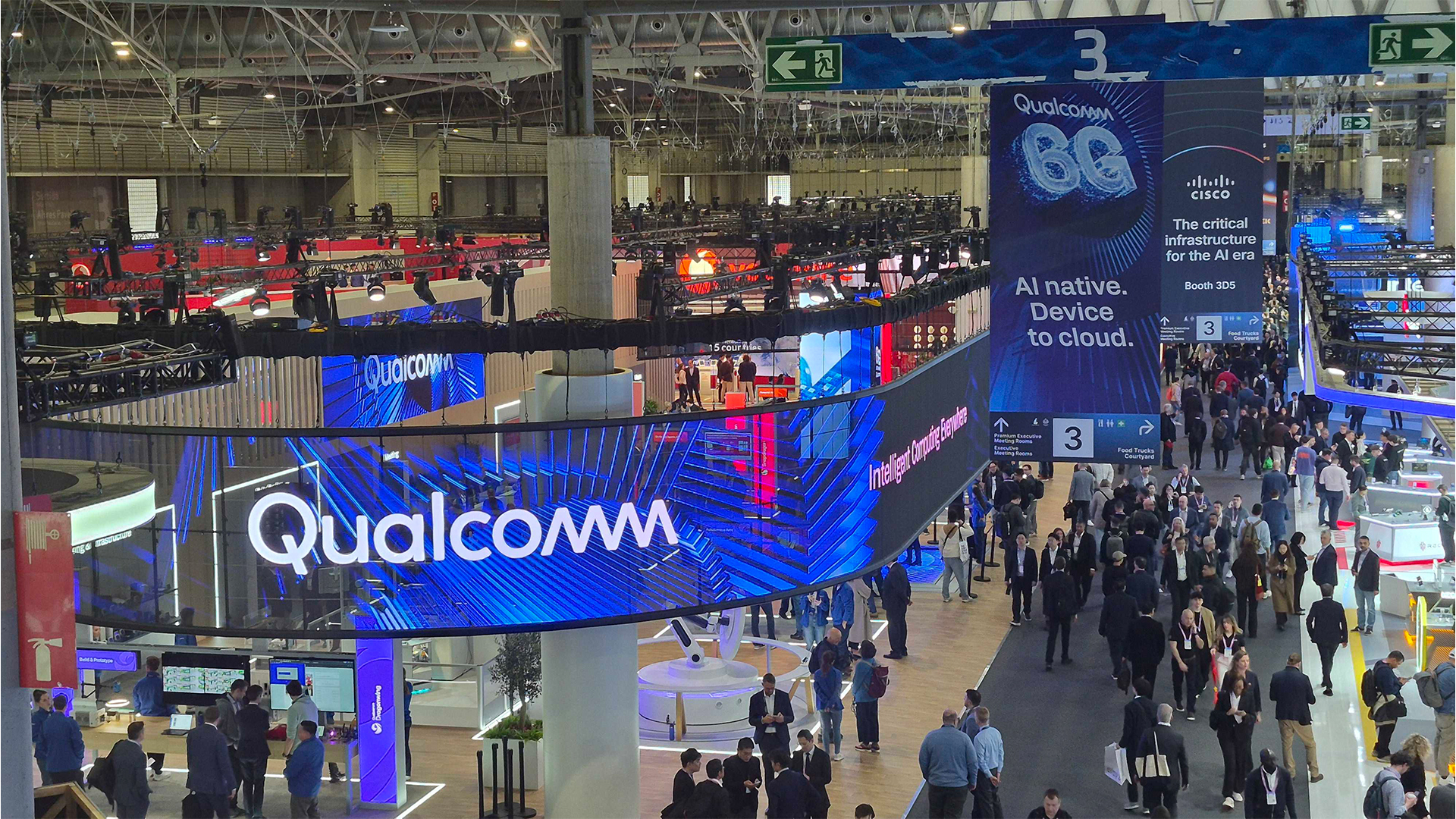
“They’re talking 6G, but most businesses are still waiting for the return on investment of 5G,” one telco journalist told me on day two of Moblie World Congress 2026.
The day before, Ericsson talked up the work it had done to prepare for the next generation of mobile connectivity, which the company claimed will not just power AI, but will be AI-native. New radios, antennas, and other forms of hardware are being built and pitched to businesses because 6G is coming.
Yet despite this being a conference about mobility run by GSMA – the clue’s in the name, really – 6G hasn’t been one of the main themes of the show. This is an AI-first conference, with those very tiresome initials adorned on every wall, at every booth, and across all the products. So we are heading for 6G, but only because we’re doing artificial intelligence to death – networks, we’re told, are feeling the impact of all our various AI demands.
This is the message vendors are trying to sell to businesses; they want you to invest that little bit more so you’re future-proofed. The same kind of future-proofing 5G was meant to give you. We should have suspected something was going to happen when the talk became 5G 2.0 or 5G advanced…
Return on investment (ROI) is a pillar of this year's MWC – particularly with AI, which is costing the world more than just money. Not only do organizations want financial gains, they also want useful services. Take Samsung’s Privacy Display, for example, where AI is used to obscure the view of the phone from the side or above. For years, vendors have talked endlessly about the ‘AI’ on their devices – often with limited use and sometimes straight-up slop – yet the most interesting AI-centric development I’ve seen on a smartphone of the last 5 years is a practical security feature.
Practicality and security are also driving changes in hardware. There were a couple of good examples of modular computing at MWC, with devices that can be easily repaired, upgraded, or even built to the users' preferences. Techo’s modular smartphone concept was a popular attraction at this year’s conference. A thin magnetic slab of a device that doesn’t even have a charging slot (such is its thinness). You add components you want through pogo pins, such as the battery or a camera system.
In a similar, yet entirely more useful vein, Lenovo showcased the T14s, its business-focused laptop that has been developed in partnership with iFixIt. I was shown a demo of how the keyboard clicks out, how the battery pops off, and even how the ports can be pulled out. The simplicity of it all was breathtaking – and there were QR codes all over it that gave you precise information for repairs. You can see the value throughout the device, as well as the value it will create for IT teams and businesses that don’t want downtime or to spend more budget on replacing whole laptops.
Another interesting piece of hardware on display at MWC was the Jolla Phone, which was built with the direct input of a community that wanted a European-developed phone. They committed to buying it – preorders of 10,000 – so Jolla built it to that community's specific demands.
Arguably, the hardest part of MWC is trying to distill what you have seen into one coherent piece. Many delegates start the week on Saturday energized and ready to learn but by Wednesday they’ve drowned in too much information to fully assimilate. Beats and specialist areas kind of go out the window the moment you set foot in the Fira. One point was crystal clear from start to end, though: businesses need to start seeing the value of AI technologies, and vendors might do well to listen to these customers more often.


 Why architecture matters more than you think in cyber resilience
 Israeli digital ad agency caught serving first in-the-wild zero-click spyware

 Ericsson maps out the road to fully commercial 6G networks at MWC 2026
 Does 6G matter?
