Sign up today and you will receive a free copy of our Future Focus 2026 report - the leading resource for IT decision-maker insight on priorities and investment areas in AI, security and more.
You are now subscribed
Your newsletter sign-up was successful
An account already exists for this email address, please log in.
Analysis: Five security tips for smartphones in the enterprise
The technology of today’s smartphones is going to put more pressure on IT departments, and IBM has released advice about how administrators can cope.
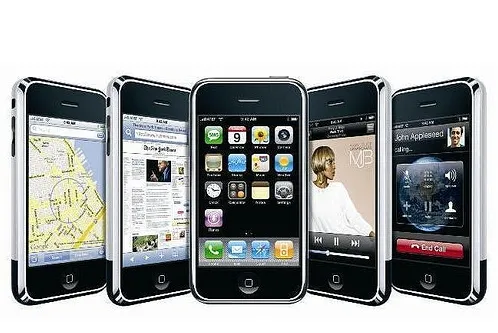
Amongst all the fanfare from the release of the 3G iPhone, business users were particularly interested in the fact that it was much better positioned to be used for enterprise, thanks to new business tools and capabilities such as the push email.
This has focused more attention on the incorporation of smartphones into business networks, which in the future looks to be a necessity thanks to modern day workers needing to perform many tasks on the move.
RIM's Blackberry has been the business smartphone of choice for a while, with its ability to perform corporate tasks and its functionality.
However, a new generation of smartphones such as the iPhone but also devices like the Nokia N71 and the new series of Blackberrys are capable of doing much more. These phones have features such as the ability to access the net using 3G, watching videos and downloading third party applications which have its own inherent risks.
It is also clear that smartphones will carry more important and confidential corporate information than ever before such as internal communications, customer contacts, financial information as well as intranet systems and networks.
In the wrong hands it could cause huge damage to business, and IT departments around the world are going to have to deal with new problems and a bigger strain on networks.
In response, IBM Internet Security Systems released a five point plan which IT administrators need to keep in mind when attempting to incorporate the technology into their enterprises.
1 - Enforce strong password policies
If the smartphone was lost or stolen, strong passwords could mean the difference between the loss of a phone and the loss of sensitive data which could cost business financially and destroy reputations. It was advised that business smartphones needed to be configured to lock screens after a period of inactivity, and passwords be complicated and changed on regular basis.
2 - Protect smartphone VPN access
Attackers are capable of exploiting vulnerabilities in smartphones and infecting them with malware, which in turn can transfer through VPN connections through to intranet resources. IBM said that smartphone servers and VPN egress points should be placed on a network which is firewalled from the rest of the internet. Connections coming from the phones should be monitored with intrusion protection systems and access from smartphone VPNs restricted to servers that are really needed by users.
3 - Establish procedures for employees to follow
It is possible for sensitive data to be wiped from smartphones remotely from the enterprise server if they are lost or stolen. It was recommended that a contact point for employees who had lost their phone so data could be wiped and a replacement be sent.
4 - Control the installation of third-party applications
Smartphone users will be tempted in downloading productivity applications or other files which carry malware or a back door. Businesses needed to consider restrictions on these types of third party applications, especially if they are not digitally signed.
5 - Evaluate smartphone anti-virus solutions
Although there are few malware threats on smartphones at the moment, there are anti-virus solutions on offer. As the popularity of smartphones increase, so will the malware that targets them. Businesses needed to monitor constantly in determining which mobile phones needed to be included in host based security deployments.
TOPICS
CATEGORIES
Get the ITPro daily newsletter
Sign up today and you will receive a free copy of our Future Focus 2026 report - the leading resource for IT decision-maker insight on priorities and investment areas in AI, security and more.
 TfL takes Oyster photocard systems offline following breach
 Irish credit unions hit by data breach after IT provider compromised


 How your network can take on the cloud - and win
 What is subnetting?
 BlackBerry 10 cleared for use by US government agencies
 BlackBerry 7 OS certified to carry 'Restricted' UK government information
 Cisco to tackle BYOD challenge
 Cisco posts bumper results amidst restructure
 Cisco announces 40GbE and 100GbE switching upgrades
 Cisco launches turbo-powered wireless access point


