

Did you know that 84% of companies have at least one AI pilot that has not reached deployment, with 38% saying their longest-running AI pilot has been stuck in the testing phase for over a year?
A core driver of stalled AI projects isn’t a lack of computing power or the right hardware, but the quality, availability, and accessibility of the data AI systems need to be trained and deployed. This can create a host of problems for IT leaders, from AI pilots that stall before production to data stuck in disparate silos, provisioned GPUs sitting idle, and inconsistent data governance and security.
This is where an open, modular platform such as the Dell AI Data Platform can shine. It combines enterprise storage and data engines with a distinct orchestration layer. Storage provides the foundation; Processing, Analytics, and Search prepare, query, and retrieve data; and the Data Orchestration Engine coordinates and governs workflows across the AI data lifecycle—from ingestion and enrichment through indexing, retrieval, and refresh.
Together, these capabilities can help organizations turn existing enterprise data into a governed, reusable context layer for AI-driven insights and actions – while working with existing data environments.
TL;DR
- Poor access to AI-ready, enterprise data can shoot down an AI pilot before it even takes off
- Disconnected and fragmented data silos across an enterprise’s infrastructure can make it hard to access the data needed to train and then deploy AI systems
- The Dell AI Data Platform helps address these challenges by accessing, preparing and enriching and transforming enterprise data from disparate structured and unstructured sources, and preparing it for AI workflows
- Built-in security and governance across the Dell AI Data Platform's stack of storage, data capabilities, and orchestration layers keeps business-critical information safe and in line with established governance, while still enabling it to be used by an AI
- The Dell AI Data Platform creates AI-ready data without the need to overhaul existing data structures and storage systems
- By automating data preparation and workflows, the Dell AI Data Platform can get an AI project up and running, helping avoid costly GPU resources sitting idle

Connect to data across silos to avoid stalling AI pilots
The success of an AI system increasingly comes down to the quality of the data it ingests and processes. But don’t just take our word for it. According to Gartner®, a “Lack of AI-ready data puts AI at risk,” predicting that “through 2026, organizations will abandon 60% of the AI projects unsupported by AI-ready data.”*
While many enterprises are familiar with analyzing giant data sets and making things work across disparate systems, the rising prevalence of data silos and fragmented storage systems makes it hard for AI to access and analyze that data at scale, especially if it's unstructured.
IT and business intelligence teams can create pipelines to bring unstructured data together, but they’re often too brittle to scale effectively and use in active AI deployments. This slapdash approach also means time that could be spent on developing AI models and systems is largely spent on data collation and preparation.
The Dell AI Data Platform resolves the integration bottleneck by pulling data together from multiple cloud environments, on-premises servers, and edge-based systems directly at the storage layer, ready to be handled by the data engine with its three core capabilities: processing, analytics, and search.
- Processing: Transforms batch and streaming data into ready-to-use datasets for analytics, machine learning, and AI workflows.
- Analytics: Queries structured and semi-structured data across databases, data lakes, and object stores without first copying or consolidating it.
- Search: Combines keyword and vector search to retrieve relevant information from unstructured enterprise data for AI and retrieval-augmented generation (RAG) applications.
Combined, these capabilities enable a whole host of enterprise data to be pulled together, prepared, and worked on by AI systems, without the need for IT or business intelligence teams to manually pull all the information into one place and tie together processing and analytics workflows.
What’s more, the Dell AI Data Platform doesn’t need to migrate underlying data, force data into a proprietary format, or duplicate it, meaning safely stored data can still be accessed without breaching security and governance policies.
For applicable workloads, Dell PowerScale SmartLock and Dell ObjectScale Object Lock can help protect critical data from unauthorized modification, while Zero Trust controls ensure AI models can retrieve only the data their identities and users are authorized to use.
Above the storage and data layers, the Dell Data Orchestration Engine creates and automates data pipelines across an AI system’s lifecycle.
The Dell AI Data Platform helps AI pilots get off the ground and into production without compromising an organization’s sensitive and critical data.

Reinforce AI data governance and security
While the Dell AI Data Platform provides the means to access data from across an enterprise so it can be ingested and acted on by a new AI system, this doesn't mean security and information governance can be ignored, especially as a lot of enterprise data can contain sensitive and business-critical information.
Yes, responsible AI practices are maturing, but Accenture research shows 54% of CIOs cite governance and responsible AI concerns as a primary barrier to scaling AI, with only a third (32%) reporting advanced or leading AI governance maturity.
Governance is far easier to enforce when it’s part of the data layer. The Dell AI Data Platform unifies encryption, threat detection, and access controls across its stack, so an organization’s governance and compliance policies can be applied to the data an AI system touches. This also spares organizations from assembling their own AI data stack, which can create a whole patchwork of new gaps in security and governance controls, such as data sovereignty and audit trails.

Avoid costly GPUs idling while your organization gets its data AI-ready
Without the prepared data and reliable pipelines, an AI pilot’s budget can quickly drain away on provisioned GPUs sitting idle, with no AI model to train or agent to deploy. In fact, a 2026 Cast AI report revealed average GPU utilization sits at a concerningly low 5% across the Kubernetes clusters it analyzed – exposing a costly gap considering recent price rises imposed by cloud vendors.
The Dell AI Data Platform addresses this by pulling together processing and orchestration to reach data across the enterprise and automate the pipelines that feed an AI system, which shortens the route from pilot to production, so it can tap into ready-and-waiting GPU power.
Purpose-built, NVIDIA-accelerated data capabilities within the Dell AI Data Platform build GPU acceleration directly into data processing. Data is prepared faster for AI training and inference, so GPU capacity spends less time waiting on it.
On the storage side, three dedicated engines (Dell PowerScale for unified file and object in mixed-protocol environments, Dell ObjectScale for object at scale, and Dell Lightning File System for high-performance parallel access) let storage scale independently of GPU capacity. Organizations don’t need to provision costly GPUs while they wait for their data to grow, which cuts wasted compute and the cost of piloting and then deploying AI.
If you think the Dell AI Data Platform could benefit your business, find out more on the Dell website: US readers click here, and CA readers click here.
FAQs
Why do AI pilots stall before production, even when the hardware is in place?
There can be several reasons, including data access or quality challenges, integration work, or governance requirements. An AI pilot can run on a curated sample, but production needs live access to information scattered across clouds, on-premises servers, and edge systems, with governance applied throughout. Without that, GPUs sit provisioned but idle while teams collate and prepare data by hand. The Dell AI Data Platform provides data-engine and orchestration capabilities that reaches data where it already lives and automates the pipelines that prepare it for AI.
What does “AI-ready” data actually mean?
AI-ready data is relevant, accessible, sufficiently prepared and governed for the intended use. The Dell AI Data Platform provides processing to prepare raw data, analytics to query the data in place, and search to retrieve the data by keyword or meaning, with security and governance applied across the stack.
Does an organization need to move or rebuild its data before using the Dell AI Data Platform?
Not necessarily. The Dell AI Data Platform supports workflows that can access some data in place across cloud, on-premises, and edge environments, without migrating or duplicating it or forcing it into a proprietary format. Existing storage systems stay as they are, so security and governance policies keep applying to the data an AI system draws on.
*Gartner Q&A, Lack of AI-Ready Data Puts AI Projects at Risk, February 26, 2025, GARTNER is a trademark of Gartner, Inc. and/or its affiliates
-
 AI storage that helps existing data support new workloads — meet the Dell AI Data Platform
Sponsored Turn siloed data into an enterprise-wide data context layer and keep files ready for new AI workloads
-
 Identify the threat before it spreads: 3 ways Dell PowerProtect detects ransomware in backup data
Discover how Dell PowerProtect uses pattern matching, behavioral analysis, and configuration checks to detect ransomware in backups and ensure confident recovery


-
 One platform, four enterprise AI data challenges solved: Inside Dell AI Data Platform
Sponsored Your production AI will only be as good as the data it uses. Here’s how to get your data ready.
-
 Dell Technologies eyes agentic context and quality gains with new AI Data Platform features
News New features for classifying structured and unstructured data could deliver more reliable agentic outputs
-
 Getting ready for production AI – Part 2: How to turn enterprise data into AI-ready pipelines
Sponsored Production AI depends on data pipelines that stay current, governed, and ready for retrieval.
-
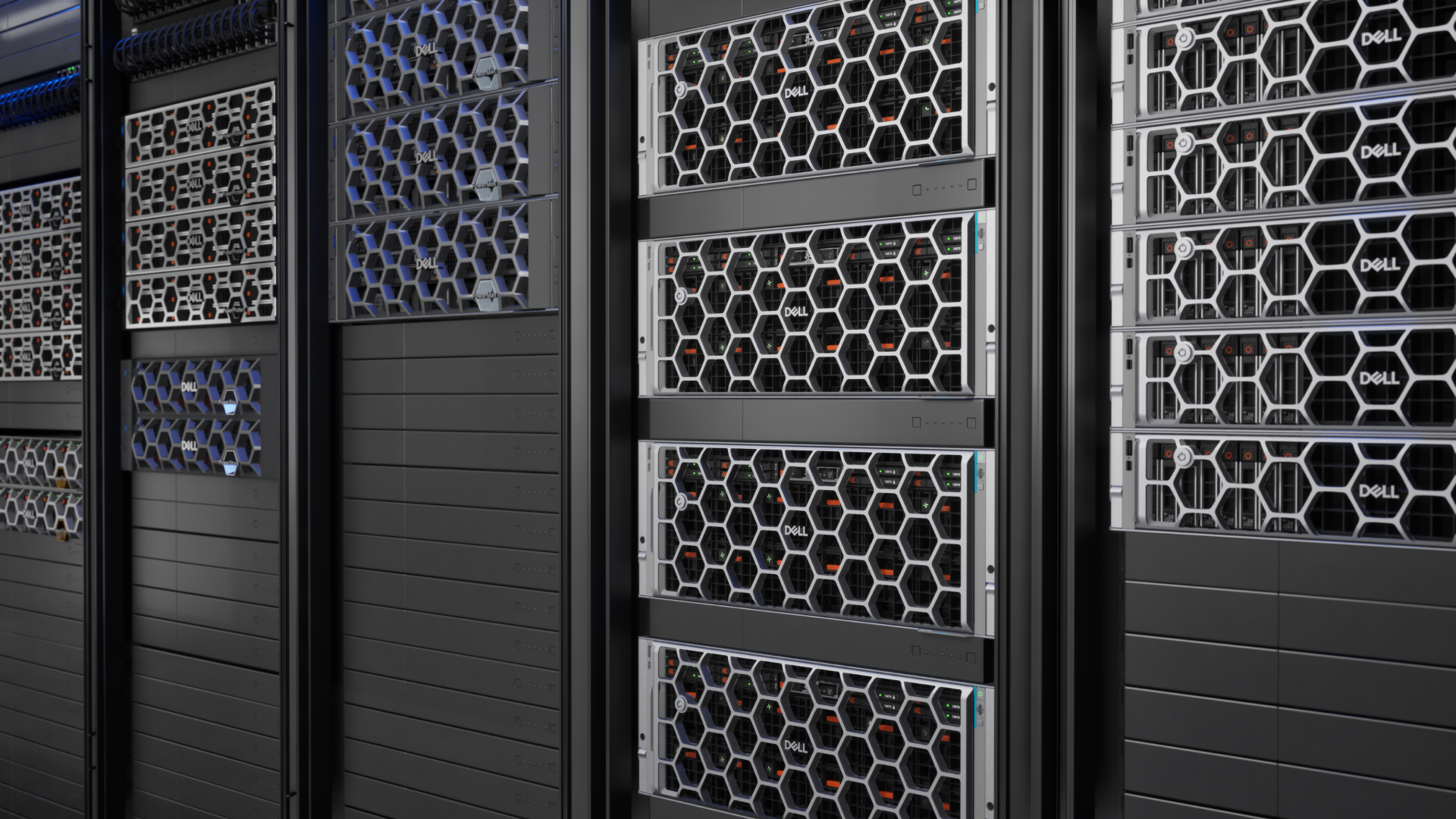 Turning enterprise data into AI-ready data: the 4 data engines built into the Dell AI Data Platform
Sponsored Poor data quality, fragmented systems, and slow pipelines can all hold back AI adoption. The Dell AI Data Platform brings together four built-in data engines to help enterprises orchestrate, process, search, and analyze data for AI at scale
-
 How to transform data chaos into real AI outcomes: the missing link in enterprise AI
Sponsored Enterprises face acute data quality challenges. Here's how the Dell AI Data Platform can help
-
 3 ways to get your data AI-ready
Sponsored Data placement, preparation, and orchestration make or break an AI project – and the Dell AI Data Platform reduces the strain on enterprise IT teams across both storage and the data foundation
-
 From pilot to production: why AI needs next-generation data organization
Sponsored As AI workloads scale, organizations must decide where data and inference belong: public cloud, on-premises, or the edge
-
 Why speed and performance are vital for extracting value from data
Sponsored Businesses are mired in more complexity than ever, with the need to harness new technologies adding to the strain. But investing in enterprise infrastructure that encourages speed and high performance means faster results.


