The Samsung Galaxy S26 Ultra is almost an all-in-one solution for video production – its stabilization capabilities are out of this world
A big, beautiful slab of a smartphone with a cutting-edge privacy display and video capabilities for all your creative needs

-
+
Privacy Display feature
-
+
Impressive camera and video upgrades
-
+
High storage options
-
-
Same design as the previous model
-
-
Expensive

ITPro had hands-on time with the Samsung Galaxy S26 Ultra way back in February and was left impressed by its privacy display. But two months on, with an Enterprise Edition review unit in our possession, the most impressive feature is arguably its video capabilities.
From its five high-quality lenses to its innovative stabilization controls, the S26 Ultra is a video powerhouse perfect for today's content creation needs. Sure, it's expensive, but for social, promotional, or even mini film needs, the S26 Ultra is almost an all-in-one solution.
Samsung Galaxy S26 Ultra: Design and specs


There really isn't much to say about the S26 Ultra's design, other than a few new color options and a slight reduction in thickness (7.9mm). To the naked eye, it looks the same as the S25 and the S24, which is not necessarily a bad thing. It has a great design, with those nice flat edges and a minimalist back cover, both made from 'Armor Aluminum'. It's a very distinctive look, particularly with the camera island and its many lenses.
The many lenses seem to be a big bulk of its weight too; despite the flat edges, it doesn't stand up on its own and tends to fall backwards – I even noted this when I tried to support the device with a stand – the weight of those lenses still pulled it backwards. So if you are filming, you need a case with a stand or a tripod of some kind as it won't stay up on its own.
Most of the changes and improvements are software or internal. It's powered by the Snapdragon 8 Elite Gen 5 chip, which brings a range of new capabilities for both on-device artificial intelligence and quite striking improvements to the camera software.

The S26 range has been designed under the banner of 'effortless AI', with more generative capabilities and shortcuts with simpler operations. Each of the models in the range will offer tailored experiences as they learn about the user, and produce impressive-looking capabilities for managing daily life and work – all through a new data engine. Bixby is also still lurking on your Samsung device, though it can now search the web. I didn't find this to be much better or quicker than simply searching the web in the old-fashioned way.
Other notable updates include the battery, which has been improved, with faster charging; Samsung says this can go from 0-75% in 30 minutes, which is near enough there in our experience. And it also sends the bare minimum power to certain apps – so it gives you enough to WhatsApp, but doesn't waste power.
Samsung Galaxy S26 Ultra: Display
As always with Samsung, the screen technology is top-notch. On the S26 Ultra, the display is a 6.9in Dynamic LTPO AMOLED, with a 120Hz refresh rate and HDR10+ capabilities.
It has two options for color profiles: vivid and natural. The former is punchier and good for streaming, while the latter is for more authenticity, particularly with camera shots. With our colorimeter, the natural setting showcased sRGB gamut color coverage at 96%, and 98% for color volume, which is about the same as the S25 Ultra and other models in this price range.
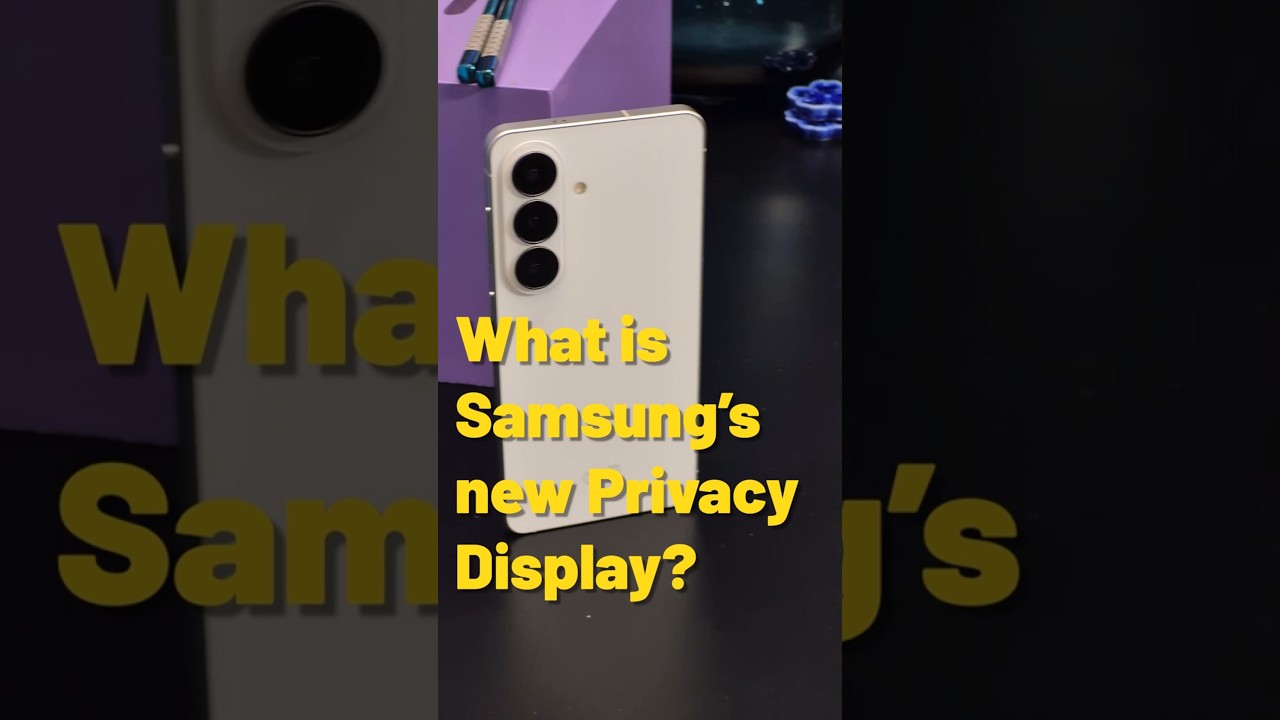
For those who feel the prying eyes of the world peeking over their shoulder, the Samsung Galaxy S26 Ultra has something special for you: a new pixel-level feature that blocks out the display from the side and above. 'Privacy Display', as it is known, is arguably the most important feature on a phone in some time. This is a type of anti-shoulder surfing technology that obscures your screen. It works automatically on notifications, but needs to be activated for individual apps. Once on, sideways viewers will only see a dark display.
The feature works at 'the pixel level', according to Samsung. And it is the result of five years of software engineering and tests. It's an appealing capability for the Samsung S26, but we expect it won't be long before other vendors have alternatives.
It is quite brilliant. No one can see your phone from the side or above, and all passwords have the feature on automatically. I kept it on for about a week, traveling on trains, buses, and in a car, with complete privacy. The only downside is it limits your view when you're shooting video or taking photos.
Samsung Galaxy S26 Ultra: Specs and performance
Samsung has opted for the Snapdragon 8 Elite Gen 5 inside the S26 Ultra, with 12GB or 16GB of RAM and either 256GB, 512GB, or 1TB of storage. And, for Android devices, this combination is the most powerful.
In Geekbench 6, the Ultra hit 3702 for single-core workloads and 11307 for multi-core workloads. The only device that pips that is the iPhone 17 Pro Max, according to the Geekbench website. Not that you would be able to notice the difference in real use, but the score is there for those who use their devices to the absolute limit.
Using the 5,000mAh battery to its absolute maximum is also a rarity, as it lasts and lasts. ITPro's standard battery test is a looped video that lasts 20 hrs, but we are starting to see handsets last much longer – and the S26 Ultra was just five hours short of doing two rounds of our in-house test. It lasted a whopping 35hrs and 43mins, which is simply amazing.
What’s more, the Enterprise Edition comes with a range of specific features for security and maintenance. These include the Knox Suite Enterprise Plan, which protects devices and data from malware and other malicious threats via multi-layered government-grade software. Along with a three-year warranty, business customers will also get up to seven years of security and maintenance releases and an extended product lifecycle.
Samsung Galaxy S26 Ultra: Cameras
The cameras (as always) are where the Ultra really shines. There are four lenses (200MP, 10MP, and two 50MP – one telephoto) with vast improvements to the software that underpins them. Case in point, night shots which use the Snapdragon chip to pull more detail out in low light settings, with a brighter aperture and less noise. I used this feature a lot, capturing stunning images later in the evening and at night. The only issue is that you need steady hands to hold the phone still while it captures enough details to make the shot, though the on-device stabilization does help a lot.

I noticed limits to the stabilization elsewhere, such as the maximum telephoto range, which gives you very melty-looking images. Up to 30 times zoom, and it becomes very shaky, but there are many impressive levels before that. And you also get an AI assist, which is largely how people get such detailed shots of moons and faraway sights.
For video, the Ultra goes even bigger, with an 8K sensor recording at 30fps. It boosts stabilization, allows for auto framing, and automatic corrections for action shots. For professionals and content creators, the Ultra also has Advanced Professional Video (APV) capabilities, which preserve the quality of your shoots from capture through to edits, which is also aided by the improvements to storage.
The auto framing feature is a little jaw-dropping. Essentially, you lock on to a subject, and no matter how much shaking goes on, the footage remains still, stabilized, and aligned with the person or thing you're shooting. You have to believe me, I tried spinning the camera and violently rocking it side to side, and it still came back with perfectly still video. This could well be the death of the gimbal.
Samsung Galaxy S26 Ultra: Is it worth it?
The Samsung Galaxy S26 Ultra costs $1,999.99 (£1,279.99), and for that you get a giant slab of a smartphone with a privacy display, long battery life, a super processor, AI features, and a brilliant camera system. It's a lot, both in price and quality. So it really is worth weighing up your needs.
If you are a business that creates lots of video, or you're part of the team within a business that needs a smartphone that can be used for quick video production, then the S26 Ultra is almost an all-in-one production kit. It shoots crisp footage, gives you unparalleled stabilization, and allows you to transfer those files with little to no loss of quality. It simply is a (mini) filmmaker's dream.
Samsung Galaxy S26 Ultra specifications
CPU Snapgragon 8 Elite Gen 5
Display 6.9in Dynamic LTPO AMOLED 2X, 120Hz, HDR10+
RAM up to 16GB
Storage up to 1TB
Cameras 200MP f/1.4 (wide), 10MP, (telephoto), 50MP f/2.8 (periscope telephoto), 50MP f/2.9 (ultrawide). Front: 12 MP f/2.2, (wide)
Connectivity Wi-Fi 7, Bluetooth 5.4
Dimensions 163.6 x 78.1 x 7.9 mm
Weight 214 g
Operating system Android 16, up to 7 major Android upgrades, One UI 8.5

-
 Overe targets MSP and SMB security gains with former Sophos CSO appointment
News Overe wants to bolster support for MSPs and small businesses after a “massive win” on the recruitment front
-
 UK and Germany target deeper tech collaboration with expanded deal
News New partnerships will drive investment, new jobs, and the adoption of cutting-edge technologies such as quantum
-
 Keeper Security hails rapid growth after hitting customer milestone
News Adoption of the vendor’s identity security platform has helped the company surpass $240 million in annual recurring revenue


