As business leaders look to position their organizations to make the most of enterprise AI deployment, it can be difficult to know where budgets should be allocated to deliver the most return on investment.
New AI models are released all the time, which can lead businesses to hold off buying new hardware or software until things feel more stable. Doing so could be a mistake, however.
In this rapidly changing environment, it pays for businesses to be prepared and clear in what they want from their AI infrastructure. The technology can be mercurial – especially at the software levels – but planning can help organizations set themselves up for success. By understanding what workloads they want to apply AI to and what they want to achieve from it, they can then prepare their data and determine what hardware they need to support their initiative.
This is a ‘measure twice, cut once’ scenario – as a business leader, you want to make sure that when all the other elements of your AI strategy fall into place, you can lean on reliable hardware to deliver the power and efficiency needed to run your AI workloads at scale.
Dell Technologies is a leader in providing modern, optimized server infrastructure to enterprises to ensure the investments they make today will also be fit-for-purpose tomorrow and beyond. The Dell PowerEdge server portfolio is filled with options for businesses looking to make the most of their AI infrastructure budget, with standout specs and unique features ensuring it stays ahead of the competition.
Why PowerEdge is the right choice for now and what’s next
With the intense performance required of AI hardware and demand to scale AI workloads, businesses need to invest in platforms that can easily exceed their current compute needs.
Server racks must be assessed not only for their ability to easily run today's most sophisticated AI models – giving leaders the flexibility to deploy them as needed – but also to scale and continue to meet demand as new, even more intensive models are released.
Across the PowerEdge portfolio, Dell Technologies offers servers designed for demanding workloads. For example, the Dell PowerEdge XE9780, optimized for generative AI and deep learning, supports two 6th Generation Intel Xeon Scalable processors (up to 86 cores per processor) and a choice of eight NVIDIA HGX B300 NVL8 270GB 1100W SXM7 GPUs, or eight NVIDIA HGX B200 180GB 1000W SXM6 GPUs.
The Dell PowerEdge XE9785, similarly optimized, supports two 5th Generation AMD EPYC 9005 Series processors (up to 192 cores per processor) and a choice of eight AMD Instinct MI355X 288GB 1400W OAM GPUs, or eight NVIDIA HGX B300 80GB 1200W SXM6 GPUs.
Supported operating systems include Canonical Ubuntu Server LTS, Red Hat Enterprise Linux, and SUSE Linux Enterprise Server.
The Dell PowerEdge R-Series, the most deployed PowerEdge server, is relied upon for cloud workloads, enterprise IT, or intensive data analytics for a reason.
Dell PowerEdge R7725, featuring AMD EPYC 5th Generation processors, achieved a VMmark1 4.0.2 score of 7.28 @ 8 tiles in a 2-node, 2-socket configuration, setting a world record at the time.
As the need for compute increases, enterprises can easily scale PowerEdge systems to meet their growing needs. For example, the Dell PowerEdge XE9780 is deployable as a validated, single-unit rack to which more racks can simply be added over time.
The McLaren Racing Formula One team is no stranger to achieving great results at record speeds and relies heavily on Dell PowerEdge servers for making crucial decisions about car upgrades and alterations ahead of race deadlines.
In every race, each McLaren Racing car captures around 500GB of data using 300 onboard sensors. That data has to be analyzed at scale and in real time each weekend to inform changes that need to be made.
The team uses Dell PowerEdge servers to create a 3D digital twin of the car and run over 50 million simulations, with complex elements such as computational fluid dynamics (CFD) taken into account in each run.
“We're in a data and speed competition, and it's great partners like Dell Technologies that help us go faster,” said Zak Brown, CEO at McLaren Racing.
TL;DR: Dell PowerEdge more than meets the computational demands of today’s AI workloads and can be easily scaled.
Dell excels at enterprise cooling
Cooling is a major concern when it comes to running enterprise AI. The immense amount of electricity drawn in by the specialized hardware needed to run computationally-intensive AI workloads means the technology runs hot – really hot.
This is why cooling technology is one of the most important aspects to consider when looking to scale servers at the enterprise level.
As data center buildout explodes to meet AI demand – with McKinsey finding a projected 70% of new data center demand is for AI-enabled sites – enterprises will need to know they’re using hardware that’s cooled effectively, too.
Dell PowerEdge R-Series servers, when paired with iDRAC Enterprise/Datacenter and the OpenManage Enterprise Power Manager plugin, provide dynamic power capping and real time power monitoring. This means that IT operators can track and control energy usage across individual servers, groups, and racks through policies and telemetry.
Software tweaks don’t mean hardware improvements can be overlooked, and here Dell Technologies also delivers.
As previously mentioned, cooling is a big factor in ensuring optimal performance and efficiency, and Dell’s PowerEdge series offers many air-cooling elements that all work together to deliver the right results:
- High performance, hot swappable fan modules with N+1 redundancy and variable speed control to match airflow to thermal demand. This minimizes fan power while maintaining component reliability. This means they can be replaced without needing to shut down a rack – a must for enterprises for whom downtime is unacceptable.
- Purpose built heat sinks (standard and high-performance variants) sized to CPU/GPU TDP and airflow, with many 17th generation platforms supporting air cooled configurations – even those with high wattage CPUs in select models (for example, R7725 supports air cooled CPUs up to 500 W).
- Air shrouds/baffles and front to rear airflow paths that work to channel intake air across the hottest components (CPUs, memory, VRMs, PCIe cards) before exhaust. This maintains a clear, low impedance air corridor through the chassis.
- PowerCool CFD (Computational Flow Dynamics) driven chassis design plus control algorithms (such as adaptive closed loop power capping, baseline fan speed, custom deltaT/outlet temperature, PCIe card airflow targets) to ensure support for high performance at the lowest practical fan speed.
- Thermal and power telemetry via iDRAC (and OME Power Manager), including real-time power metering, graphing, and historical counters. These can be used to automate policies that prevent hot spots and handle thermal events without adverse impact on service.
- PowerCool chassis options that increase intake area and streamline obstructions to support higher core count CPUs and faster DDR5 in air cooled environments.
- Air-optimized system board layouts (for example, T-shaped boards and component placement strategies) that reduce airflow shadowing and ensure critical devices receive direct, laminar cooling air.
- ASHRAE aligned thermal envelopes with many air-cooled platforms designed for up to 35°C inlet temperatures, maintaining performance in standard data center conditions and cold/hot aisle designs.
- Cold-aisle service options on select systems (front I/O power access), enabling maintenance without standing in exhaust heat in hot aisles.
Air-cooled units also make use of Dell PowerCool Enclosed Rear Door Heat Exchangers (eRDHx), which are rack level, self-contained cooling systems that capture 100% of IT heat and recirculate cooled air to the front of the rack. They operate with warm facility water between 32–36°C (90–97°F), which significantly reduces reliance on energy intensive chillers compared to standard RDHx that typically require ~20°C water.
In Dell analyses, eRDHx delivers up to a 60% reduction in cooling energy use versus. standard RDHx as well as enabling up to 16% more racks of dense compute without increasing power consumption (actual results vary by site conditions).
This approach supports hybrid-cooled deployments by removing rack heat to water and keeping the room close to neutral conditions, rather than dumping exhaust heat into the data center environment. Prior to deployment, it’s a case of confirming the server inlet air temperature requirements for the intended configurations.
For organizations looking for liquid rather than air cooling, Dell PowerEdge is also available with liquid cooling specifications, making it suitable for either use case.
Dell Technologies brings the same innovative mindset to all of its PowerEdge servers: no compromises in efficiency, power, or scalability.
If you think PowerEdge servers are the right call for your business, find out more about pricing options by clicking here.
1VMmark is a free benchmarking tool developed by VMware to evaluate virtualization platform performance and scalability

 Hai ambizioni di espansione nell'AI? Inizia dalle basi: cloud e sicurezza
 7 capabilities every modern enterprise storage platform should deliver in 2026
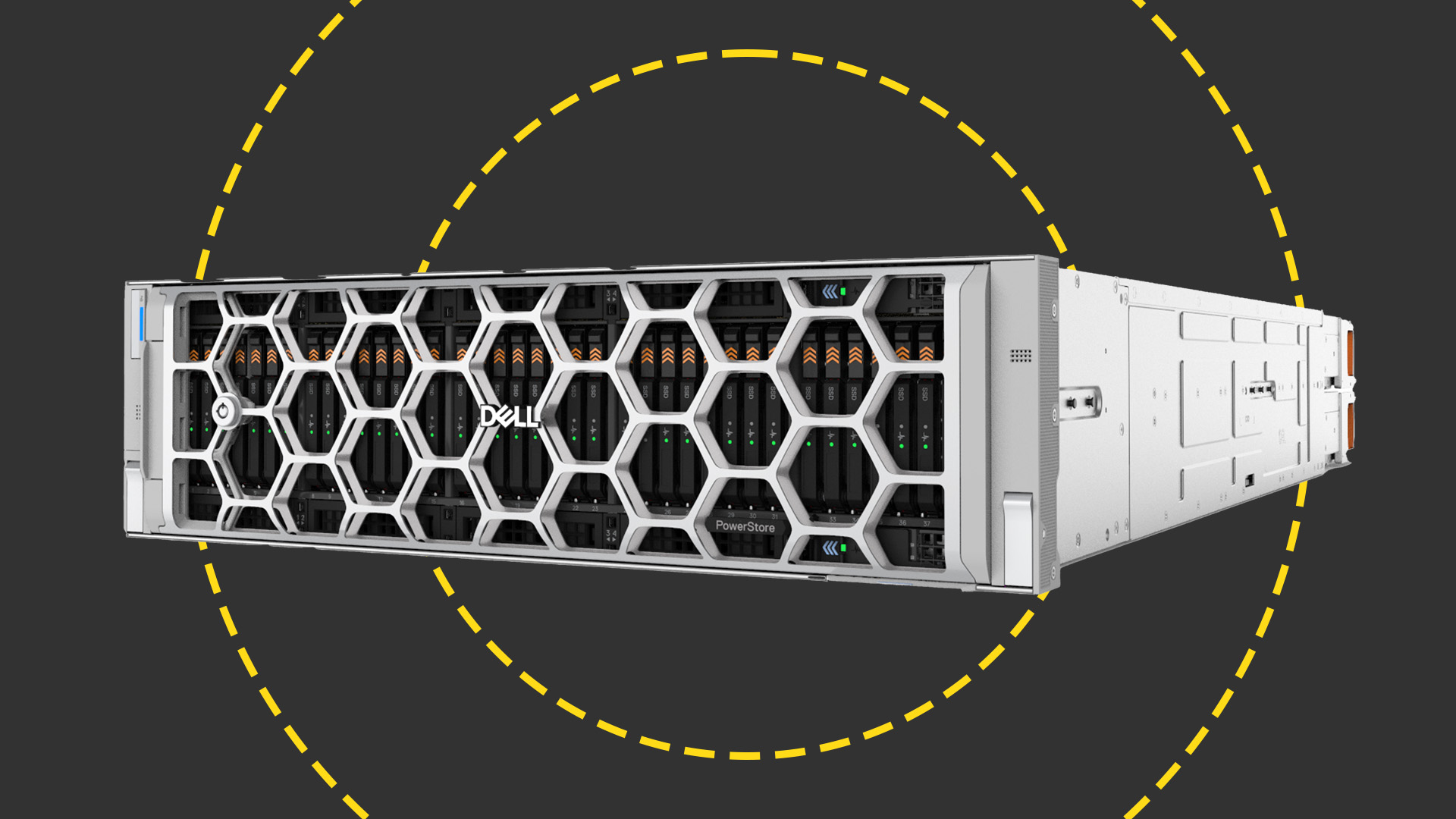 Dell PowerStore Elite unveiled at Dell Technologies World 2026
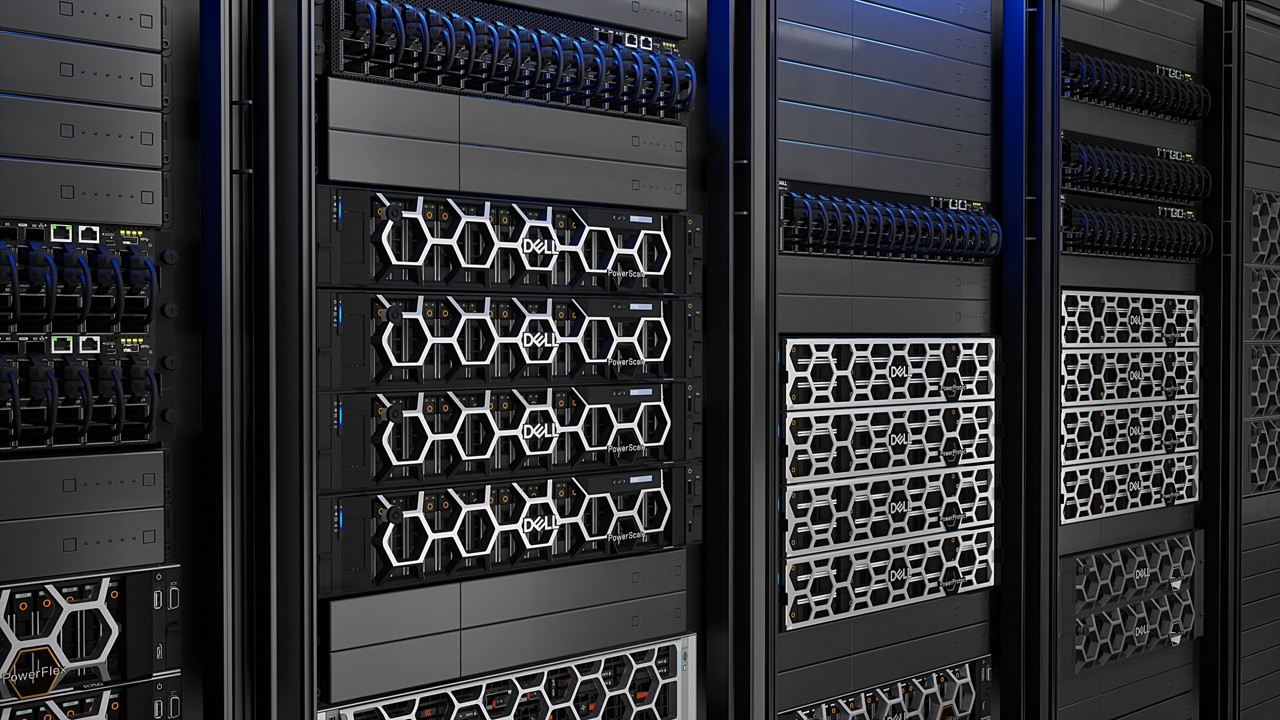 Why Dell PowerScale’s intelligent data placement is critical for AI-era performance and efficiency
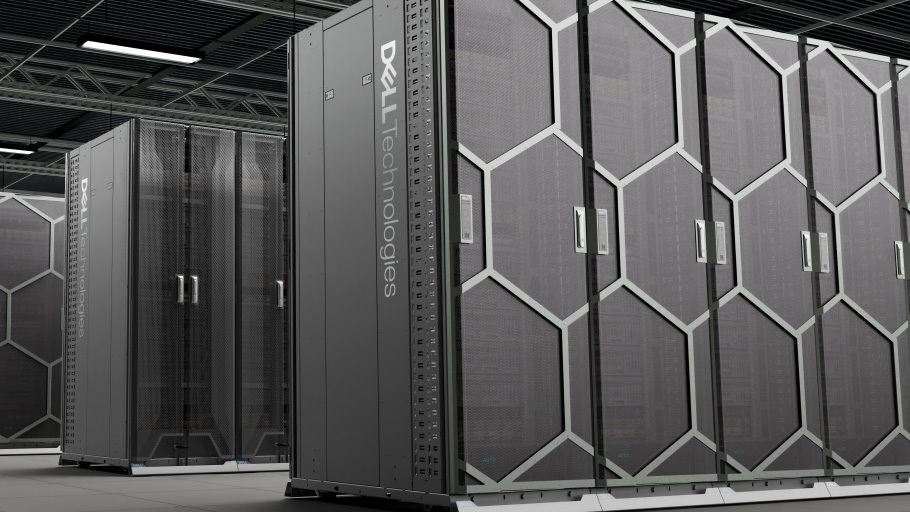 Dell PowerRack launches at Dell Technologies World 2026 as a ‘turnkey’ networking, storage, and compute system for AI
 Why speed and performance are vital for extracting value from data
 Why storage really matters in an AI-centric world
 Is it worth moving from an air-cooled data center to a water-cooled one?
 Dell Technologies unveils massive expansion to Dell AI Factory with Nvidia at GTC 2026


