Sponsor Content Created With Dell Technologies
How to achieve cyber resilience today, tomorrow, and beyond
Resilience in the event of an attack is a business need, not a nice-to-have

Over the past decade, digital transformation strategies have been optimized for speed and efficiency, as the likes of cloud-first mandates, SaaS adoption, DevOps acceleration, and cost optimization have reshaped enterprise IT.
As ransomware, supply chain attacks, insider threats, and AI-powered exploits continue to evolve and become more sophisticated, however, the conversation has shifted. Indeed, the question is no longer just how to be fast and efficient – it’s how to be fast, efficient, and resilient enough to withstand and recover from inevitable cyber disruption
For many organizations, when it comes to cybersecurity, resilience has historically been framed as a trade-off: greater protection meant bigger overheads, more cost, and less agility. That mindset is outdated, as efficiency and resilience are not opposing forces. In fact, when constructed correctly, they can reinforce one another; the organizations that best understand this will outperform peers not only in security outcomes, but in operational continuity, regulatory compliance, and long-term competitiveness – all core drivers of business value and shareholder confidence
Resilience as a business imperative, not an IT afterthought
In the modern business landscape, cyber resilience goes beyond cybersecurity, encompassing an organization’s ability to anticipate, withstand, recover from, and adapt to adverse conditions, stresses, or attacks without compromising critical services.
For many boards, resilience is now viewed as a measure of operational maturity and fiduciary responsibility. Regulatory scrutiny has increased across industries, with customers expecting uninterrupted services, and investors penalizing any prolonged downtime or data breaches.
Cyberattacks are no longer rare events – they are statistically inevitable for many businesses, so the implication is clear: prevention alone is insufficient. Organizations must assume a breach will occur and design systems that continue operating and can recover rapidly when (not if) it happens.
This is where efficiency and resilience converge, as highly effective IT environments are by nature well-architected, automated, observable, and standardized. These same characteristics – automation, visibility, consistency – are foundational to cyber resilience, and the drive required to eliminate operational waste is the same discipline required to reduce attack surfaces and recovery times.
Strong security posture: the foundation of modern resilience
A resilient enterprise starts with a strong security posture, which will often include zero-trust architectures that limit lateral movement, identity-first controls, and least-privilege access. In addition, continuous monitoring and threat detection, immutable infrastructure practices, and comprehensive incident response planning remain key.
There is one component that often remains chronically underestimated until it fails, though: backup.
Backup is no longer a compliance checkbox or an insurance policy gathering dust in a data center, but the last line of defense against threats such as ransomware, destructive malware, and insider threats. If primary systems are compromised, corrupted, or encrypted, all hopes of recovery often hinge on the integrity, availability, and speed of backup data.
The recent shifts in attacker behavior have made this particularly urgent. There is growing evidence of modern ransomware campaigns targeting backup repositories explicitly, looking to encrypt, delete, or corrupt recovery points before detonating the primary attack. In this environment, traditional backup approaches – flat storage, weak segmentation, insufficient immutability – are inadequate.
In order to remain effective, this new age of resilience requires backups that are immutable and tamper-proof, but also logically and physically isolated. They should also be integrated into broader incident response workflows, continuously tested for recoverability, and be capable of rapid, granular restoration.
Organizations that prioritize and invest in these capabilities are not merely protecting their precious data; they are also ensuring business continuity, reputation, and customer trust.
Storage: the strategic enabler of resilience
Storage is often treated much like plumbing in a house – essential but invisible. In reality, it’s a strategic enabler of both efficiency and resilience.
Modern storage architectures must support three simultaneous objectives:
- Power analytics, AI workloads, and transactional systems with high performance and efficiency
- Scale and flex to adapt to hybrid and multi-cloud environments
- Have built-in resilience to ensure data durability, immutability, and rapid recovery
The evolution of storage technologies – including object storage with immutability, software-defined storage, and intelligent tiering – allows organizations to consolidate workloads while strengthening protection. Deduplication, compression, and automated lifecycle management reduce costs without compromising security and, in fact, often enhance it by standardizing data governance and visibility.
Critically, storage platforms are increasingly embedding security capabilities directly into the stack: anomaly detection, ransomware behavior analytics, immutable snapshots, and air-gapped vaulting. When resilience is engineered into storage itself, it reduces complexity elsewhere in the environment.
This is where the myth of the efficiency/resilience trade-off collapses. Simplified, consolidated storage environments reduce operational overhead and shrink the attack surface simultaneously, as fewer silos mean fewer misconfigurations, automated policies mean fewer human errors, and unified management means faster recovery. In this context, efficiency becomes a resilience multiplier – not a competing priority
Today: close the gaps
So what steps can be taken to progress in terms of resilience? In the near term, organizations should focus on closing obvious resilience gaps, whether that is by conducting ransomware-focused risk assessments, implementing immutable storage and retention locks, or by measuring and improving recovery time objectives (RTOs) and recovery point objectives (RPOs).
They can also harden and segment backup environments, as well as test full restoration processes, not just file-level recovery, making sure that if the worst does happen, the systems are in full working condition.
Resilience is not theoretical; it must be proven operationally, so tabletop exercises and live recovery simulations often reveal architectural weaknesses that routine monitoring misses, and may be worth investigating.
Tomorrow: architect for adaptability
The sad truth is that the threat landscape will continue to evolve, especially as AI accelerates attack automation and personalization.
Tomorrow’s resilience strategies must emphasize adaptability, which means not only designing hybrid architectures that avoid single points of failure, but also leveraging automation and orchestration to reduce human response delays.
Businesses should also consider integrating security telemetry across all infrastructure layers, including storage, and embedding resilience metrics into executive dashboards.
Resilience should be observable, measurable, and treated as a key performance indicator, not an abstract aspiration.
Beyond: resilience as competitive advantage
Looking further ahead, awareness and preparation of cyber resilience will separate market leaders from the competition, as those organizations able to guarantee service continuity will win out in regulated sectors, critical infrastructure, and digital-first markets.
Moreover, resilience supports innovation, as when leadership trusts systems are able to withstand disruption, they are more willing to pursue transformation initiatives, adopt emerging technologies, and experiment with new business models.
In that sense, resilience is not defensive - it’s enabling, and the future belongs to enterprises that reject false trade-offs. Efficiency and resilience are not mutually exclusive, but are two sides of operational excellence. By strengthening security posture, modernizing backup strategies, and elevating storage to a strategic pillar, organizations can achieve the best of both worlds today, tomorrow, and beyond.
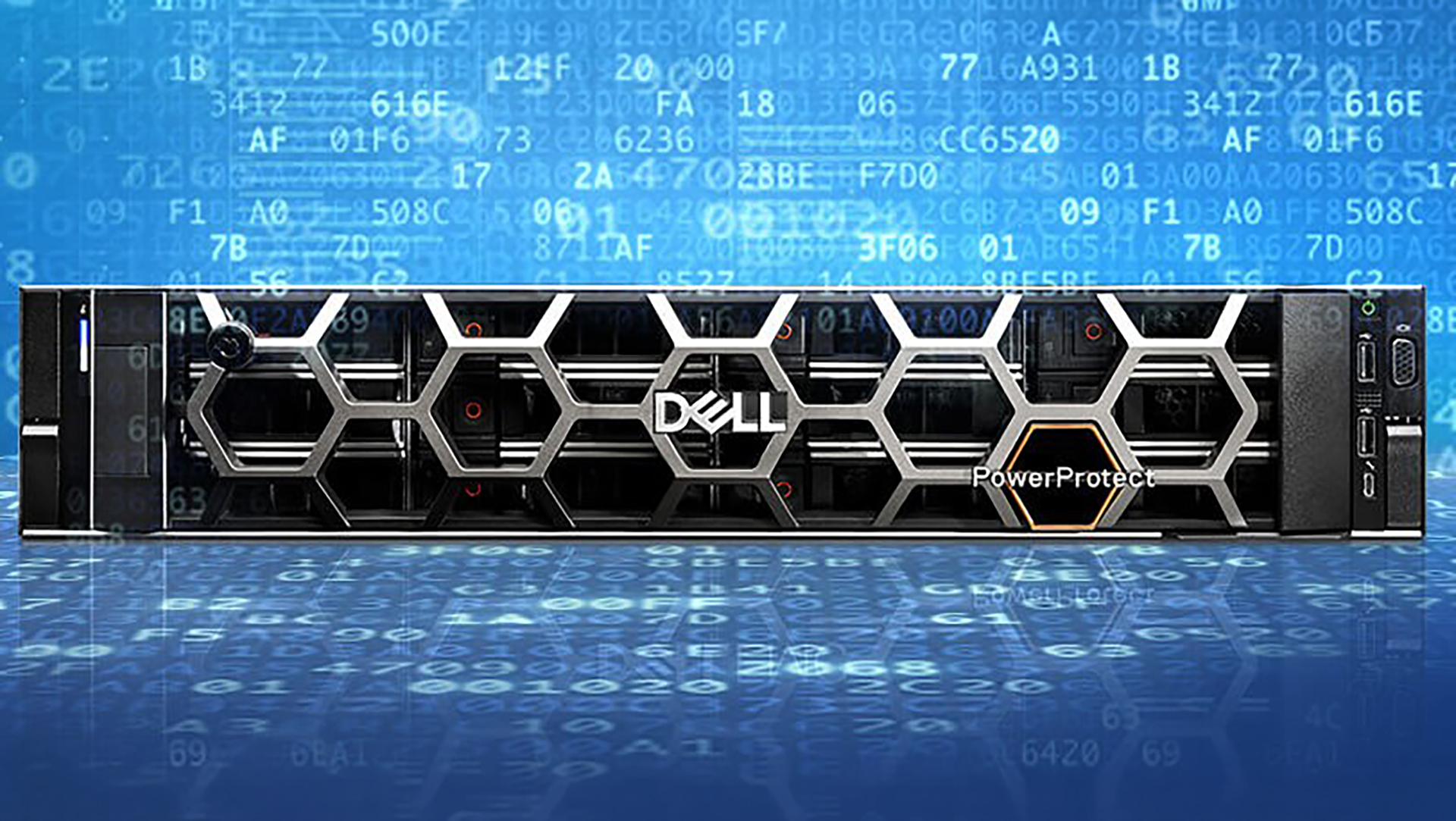
Dell Technologies PowerProtect
For organizations seeking proven cyber resilience, Dell Technologies PowerProtect delivers a trusted, end-to-end data protection portfolio designed to help you prepare for, withstand, and rapidly recover from cyberattacks.
The PowerProtect portfolio brings together Dell's security and data protection innovations to help you detect, secure, and recover critical data across your environment.
One organization strengthening its cyber resilience posture with Dell Technologies is Drogaria Araujo, a leading Brazilian retail pharmacy group, which relies on Dell PowerProtect to defend against relentless cyber threats.
“With a robust cyber resilience strategy and Dell’s scalable, secure solutions, we can confidently adapt to change while protecting our most valuable asset – our data," says Rodrigo Suarez, technology manager at Drogaria Araujo.
Learn how your organization can advance its cyber resilience strategy.
Sign up today and you will receive a free copy of our Future Focus 2026 report - the leading resource for IT decision-maker insight on priorities and investment areas in AI, security and more.
-
 Orca Security launches new global partner program
News The Partner POD Program and Partner Success Platform aim to help partners improve efficiency, build expertise, and grow their cloud security businesses
-
 Cohere CEO Aidan Gomez shares new details on Aleph Alpha merger
News The companies say the deal, expected to complete this year, will create the first transatlantic sovereign AI firm


-
 Dell PowerProtect Cyber Recovery C
whitepaper
-
Dell PowerProtect Cyber Recovery B
whitepaper
-
 Why Microsoft paused Patch Tuesday updates for some Dell devices
News Select devices running Intel Innovation Platform Framework drivers encountered “poor performance”
-
 5 top features of Dell PowerProtect One: The world’s most comprehensive cyber resilience platform
With PowerProtect One, organizations can capitalize on a unified, centralized cyber resilience platform
-
 Why cyber resilience isn’t just a defence mechanism: How to create a secure foundation for innovation, too
Sponsored Investing in a solid enterprise system that incorporates security by design lets you ensure business continuity while encouraging innovation at pace
-
 US cyber resilience insights
 -
 Resilient pharmacy care, safeguarding vital health services
 -
 Dell PowerProtect Data Manager


