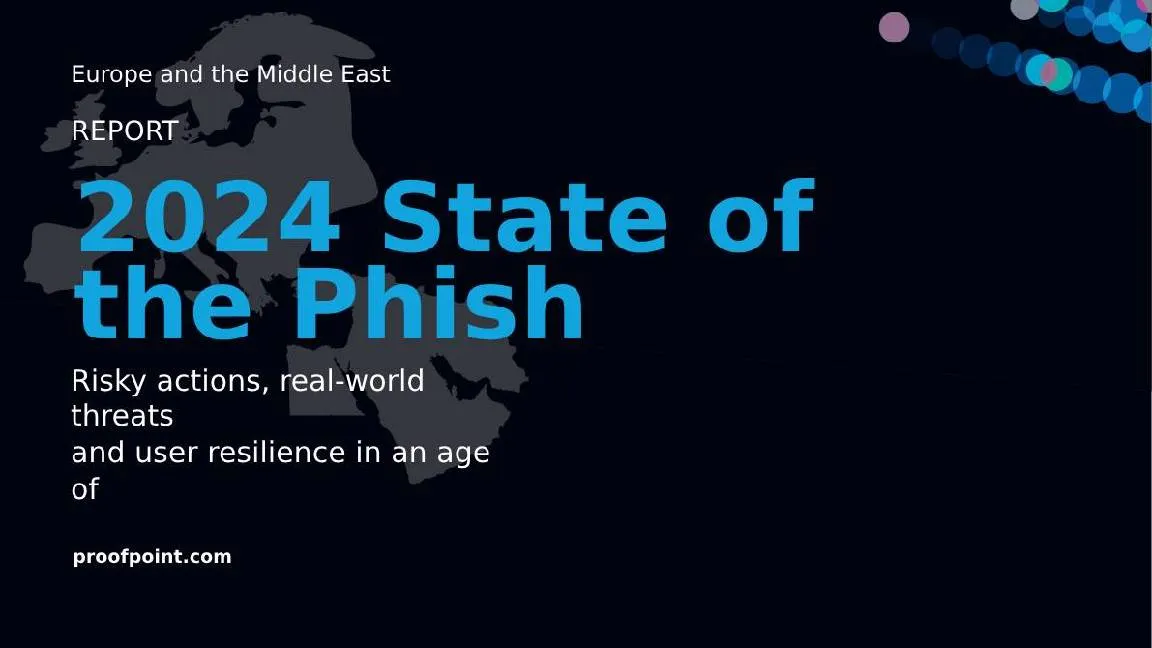
2024 State of the phish report
Risky actions, real-world threats and user resilience in an age of human-centric cybersecurity

(Image credit: Proofpoint)

-
 A spate of cyber attacks has rocked Japan
News With over 100 cyber attacks impacting major sectors this year, Japan’s ruling party is calling for an emergency taskforce to strengthen AI defenses
-
 Top takeaways: The AI tokenomics challenge
Feature Why invisible metering, compounding agentic workflows, and production scale turn enterprise AI into an open tab – and how leaders can govern for measurable value


-
 Microsoft takes down ‘EvilTokens’ hacker service that used AI to ‘decide who to target, who to impersonate, and how to most effectively exploit’ victims
News In just six months, the EvilTokens phishing as a service platform hit thousands of organizations worldwide
-
 ‘Cyber criminal groups suffer from the same security weaknesses they routinely exploit’: ShinyHunters claims it hacked Clop ransomware rival
News An attack on the cyber crime gang could prove dangerous for previous victims of data leaks, experts have warned
-
 Cost of a Data Breach Report 2026
whitepaper
-
 Cyber Resilience Insights N
whitepaper
-
 Dell Automation Platform: Intelligent Automation that moves you forward N
whitepaper
-
Dell Automation Platform: Intelligent Automation that moves you forward E
whitepaper
-
Establishing a Solid Foundation for Cyber Resilience N
whitepaper
-
Establishing a Solid Foundation for Cyber Resilience E
whitepaper


