Sign up today and you will receive a free copy of our Future Focus 2026 report - the leading resource for IT decision-maker insight on priorities and investment areas in AI, security and more.
You are now subscribed
Your newsletter sign-up was successful
An account already exists for this email address, please log in.
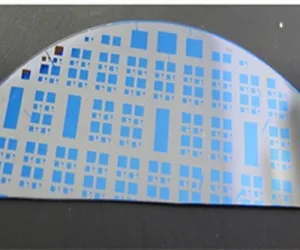
University College London researchers have detailed what it claims to be the world's first silicon oxide-based resistive RAM (ReRAM) that can run at room temperature.
ReRAM is one of the technologies researchers are developing that could replace traditional NAND flash for non-volatile storage systems, offering speeds far closer to that of volatile dynamic RAM (DRAM) modules.
Previous ReRAM prototypes, including a headline-grabbing example from 2008 which was based on titanium dioxide and Eplida's recently-announced module which is due for mass production in 2013, have required esoteric operating environments - including vacuums and extreme temperatures - and complex production processes which have precluded them from commercialisation.
According to the team's work, published in the Journal of Applied Physics, the solution may have been found with the first ReRAM module to be produced from common silicon oxide and to operate at ambient temperatures - heralding a potential revolution in high-speed storage systems.
"Our ReRAM memory chips need just a thousandth of the energy and are around a hundred times faster than standard flash memory chips," boasted Tony Kenyon of his team's findings. "The fact that the device can operate in ambient conditions and has a continuously variable resistance opens up a huge range of potential applications."
The prototype system is capable of switching resistance significantly more efficiently than any other ReRAM prototype around, thanks to a novel silicon oxide structure whereby the arrangement of silicon atoms changes to form filaments of silicon within the solid silicon oxide. These filaments are significantly less resistive than the filament-free silicon oxide, providing the one to their absence's zero required for digital storage.
The ReRAM prototype could also be used to produce memristor hardware which mimics the neurons in the brain, thanks to its ability to record a continuously variable resistance based on the last voltage that was applied.
Get the ITPro daily newsletter
Sign up today and you will receive a free copy of our Future Focus 2026 report - the leading resource for IT decision-maker insight on priorities and investment areas in AI, security and more.
Amusingly, the material was discovered by accident. During work on producing silicon-based light-emitting diodes (LEDs), researchers noted that the prototype devices appeared unstable. Adnan Mehonic, a PhD student, was asked to investigate - and found that, far from being unstable, the material the team had created flipped between conductive and non-conductive states extremely predictably.
"My work revealed that a material we had been looking at for some time could in fact be made into a memristor," Mehonic explained at the material's unveiling. "The potential for this material is huge. During proof of concept development we have shown we can program the chips using the cycle between two or more states of conductivity. We're very excited that our devices may be an important step towards new silicon memory chips."
The team is keen to point out the material's potential for high-speed non-volatile memory systems, memristor applications and even for use as a central processor - but, as is often the case with academia, is somewhat silent on a potential release date for a commercialised version of the technology.
Gareth Halfacree is an experienced tech journalist and IT professional, and has been writing since 2006. In addition to contributing article for ITPro, Gareth has been featured in publications such as PC Pro, Techmeme, The Register, The MagPi, and Tom’s Hardware.
In addition to his digital articles, Gareth is the author of several best-selling books. These include the Raspberry Pi User Guide, an essential text for those looking to get started with their Raspberry Pi, as well as The Official Raspberry Pi Beginner’s Guide. Gareth also wrote the Official BBC micro:bit User Guide, a comprehensive guide to setting up the pocket-sized computer, learning to code on it, and even creating your own hardware addons.



 ‘We want to be able to share the pain with you’: Everpure CEO Charlie Giancarlo says firm will share the burden with customers amid rising hardware costs
 Analyzing the economic value of IBM storage FlashSystem built-in resilience
 Sustainability is more than a flash-in-the-pan topic for the data storage industry
 The Total Economic Impact™ Of IBM FlashSystem
 The pros and cons of flash storage
 IBM FlashSystem 5000 and 5200 for mid-market enterprises
 Qnap TS-h2490FU QuTS hero edition review: Smash hit flash
 The smart buyer’s guide to flash