
FBI warns driverless cars could be used as "lethal weapons"
US crime-fighting agency flags driverless car safety concerns
The US Federal Bureau of Investigation (FBI) has aired concerns about how driverless cars, which are being pioneered by the likes of Google and Tesla, could be used as "lethal weapons."
The FBI made the admission in an unclassified, yet restricted report obtained by The Guardian newspaper, which featured insights into how the widespread use of driverless cars in the future would potentially affect the way criminals operate.
The report states, for example, that driverless cars will "have a high impact on transforming what both law enforcement and its adversaries can operationally do with a car."
This would make it easier for criminals to carry out tasks, such as shoot guns, that could potentially put FBI agents in additional danger during car chases, as they won't need to keep their hands on the wheel or their eyes on the road.
The report, which was put together by the FBI's Strategic Issues Group within its Directorate of Intelligence, states: "Autonomy... will make mobility more efficient, but will also open up greater possibilities for dual-use applications and ways for a car to be more of a potential lethal weapon tha[n] it is today."
However, it isn't all doom and gloom, as the FBI also admits that driverless cars could reduce the number of road traffic accidents that happen each year because of careless driving.
"The risk that distraction or poor judgement leading to collision that stems from manual operation would be substantially reduced," the report adds.
Sign up today and you will receive a free copy of our Future Focus 2026 report - the leading resource for IT decision-maker insight on priorities and investment areas in AI, security and more.
The Bureau's surveillance work could also become "more effective and easier", the report reasons, because the chances of an FBI agent losing sight of the targeted vehicle will are likely to be lower.
"In addition, algorithms can control the distance that the patrol car is behind the target to avoid detection or intentionally have a patrol car make opposite turns at intersections, yet successfully meet up at later points with the target."
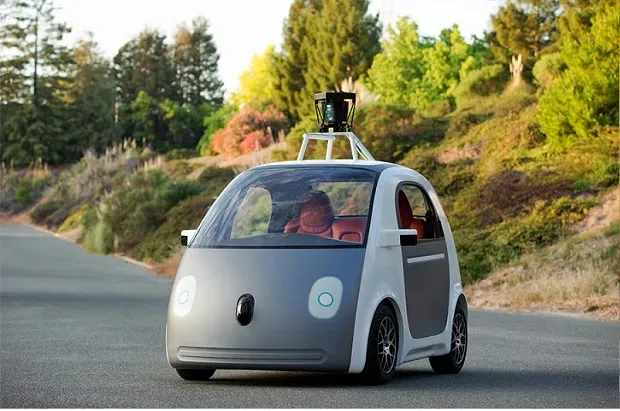
Search giant Google recently showcased its first self-driving car prototypes (pictured), which are designed to work autonomously and without the use of pedals and steering wheels.
Its vehicles have a maximum speed of 25mph, and the firm said it hopes to run a small pilot programme with them "within the next couple of years."
Caroline Donnelly was the news and analysis editor of IT Pro. Previously, she worked as a reporter at several B2B publications, including UK channel magazine CRN, and as features writer for local weekly newspaper, The Slough and Windsor Observer. She studied Medical Biochemistry at the University of Leicester and completed a Postgraduate Diploma in Magazine Journalism at PMA Training in 2006.
-
UK tech leaders are implementing AI faster than related governanceNews IBM research shows that chief AI officers are being given strategy roles, but not full control
-

11:11 Systems appoints new EVP in EMEA growth driveNews The experienced executive will oversee the provider’s operations and strategic execution across the region as it targets further growth
-
UC Irvine selects Velodyne Lidar’s traffic-monitoring solutionNews HIMaC² will leverage Velodyne’s Intelligent Infrastructure Solution to improve road traffic safety and efficiency
-
Aurora announces Safety Case Framework for autonomous vehiclesNews New framework assesses self-driving vehicles’ safety on public roads
-

Have driverless cars stalled?In-depth Self-driving vehicles are taking a circuitous route to becoming reality. What’s holding up automotive automation?
-
Innoviz and Whale Dynamic partner on LiDar-enabled autonomous driving platformNews Whale Dynamic’s L4 autonomous driving platform will feature InnovizOne LiDAR sensors
-
Smart ships are comingIn-depth Autonomous vehicles don't start and end with cars. Our seas and waterways are set to be revolutionised, too
-
Oculii raises $55 million for its AI-powered radar softwareNews The VAI platform by Oculii improves the angular resolution of any radar by up to 100 times
-

UK gov to allow self-driving cars on motorways this yearNews Automated Lane Keeping Systems to be legally defined as 'self-driving' as a cautious first step to allowing fully autonomous cars on UK roads
-
ZF augments vehicle intelligence with next-gen AI supercomputerNews New ZF ProAI packs a punch with up to 66% more computing power than its predecessor