A feature unique to the ShareSpace is the bundled MioNet remote access software, due to Western Digital's recent purchase of the program's developers. MioNet allows files stored on the SharedSpace to be accessed remotely from over the internet using a web browser. Any PC on your network with the MioNet software installed on it can also be accessed and controlled remotely through a web browser, similar to VNC and other remote desktop software.
Remotely accessing your files using MioNet can be a chore though. The MioNet Java applet used by the remote computer can be sluggish to load, especially over a slow connection. You may also have to adjust your network's firewall before leaving the office to enable MioNet to work. This is easy enough if you use a socket filter firewall, but trickier if you use a packet filtering firewall since Western Digital's documentation doesn't specify which port numbers MioNet uses.
The ShareSpace comes configured as a RAID 5 array out of the box. To test its file transfer performance, we copied batches of large, medium and small files to the ShareSpace each batch measuring 10GB in size. The large files test consisted of 100MB WAV files, while the medium files test consisted of 4MB JPEG photos. The small files test consisted of Word documents, fonts and Windows system files none of which exceeded 50KB in size. All three tests were repeated with the ShareSpace configured as RAID 0 and 1.
No matter the RAID level, a discernible pattern emerged in the ShareSpace's performance. It copied large and medium files reasonably quickly, but struggled when transferring small files. When configured as RAID 5 it wrote large files at 9.69MB/sec and read them at 22.3MB/sec. It wrote medium files at 9.56MB/sec and read them at 20.64MB/sec. Small files were written at 1.04MB/sec and read at 3.06MB/sec.
When configured as RAID 0, it wrote large files at 15.26MB/sec and read them at 22.77MB/sec. It wrote medium files at 14.51MB/sec and read them at 21.5MB/sec. Small files were written at 1.07MB/sec and were read at 3.42MB/sec. When configured as RAID 1, large files were written at 13.68MB/sec and read at 20.78MB/sec. Medium files were written at 13.02MB/sec and read at 19.91MB/sec, while small files crawled along at 1.05MB/sec and 3.01MB/sec respectively.
The ShareSpace is fast enough for light to moderate use, but it could prove frustrating to use if you need to transfer huge quantities of data regularly, especially large archives of office documents.
Verdict
The pricing is great for a 4TB RAID-capable, drive bay-equipped NAS. However, while the ShareSpace is easy enough to set up, its file copying performance isn’t particularly quick. The MioNet software offers few advantages over using the ShareSpace’s built-in FTP server and other remote access software, such as VNC, instead. We look forward to future versions of the ShareSpace, but unless you are on a tight budget, there are faster NAS appliances available.
Storage: 4 x 1TB Western Digital Caviar Green WD10EADS hard disks
4 x hot-swap SATA drive bays
Ports: 3x USB 2.0
RAID: JBOD, RAID 0, RAID 1, RAID 5
Network: 1 x Gigabit Ethernet
Management: Web browser
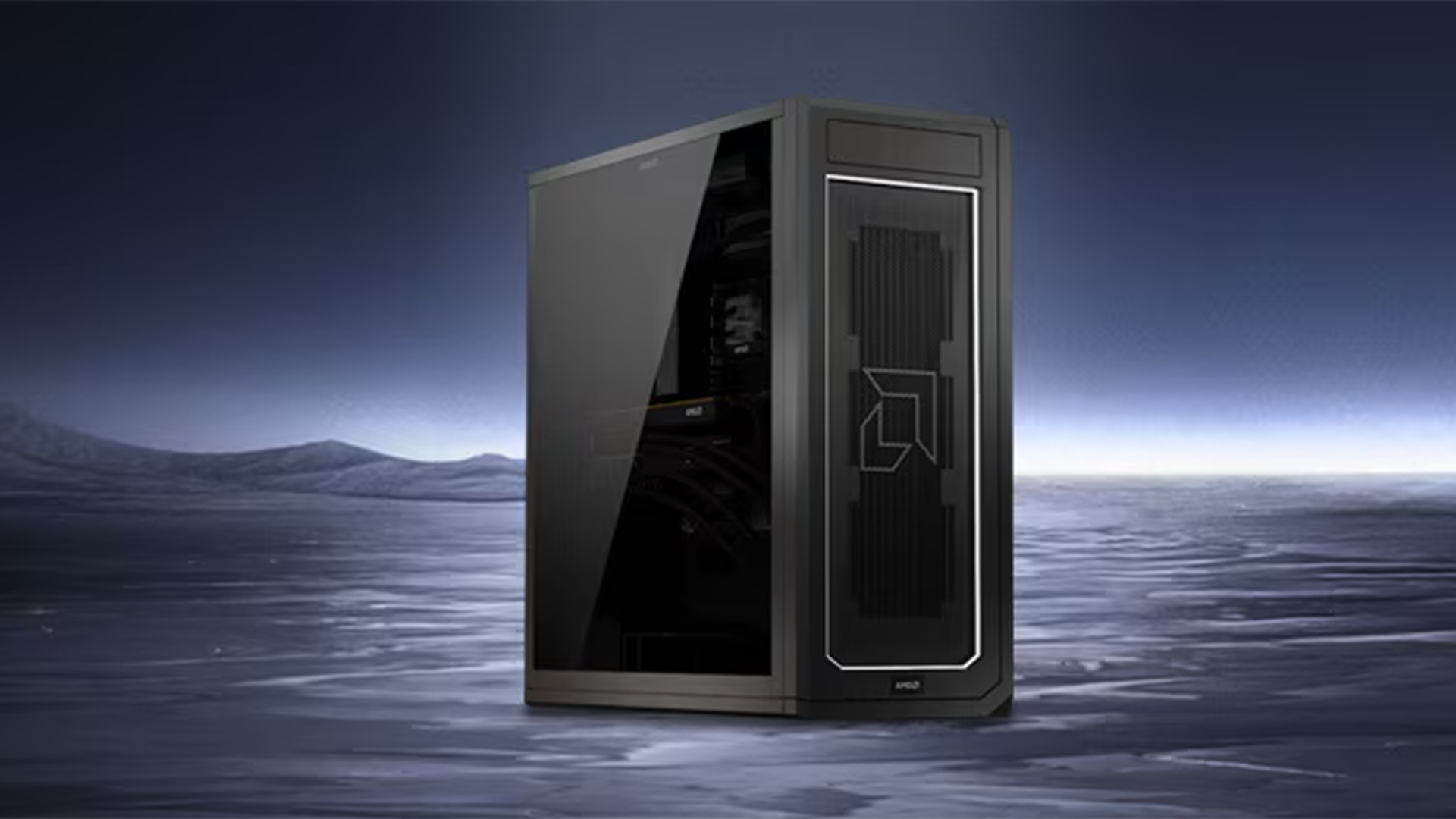 ‘This is about as close as you can get to a personal supercomputer’: AMD has Nvidia in its crosshairs with the Threadripper Halo AI workstation
 Cyber criminals are adapting ASCII smuggling for mass phishing campaigns
 O2 launches direct-to-device satellite connectivity for UK businesses

