Cloud computing's quick growth, and the fact that the cloud has emerged organically from a range of services provided by different vendors, rather than according to an industry standard, poses some practical considerations for IT professionals.
In some cases businesses will already be using cloud computing services, without defining them in that way; in others, vendors that have provided remotely accessed IT itself a service that dates back to the 1960s have added a cloud computing label to refresh an existing product. Elsewhere, though, businesses are using services such as Amazon's EC2 or Microsoft's Azure platform, which most industries observe represent "pure" cloud computing.
The most widely accepted definition of cloud computing comes from the US National Institution of Standards in Technology (NIST). NIST defines cloud computing as a "model for enabling convenient, on-demand network access to a shared pool of configurable computing resources".
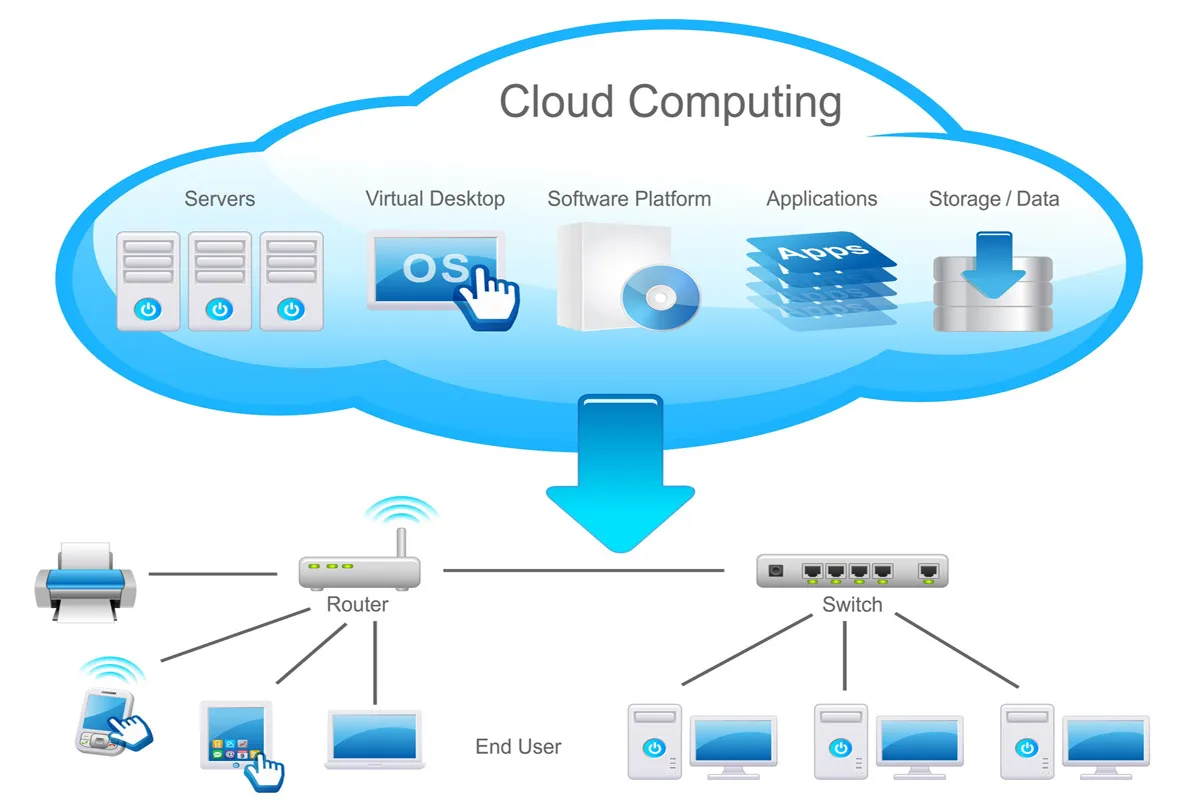
As NIST sees it, cloud computing can be divided into three main categories: software as a service, platform as a service and infrastructure as a service.
Software as a service
"The capability provided to the consumer is to use the provider's applications running on a cloud infrastructure", as NIST puts it. This includes applications such as hosted email or CRM.
Platform as a service
"The capability provided to the consumer is to deploy onto the cloud infrastructure consumer-created or acquired applications, created using programming languages and tools supported by the provider," according to NIST. This includes environments such as Microsoft's Azure, or Salesforce's Force.com.
 High performance, low latency, greater efficiency: how the Dell PowerStore 9500 array enhances any modern data center
 16-year-old boy arrested for masterminding KillSec ransomware group
