The Government Commercial Agency (GCA) has unveiled G-Cloud 15, placing a specific focus on driving opportunities for small to medium-sized businesses (SMBs).
As part of the revamp, three separate frameworks will be consolidated into a “single, streamlined agreement”. This consolidation applies to the Cloud Compute 2 framework, along with Lots 1-3 and 4 of G-Cloud 14.
The setup will make it easier for public sector customers, including NHS trusts and local authorities, to purchase cloud services through a single easy-to-use agreement, according to the GCA, t
In a statement, the GCA described the move as the “most significant upgrade to the UK’s public sector cloud procurement framework since its inception in 2012”.
All told, the framework is valued at roughly £14 billion over its four-year term. The GCA estimates around £3 billion in public sector cloud spend will flow through it annually.
SMBs in the spotlight with G-Cloud 15
A range of new measures have been introduced to lower barriers to entry and improve opportunities for smaller suppliers.
This includes an 18-month “re-opening window” which allows new businesses to join the framework. They can also join at intermittent periods throughout the four-year term of the agreement.
Philip Orumwense, commercial director and chief procurement officer for technology at the GCA, said G-Cloud 15 represents a “genuine step forward” for SMBs.
“For too long, [SMBs] have faced barriers that hold them back from winning business - complex application processes, short framework windows, and procurement routes that favor incumbents,” he said.
“This framework addresses those concerns directly whilst enabling further access for British Businesses to Government and Wider Public Sector Bodies,” Orumwense added.
Simplified procurement
Procurement simplicity is another key focus area for the framework. G-Cloud 15 will feature a “modernized, industry-aligned classification system” designed to make it easier for public sector organizations to engage with suppliers.
“It also makes it easier for suppliers - particularly smaller ones without dedicated bid teams - to position their services accurately and be discovered,” the GCA said.
Sachin Agrawal, managing director of business software supplier Zoho UK, said the new measures represent a significant improvement and will streamline procurement.
“They remove the most resource-intensive part of procurement by having the supplier selection and evaluation process sat at framework level, with pre-negotiated and pre-vetted suppliers,” he explained.
Agrawal added that the relaunch coincides with the Local Government Reorganization (LGR) program, which is the “biggest shake-up of local authorities in decades”.
This will end the long-running two-tier system of local government across 21 areas of England, replacing local authorities with a smaller number of larger councils by April 2028.
“This shake-up is putting pressure on local authorities to move quickly, particularly in areas such as technology procurement,” Agrawal noted. “It [G-Cloud 15] will provide a fully compliant procurement route without the time, cost and legal complexity of an open competitive process, reducing time pressures ahead of the April 2028 LGR deadline.”
“The speed of procurement under this framework also streamlines deployment times to help tech be operationally faster.”
FOLLOW US ON SOCIAL MEDIA
Follow ITPro on Google News and add us as a preferred source to keep tabs on all our latest news, analysis, views, and reviews.
You can also follow ITPro on LinkedIn, X, Facebook, and BlueSky.


 Anthropic teams up with Akamai in $11.6bn cloud partnership
 OpenAI and Anthropic could withhold new AI models from UK's AI Security Institute

 UK Government says it’s ‘cut cyber attack fix times by 84%’ with new vulnerability monitoring service
 Global IT spending set to hit a 30-year high by end of 2025
 Government CIOs prepare for big funding boosts as AI takes hold in the public sector
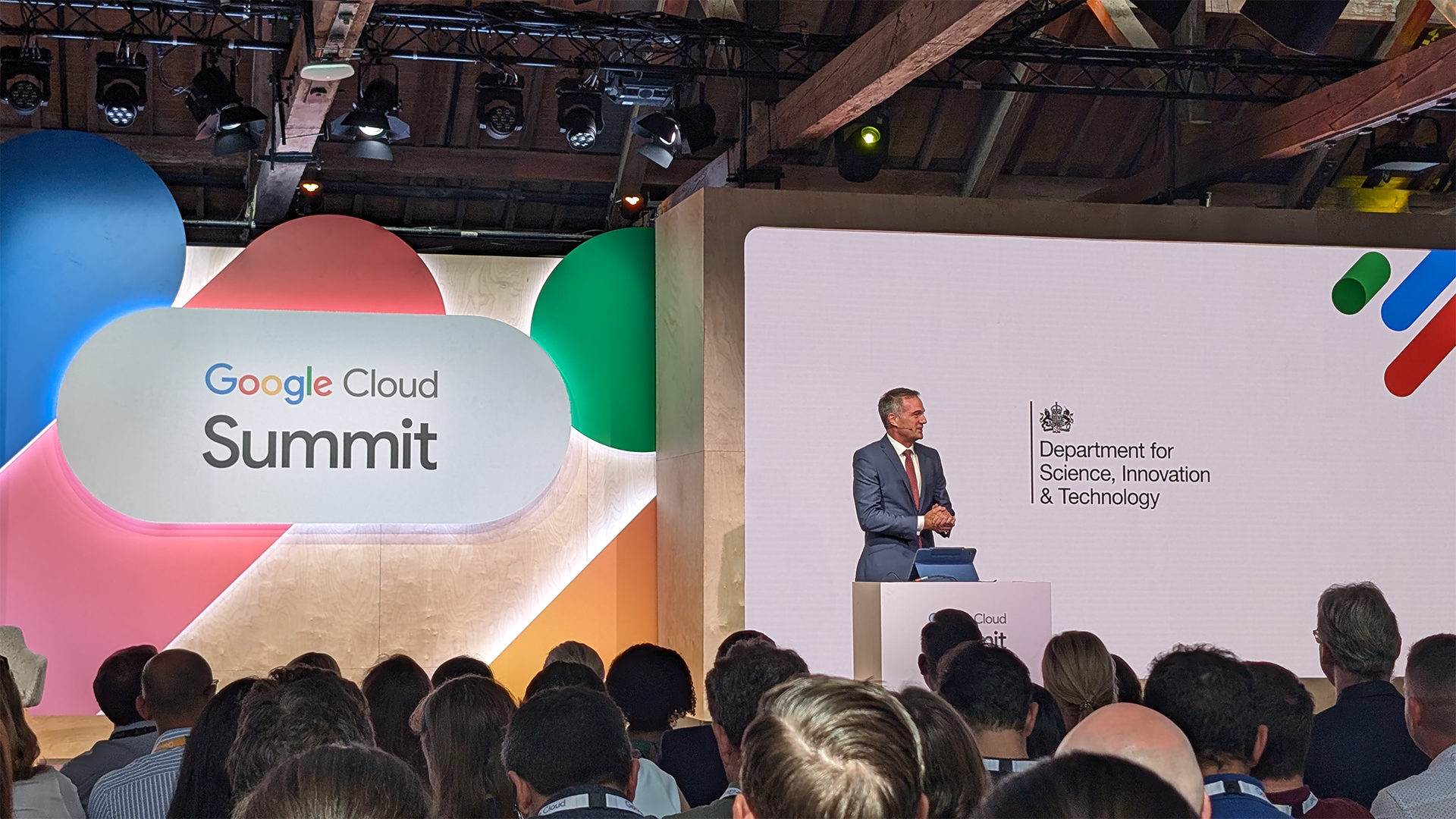 The UK government is teaming up with Google Cloud to kill public sector legacy tech
 Civil servants started using Microsoft Copilot to speed up admin tasks – here's what they found
 The public sector is bullish on agentic AI – but data readiness will be its undoing


