
TL;DR
- Dell PowerStore’s QLC options provide cost efficient, enterprises-class performance for capacity-oriented workloads.
- PowerStore’s scalability, energy efficiency, and performance stats rank among the best in the industry
- Intelligent data management capabilities mean enterprises can maintain efficient storage practices and reduce costs
IT leaders have traditionally faced a trade-off between performance and cost efficiency when making a purchasing decision.
When it comes to storage, it’s a particularly difficult scenario for enterprises - especially from a design perspective. Should IT buyers go with Quad-Level Cell (QLC) drives or Triple-Cell (TLC) drives?
QLC drives are growing in popularity, but there are distinct design differences that need to be made clear.
TLC drives use three bits of data per cell, which helps maintain a balance of performance, density, and endurance. They also have 8 voltage states, which also helps with performance and endurance and are well-suited for low-latency, write-intensive workloads. However, they often come at a premium.
By contrast, QLC drives store four bits per cell and have 16 voltage states. This means they’re the perfect option for enterprises focused on higher density, lower cost for read heavy or mixed capacity centric workloads, while still delivering low latency when deployed on an architecture like Dell PowerStore.
Like the industry’s transition from MLC (Multi-Level Cell) to TLC, Dell PowerStore reshapes what’s possible by pairing QLC with its advanced architecture and rich software capabilities. This combination unlocks the density and cost advantages of QLC while preserving the performance, efficiency, and resilience that organizations expect. PowerStore ensures that users can confidently embrace QLC technology for any workload without compromising on their storage needs."
What is Dell PowerStore?
Dell PowerStore is a modern, software driven all flash storage platform. It’s modular, scale-up and scale-out design allows IT leaders to expand their storage capacity seamlessly to compensate for growing demand. PowerStore’s intelligent lifecycle features also streamline maintenance and simplify upgrades and updates. And it integrates with Dell Private Cloud.
With Dell Private Cloud, enterprises can build and deploy on-premises infrastructure that’s made to last, is highly scalable, and is simple to roll out.
Why PowerStore is a QLC powerhouse
Dell PowerStore first introduced QLC options with the PowerStore 3200Q platform. Since then, the company has sharpened its focus on this drive format with the launch of PowerStore 5200Q.
PowerStore QLC boasts impressive performance alongside scalability, and cost efficiency while also placing a strong emphasis on sustainability.
So, what can enterprise users expect with the service?
Performance and scalability
Scale-up and scale-out capabilities mean enterprises are able to increase storage capacity seamlessly with high capacity 15TB and 30TB QLC NVMe drives. This is particularly important for AI innovation, allowing storage to expand alongside growing ambitions.
Notably, Dell’s software-defined NVMe architecture plays a vital role in supercharging performance for PowerStore users. This architecture is capable of maintaining sub-millisecond latency for workloads and boasting the same performance as TLC counterparts.
PowerStoreOS, the operating system that underpins the storage service, also provides regular updates to increase performance and enable capacity enhancements for users. This not only adds a degree of simplicity to PowerStore, but also ensures its longevity for those seeking to future-proof their infrastructure.
Cost efficiency
The cost efficiency benefits of PowerStore QLC are several fold, with a combination of features and capabilities helping reduce financial strain for enterprises.
First and foremost, PowerStore QLC options offer users a significantly lower total cost of ownership (TCO). For example, the 5200Q model when used for large-capacity workloads can deliver “up to 25% cost savings using state-of-the-art QLC media”, according to Dell Technologies’ internal analysis.
Intelligent data management capabilities also play a vital role in reducing costs for customers, and there are a number of key features at the user’s disposal.
The platform includes a guaranteed 5:1 data reduction ratio (DRR) on reducible data, for example, meaning enterprises can minimize data center footprint and thereby reduce overall power consumption – a key cost driver.
PowerStore boasts up to 54% lower energy use vs. a leading competitor.According to official Dell statistics, field results show customers unlocked data savings of 81%, with some exceeding the 5:1 DRR by 31% on average.
Data deduplication and compression capabilities are another key differentiator for PowerStore and highlight the benefits of the platform for enterprises of all sizes. By enabling users to maximize usable capacity in instances such as data-heavy analytics programs or archival projects, this simplifies what has typically been a key infrastructure pain point for IT leaders.
Dell PowerStore’s Dynamic Resiliency Engine (DRE) also focuses on data efficiency, optimizing writes and intelligently storing data in the most efficient locations.
DRE uses automated drive consumption, which also helps improve overall performance and supports scalability as the enterprise adds more drives to an array, according to Dell. Notably, it uses a “hands-off” approach, removing the need for continual oversight.
“At the heart of PowerStore’s efficiency lies the Dynamic Resiliency Engine (DRE),” Dell Technologies said in a blog post. “This next-gen data protection methodology surpasses traditional RAID systems in distribution, automation, and efficiency. DRE provides greater resiliency and efficiency to your enterprise storage, while lowering costs.”
AI-ready with Dell PowerStore
The combination of these capabilities and features means PowerStore QLC options are among the most cost-efficient, high-performance storage options available on the market today.
PowerStore QLC storage options also come at a critical time for enterprises, with many ramping up AI adoption and now contending with large, cumbersome workloads.
Dell has invested heavily in its own in-house AI capabilities, particularly for PowerStore, enabling customers to leverage the technology to maximize the efficiency of their own AI pursuits.
PowerStore offers users a built-in AI assistant that, together with health and security analytics, helps resolve issues up to 10x faster, according to the company.
Crucially, this helps reduce manual toil on admins and streamlines operations, which has a downstream impact on costs and performance.
If you think a PowerStore is the right storage solution for your business, find out more on the Dell website: US readers click here and CA readers here.
-
 OpenAI and Anthropic could withhold new AI models from UK's AI Security Institute
News The move marks the second time Anthropic declined to submit a model for testing in the space of a month
-
 How CISA plans to shake up the CVE program
News CISA will sharpen its focus on program governance, ecosystem participation, data infrastructure, and CVE record content


-
 5 reasons every AI team needs a deskside agentic AI accelerator like the Dell Pro Max with GB10
Sponsored The Dell Pro Max with GB10 can help enterprises kickstart and scale their agentic AI adoption journey
-
 Dell’s NVIDIA-based AI powerhouses compared: The Dell Pro Max with GB10 versus the Dell Pro Max with GB300
Sponsored The Dell Pro Max with GB10 and GB300 workstations are the perfect devices to help supercharge AI innovation
-
 AI on the edge: 5 reasons to add a deskside AI accelerator like the Dell Pro Max with GB10
Sponsored The Dell Pro Max with GB10 series brings high-performance compute straight to your desk
-
 Which form factor? When to choose the Dell Pro 7 in 13in, 14in, or 2-in-1 design
Sponsored The Dell Pro 7 laptop is available in a range of form factors designed to suit different ways of working. Which should you choose?
-
 How business leaders are using the Dell Pro 7 and Dell Pro 5
Sponsored Thanks to flexibility and a range of spec options, the Dell Pro 7 and Pro 5 laptops can suit a variety of business leaders across a mix of workplaces
-
 The memory shortage is hitting PC sales hard, but vendor revenues are still growing at the expense of consumers
News AI-driven component shortages are hurting PC sales, but device vendors are recording solid revenue growth
-
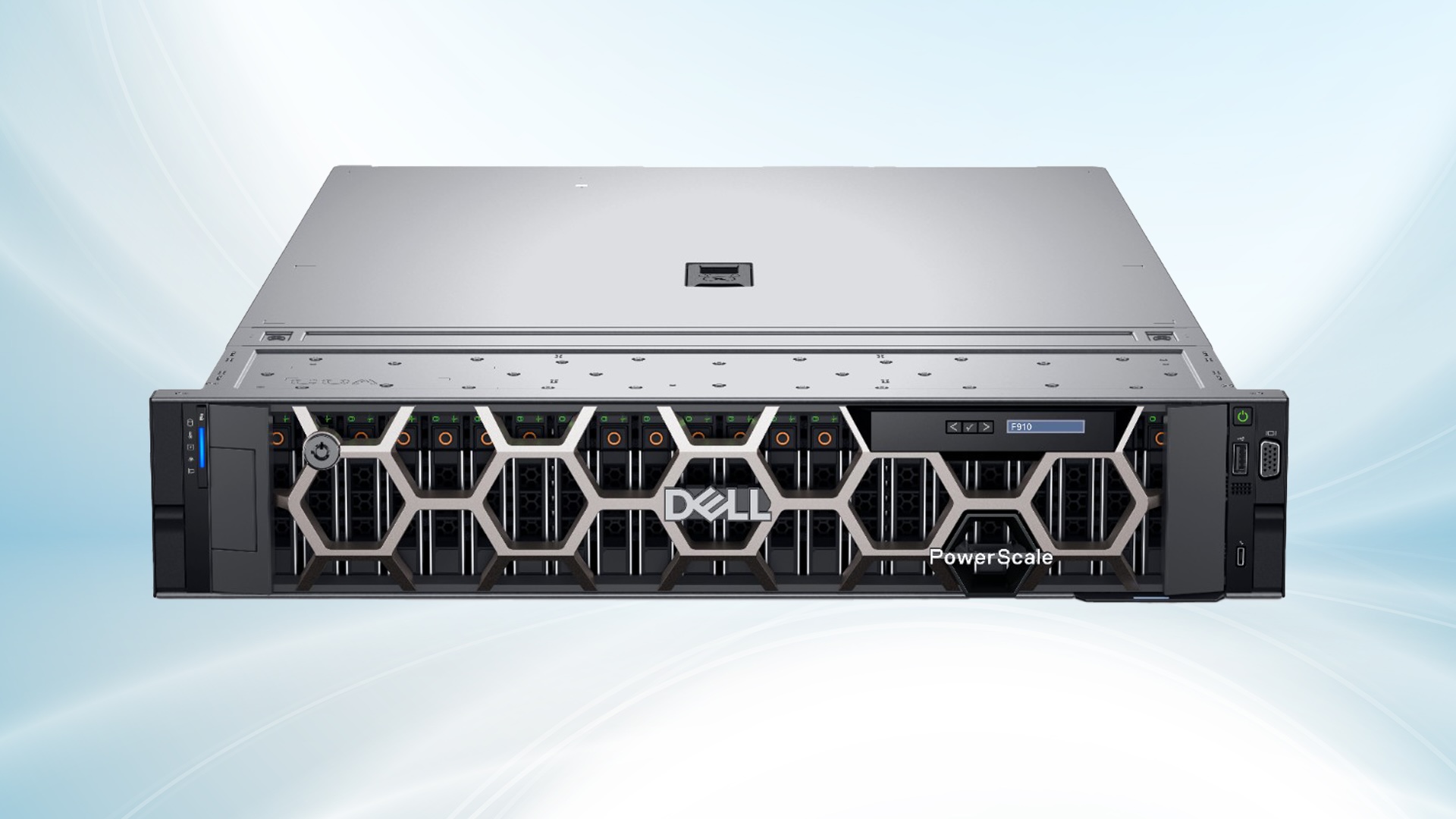 How the right automated storage management boosts AI and analytics pipeline performance and reliability
Sponsored High-performance storage infrastructure is vital for AI innovation, but underlying software features play an increasingly crucial role in optimization and management
-
 10 future-ready security features of the Dell Pro 5 that growing businesses can rely on
Sponsored How Dell Pro laptops can keep your business secure, from deployment to active use in the field


