The UK has pledged investment of up to £2 billion to position the UK as a global leader in quantum computing, but some industry stakeholders have questioned whether it can achieve such ambitious goals.
Under plans revealed by chancellor Rachel Reeves this week, the government hopes to make the UK the first country in the world to build and deploy quantum computers at scale, which it believes can be done by the early 2030s.
The potential benefits here are significant providing the UK can strike an early lead in this domain, with figures showing this could add up to £200 billion to the economy by 2045.
Government estimates show that quantum could also boost workforce productivity by 7% in the next two decades, creating more than 100,000 jobs in the process.
As part of the nationwide drive, quantum technology will help deliver personalized medical treatments and potential cures for diseases, according to the Department for Science, Innovation and Technology (DSIT), while safeguarding national security and delivering high-paid jobs.
"Quantum technology holds transformative potential across everything from healthcare and renewable energy to national security and defence," said Charlotte Deane, senior responsible owner for quantum at UK Research and Innovation (UKRI).
"Today’s announcement signals a shift in pace towards turning research into commercial deployment that delivers meaningful benefits for people across the country."
Increased support for quantum computing
A procurement program, ”ProQure:Scaling UK Quantum Computing”, will launch next week, with companies invited to table partnership proposals to create prototypes for evaluation.
The most promising companies will then be invited to deliver larger scale machines for use by scientists, researchers, the public sector, and businesses as part of the national computing infrastructure.
Meanwhile, the TechFirst program will launch new partnerships with companies in the sector, offering up to 100 fully funded internships.
Financial support will include more than £500 million for companies scale and develop new uses for the technology in areas like pharmaceuticals, financial services, and energy; over £400 million to support breakthroughs in sensing and navigation; £125 million for Quantum networking, and £205 million for quantum sensing and navigation.
Can Britain strike a global quantum lead?
The announcement has been welcomed by many. Russ Shaw CBE, founder of Tech London Advocates and Global Tech Advocates, said the UK has a “real opportunity to strengthen its position as a global hub” for frontier technologies.
“Just as importantly, the focus on translating world-class research into commercial success is a necessary shift,” he said. “Bridging the gap between breakthrough discovery and real-world deployment will be key to unlocking the UK’s full innovation potential."
Some industry stakeholders have voiced doubts over the country’s ability to meet such ambitious targets. Key lingering concerns, such as infrastructure capabilities, security implications, and even commercial viability mean there’s a lot of work to be done.
John Cheal, consulting partner for public sector and healthcare at Kyndryl, said the country faces a significant “readiness gap” with quantum investment in the private sector.
“Barriers around practicality are creating confidence issues, but with the UK government ramping up to commit to rolling out quantum computers at scale, leaders need to think here and now about their quantum strategy, or risk being caught unprepared as many were when widespread LLM availability impacted the tech sector in 2022,” he said.
Research conducted by Kyndryl found that 20% of organizations worry that current quantum investments may not deliver short-term ROI.
Similarly, while nearly two-thirds (62%) reported investing in quantum technologies, only 4% of leaders see quantum as the most impactful near-term technology.
Charlotte Wilson, head of enterprise at Check Point Software, warned that security-related considerations associated with quantum computing are growing.
Many organizations aren’t prepared for a new wave of potential threats, Wilson noted, aligning closely with a recent study from Bain & Company which found the vast majority are unprepared.
In a survey of technology leaders at 180 companies, 90% revealed they have no systems in place to defend against quantum security threats – despite many expecting them to arrive within the next five years.
“The encryption protecting your customer data, financial transactions and intellectual property was built for a different era,” Wilson said. “Quantum computing has the potential to completely unpick it, and the transition to something safer will take years.”
"Most businesses haven’t identified where they rely on quantum-vulnerable encryption, let alone started replacing it,” she added. “This isn’t a quick upgrade. Moving to quantum-safe security will take years, and many have yet to begin."
FOLLOW US ON SOCIAL MEDIA
Follow ITPro on Google News and add us as a preferred source to keep tabs on all our latest news, analysis, views, and reviews.
You can also follow ITPro on LinkedIn, X, Facebook, and BlueSky.


 Dreamforce 2026 showed AI safety is the new big tech battleground
 Marc Benioff and Jensen Huang aren’t sold on the ‘SaaSpocalypse’

 ‘This new system will help you do more quantum computing, faster’: IBM says its Nighthawk r2 quantum processor marks a step change in compute capability
 NIST eyes quantum gains with new research and manufacturing center
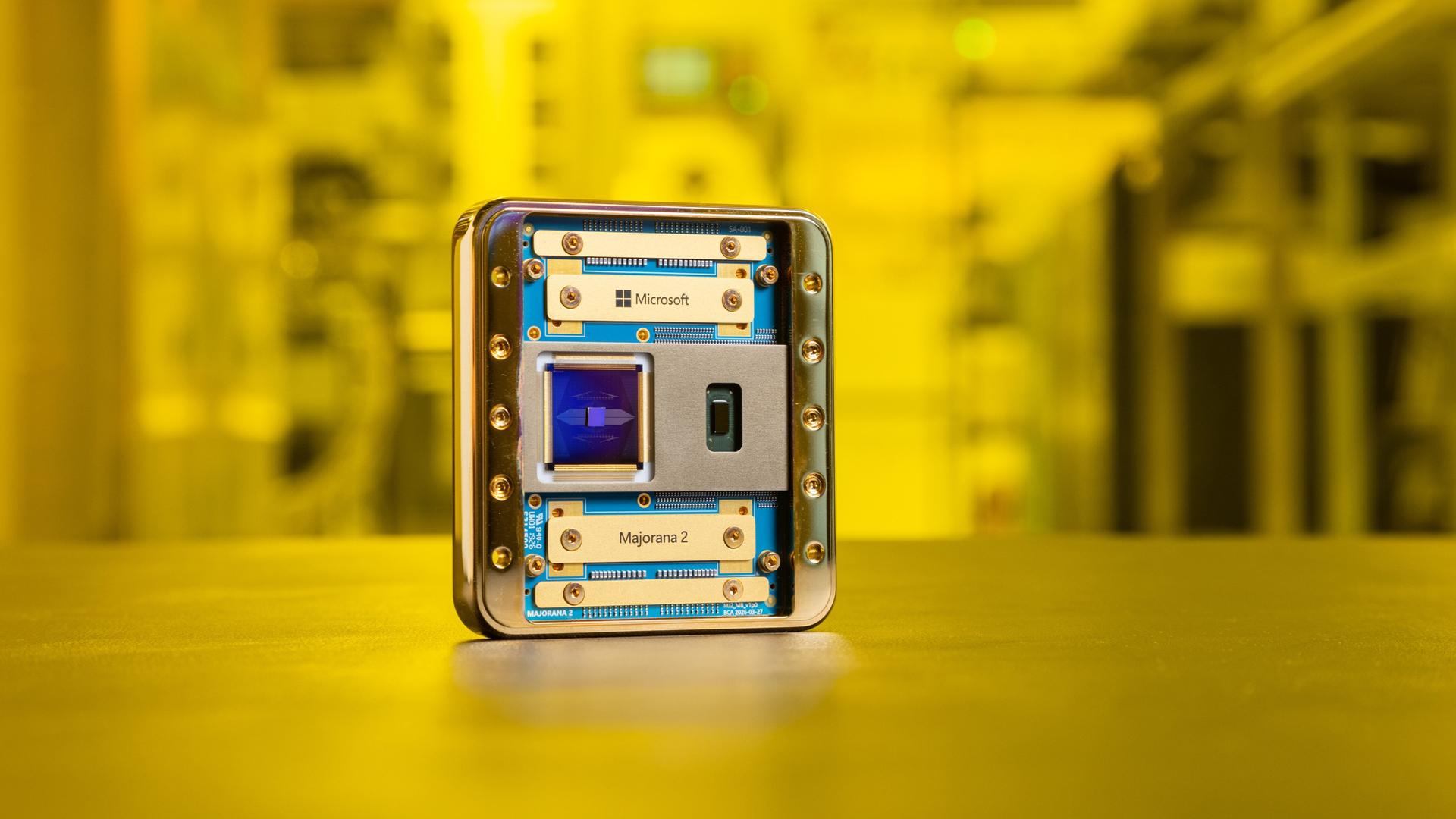 Microsoft says its Majorana 2 chip was built using AI – and it helped deliver huge performance gains
 UK businesses brace for quantum disruption – and it could come sooner than expected
 C-suites want concrete quantum use-cases, not hype
 Quantum is 'the future of AWS system security', Amazon claims
 BT and Toshiba to launch quantum-secured network across London


