Buffalo LS520 2TB review
Considering it includes two 1TB drives, the price may be initially attractive, but there are better options
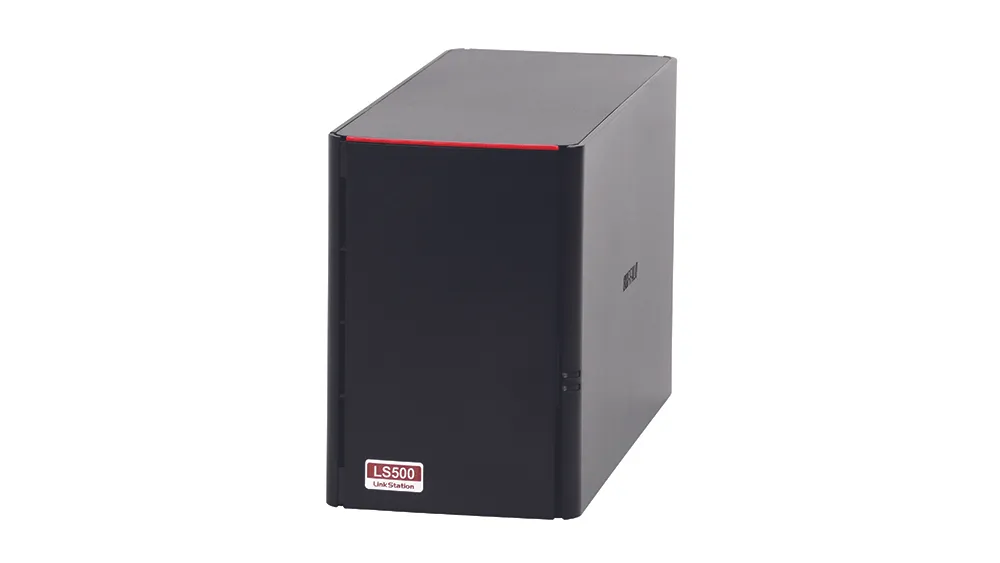
As a cheap, all-in-one solution the Buffalo may look tempting, but we'd advise plumping for the superior WD My Cloud Mirror 2. There isn't a 2GB version, only 4GB, but even at £260 inc VAT it's well worth the extra cash.
-
+
Cheap; Good backup support;
-
-
Setup tools and firmware are clunky and dated; Extremely disappointing performance;

Buffalo supplies its compact two-bay consumer NAS populated, with a choice of dual 1TB, 2TB, 3TB and 4TB drives. Despite this, it's kept the price surprisingly low, meaning you can grab the 2TB version for the same price as some unpopulated two-bay rivals.
If you want to buy the entry-level version now and upgrade later, it's no problem - open the front-facing door and the two WD Green hard disks emerge neatly in their slide-out bays.
It's a shame that the software setup process isn't so easy, requiring you to visit Buffalo's website, download its NAS Navigator software, install it and then find your NAS before you can even get going.
If the tool seems dated, the firmware isn't much better, seemingly designed to resemble an old Linux desktop interface - complete with dry control panels that make everything from configuring DLNA media access to providing remote web access slightly awkward. The LS520 can handle all your backup, file-sharing and media vault duties, but other NAS devices make it easier.
In some respects, the features are fairly basic. There are file-management apps for iOS and Android, but nothing to match the Dropbox or OneDrive-like features of other NAS drives. At least safeguarding your files isn't a challenge, with NovaBackup bundled for PCs and full support for Time Machine. The remote-access features don't do anything more than provide access to the same desktop interface, and, as a DLNA server, the LS520 isn't exactly the snappiest around.
In fact, performance is the LS520's biggest issue. The combination of a 1.1GHz Realtek ARM Cortex A9 processor with just 256MB of RAM didn't make for stellar speeds - the LS520 could only manage read/write rates of 101MB/sec and 89MB/sec respectively with the larger video files, and a woeful 24.9MB/sec and 23.3MB/sec when churning through our smaller files - a sure sign that the CPU and RAM are struggling to keep up.
As a cheap, all-in-one solution the Buffalo may look tempting, but we'd advise plumping for the superior WD My Cloud Mirror 2. There isn't a 2GB version, only 4GB, but even at 260 inc VAT it's well worth the extra cash.
This review originally appeared in PC Pro issue 261.
Verdict
As a cheap, all-in-one solution the Buffalo may look tempting, but we'd advise plumping for the superior WD My Cloud Mirror 2. There isn't a 2GB version, only 4GB, but even at £260 inc VAT it's well worth the extra cash.

-
 Atlassian introduces 'always-on' capabilities for agentic development workflows
News Customers can now adopt and scale governed agentic workflows right across the AI software development lifecycle
-
 Agents have hit the mainstream in software engineering, but security and governance practices aren’t evolving fast enough
News The number of agent-related security incidents is rising and shows no sign of slowing down, according to Harness
-
 Nebula appoints Jack Bell as strategic partner acquisition manager
News The new hire brings eleven years of telecoms industry experience to the vendor’s channel team


