
NVIDIA is extending its relationship with Toyota to bring self-driving vehicles safely to the road.
The GPU giant announced that Toyota Research Institute-Advanced Development (TRI-AD) is the first customer of its autonomous vehicle simulation platform Drive Constellation.
Originally unveiled last year, Constellation is a cloud-based platform that enables car companies to clock up million of miles on virtual roads, mapping out a range of scenarios from a routine journey to hazardous driving conditions.
Drive Constellation is comprised of two servers: Constellation Simulator, which uses NVIDIA GPUs to run software called Drive Sim and generate a virtual world to feed into the virtual car's sensors; and Constellation Vehicle, which processes the simulated sensor data thanks to the Drive AGX in-car computer.
On stage at the GTC 2019 keynote, NVIDIA CEO Jensen Huang showcased Constellation's scalability and ability to perform seamless driving tests in the cloud. Constellation will be available to developers anywhere in the world, who'll be able to submit their own scenarios to the platform's data centres then see the results for themselves. This large-scale validation capability means years of testing will be completed in a fraction of the time.
"Self-driving vehicles for everyday use and commercial applications in countless industries will soon be commonplace," Huang said. "Everything that moves will be autonomous. Producing all these vehicles at scale will require a connected collaboration for all elements of the system. Our relationship with TRI-AD and TRI is a model for that collaboration."

NVIDIA's platform will now be used end-to-end by Toyota for training deep neural networks, testing, validation and deployment of its self-driving cars.
The infinite driving scenarios we encounter means that AI, deep learning in particular, will become key to autonomous vehicles safely navigating our roads. To that end, NVIDIA also used GTC 2019 to announce a new addition to its driving software suite Safety Force Field (SFF).
Described by Huang as a "safety cocoon", SFF takes in sensor data and determines what the self-driving vehicle needs to do in order to protect itself, its occupants and other road users. SFF uses mathematical zero-collision verifications to achieve road safety, and has been tested in simulations that would be too dangerous for the real world.
"By removing human error from the driving equation, we can prevent the vast majority of collisions and minimise the impact of those that do occur," said David Nister, NVIDIA's vice president of autonomous driving software.
"SFF is mathematically designed such that autonomous vehicles equipped with SFF will, like magnets that repel each other, keep themselves out of harm's way and not contribute to unsafe situations."
-
 The future of AI depends on stronger partner programs — here’s what vendors need to know
Industry Insights AI transformation depends on the channel, but outdated partner programs threaten progress
-
 Wasabi establishes dedicated AI business led by Pinaki Mukherjee
News The cloud storage vendor's new business will focus on strategy, partnerships, and go-to-market activity as AI drives growing storage demand


-
 HPE AI Factory adds features to improve your experience with agents
News The HPE AI Factory will now offer the Nvidia Agent Toolkit software, such as Nvidia Nemotron open models and Nvidia NemoClaw
-
 Nvidia touts its contribution to UK sovereign AI plans
News The latest deal sees Nebius expanding capacity in the UK with three new deployments
-
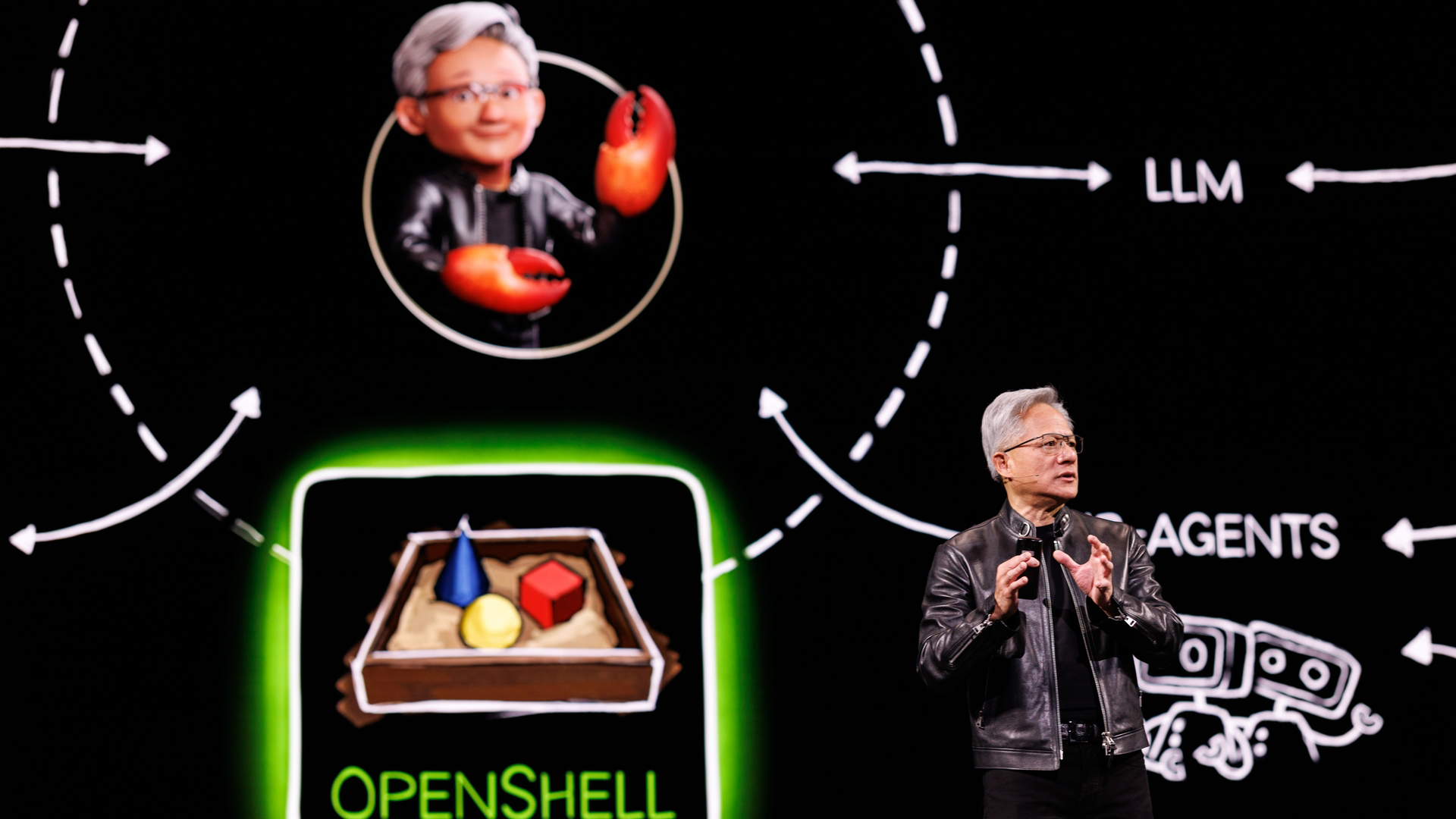 Nvidia targets open source interoperability with new model coalitions, agentic frameworks
News A new open model development coalition and agentic frameworks target enterprise interoperability
-
 Will AI hiring entrench gender bias?
ITPro Podcast This International Women's Day, it's more important than ever to consider the inherent biases of training data
-
 February rundown: SaaS-pocalypse now?
ITPro Podcast Geopolitical uncertainty is intensifying public and private sector focus on true sovereign workloads
-
 HPE and Nvidia launch first EU AI factory lab in France
News The facility will let customers test and validate their sovereign AI factories
-
 Dell Technologies doubles down on AI with SC25 announcements
AI Factories, networking, storage and more get an update, while the company deepens its relationship with Nvidia
-
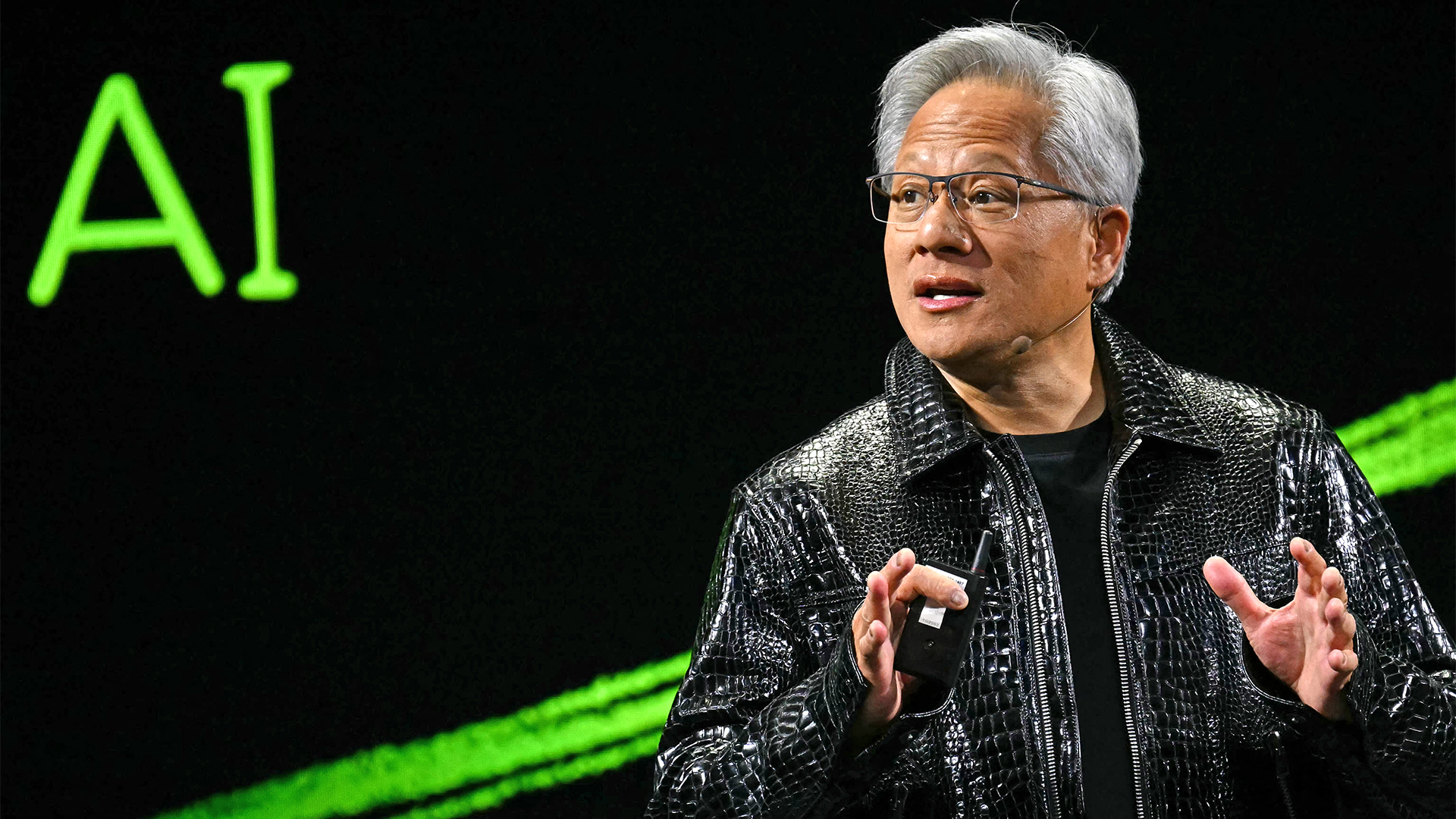 Nvidia CEO Jensen Huang says future enterprises will employ a ‘combination of humans and digital humans’ – but do people really want to work alongside agents? The answer is complicated.
News Enterprise workforces of the future will be made up of a "combination of humans and digital humans," according to Nvidia CEO Jensen Huang. But how will humans feel about it?


