

Digital transformation may be different for every organization but one thing remains true for all – it’s not a destination, it’s a mindset.
In many ways, digital transformation is a never-ending journey that allows your business to grow and almost future-proof itself. It isn’t just about taking legacy infrastructure and making it digital or cloud based – it also involves the ongoing process of upgrading any modern business systems.
The case for expanding your CRM
A customer relationship management (CRM) system is a great example of this. As a sales platform, it is a central part of the business likely used by most of your customer-facing employees, and its capabilities need to expand in line with your business needs. At their most basic level, CRM systems are simply a way to keep track of all the prospects and customers your business interacts with, along with their status as a lead and what communications you’ve had with them. This usually includes details about the company or individual in question such as their location, contact information and purchase history, but can also be expanded with further data such as the primary sales contact within your business. Dedicated CRM platforms also offer a host of additional features beyond this, including personalization tools, data analytics and marketing automation.
No matter the size of the organization, it's vital to choose a CRM system that can scale as fast as your business does. Now, scalability isn’t merely a buzzword of the tech industry – in simple terms, it refers to an application's ability to adapt and grow in line with the needs of the business. And regardless of whether you’re in charge of a 50-person startup or a Fortune 500 company, the CRM system you use needs to offer the same functionalities for each individual.
The main issue here, however, is that there is a software solution for virtually everything these days and if businesses are not shrewd in this market they can end up with a bloated subscription list. Why, for example, should you have applications for different HR processes when you can have one single solution for all? Save money, avoid employee confusion and reduce the need for multiple login credentials – it can all be achieved by taking the time to assess the options properly.
The mindset to scale
As your company scales over time, your CRM can start to become a bottleneck that can stifle your growth. A larger customer base means more records to keep up-to-date, but in addition to that, you’ll ideally want to add more fields and data points to each customer’s record, allowing you to better track the relationship and sort between them. All of this multiplies the time and effort it takes to ensure the system is adequately maintained, which could be better spent on delivering meaningful value to the organization.
Just as you should increase your workforce as demand grows, you also need to upgrade the capacity and capabilities of your sales and marketing tools as well, to ensure that your staff have everything they need in order to perform their jobs effectively, and that their time isn’t being taken up by unnecessary admin tasks. A fully featured platform such as Zoho CRM includes a range of helpful additions designed to remove time-consuming manual processes, such as invoicing tools for faster payments, more in-depth lead categorization options for improved filtering, and granular user management to enhance KPI tracking
CRM systems allow businesses to assign specific customers to specific sales representatives, increasing organizational efficiency by giving team members faster and easier access to the relevant information they need to turn prospects into customers – and because their access to the underlying data is limited, there’s less risk of an employee plunging your business into chaos by changing the wrong record or accidentally deleting everything.
Automation and integration
Centralizing all of this data also opens up more opportunities for intelligent automation to help speed up sales pipelines and increase conversion rates. For example, Zoho CRM allows you to design custom workflows for your pipelines which can trigger tasks and actions based on specific criteria, such as sending an automated welcome email when a potential lead is marked as a closed sale. Incoming leads can also be automatically assigned to specific employees based on criteria such as the source or the company profile.
These capabilities form a strong foundation for delivering future digital transformation efforts within your business, and CRM systems such as Zoho support this through a range of integrations with other cloud-based platforms. Connecting enterprise productivity suites like Microsoft 365 and Google Workspace, or collaboration platforms such as Slack, allows you to sync email and calendar systems via your CRM system, import contacts as leads, easily create and send mail-merge documents and much more.
Leveraging the full benefit of a connected cloud ecosystem doesn’t just benefit your employees, though. It means a better experience for your customers too, thanks to faster response times to queries, a more personalized service based on data-driven insights, and less frustration with missing or incorrect information in their records – all of which results in greater satisfaction and an improved relationship with your business.
For businesses looking to invest in a more integrated and unified CRM system, Zoho CRM offers a range of flexible subscription-based plans to suit a variety of needs and budgets. For larger organizations that have plans to scale, there is the Enterprise tier, which includes features such as lead management, journey orchestration and multichannel marketing capabilities. For those companies that want to go a step further, the Ultimate tier allows even more room for your business to scale alongside enhanced features and data tools to help you get the most out of your customer relationships.
Learn more about implementing a unified CRM system with Zoho


-
 SugarCRM rebrands in AI-driven CRM and channel push
News The software vendor said the move reflects its push to deliver more proactive, action-led sales capabilities
-
 Warning issued to Salesforce customers after hackers stole Salesloft Drift data
News Customers were targeted through compromised OAuth access tokens from Salesloft Drift integrations
-
 Everything we know about the Workday data breach so far
News HR technology firm Workday has confirmed a data breach after threat actors gained access to a third-party CRM platform.
-
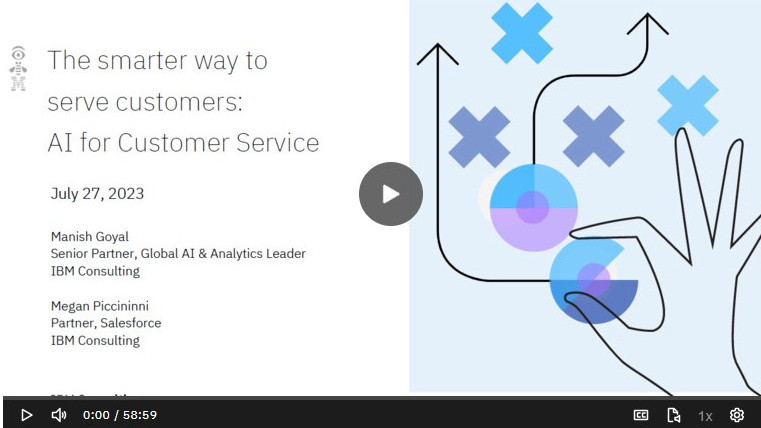 The smarter way to serve customers: AI for customer service
Webinar Understand the profound impact and potential of generative AI for customer service
-
 Salesforce reveals Einstein GPT for CRM, announces broader OpenAI partnership
News ChatGPT is also coming to Slack, as Salesforce doubles down on generative AI across its CRM
-
 How to boost ROI from your CRM system
Sponsored To deliver the results you want, you need to understand the full capabilities of your CRM system
-
 Twilio tackles 'crucial' customer retention with trio of platform upgrades
News The company believes that retaining customers and maximising LTV is crucial in weathering the current macroeconomic headwinds
-
 Mastering retention
Whitepaper Turning user behaviour insights into retention strategies


