
Gartner: VR and voice AI will fuel future device growth
Lack of innovation means PCs, mobile and tablet sales are stagnating
Sales of PCs, mobile phones and tablets are stagnating, Gartner warned today, blaming market saturation and slower innovation.
The research firm predicts that sales will remain flat at 2.32 billion units until 2018, when they will increase to 2.35 billion units.
"The global devices market is stagnating. Mobile phone shipments are only growing in emerging Asia/Pacific markets, and the PC market is just reaching the bottom of its decline," said Ranjit Atwal, research director at Gartner.
"As well as declining shipment growth for traditional devices, average selling prices are also beginning to stagnate because of market saturation and a slower rate of innovation."
PCs sold 219 million units in 2016, but are expected to sell just 205 million in 2017, 198 million in 2018, and 193 million the year after.
Devices like Apple's MacBook Pro and Microsoft's Surface range, will eat up some of the ailing PC demand, with sales rising 24% to 61 million units in 2017, according to Gartner's predictions.
But while emerging markets are quicker to replace their smartphones, as these devices function as their primary means of computing, mature markets take longer, the research firm states.
Sign up today and you will receive a free copy of our Future Focus 2026 report - the leading resource for IT decision-maker insight on priorities and investment areas in AI, security and more.
Therefore Gartner believes that while mobile phone sales will increase from 1.88 billion in 2016 to 1.89 billion in 2017, and 1.92 billion in 2018, most of that growth will be driven by demand from new markets.
Meanwhile, VR and voice assistants are expected to drive future device growth.
Atwal said: "Consumers have fewer reasons to upgrade or buy traditional devices. They are seeking fresher experiences and applications in emerging categories such as head mounted displays (HMDs), virtual personal assistant (VPA) speakers and wearables."
In order to meet that demand, hardware vendors will seek to pair with service providers offering those kinds of functions.
"As service-led approaches become even more crucial, hardware providers will have to partner with service providers, as they lack the expertise to deliver the service offerings themselves," said Atwal.
Main image: Bigstock
-
What businesses need to know from the NCSC’s annual reportIn-Depth Experts warn “longstanding security weaknesses” are getting harder for businesses to get away with
-

The MSP trust problem: Why "We outsource our IT" is not a cyber strategyIndustry Insights Outsourcing IT doesn’t outsource cyber responsibility. Indeed, organizations must retain control and demand accountability
-

CIOs and CTOs are making high-stakes decisions with incomplete information, IBM survey revealsNews Architecture, governance, and investment decisions control how fast organizations can move, what risks they can handle, and which opportunities are viable
-

Government CIOs prepare for big funding boosts as AI takes hold in the public sectorNews Public sector IT leaders need to be mindful of falling into the AI hype trap
-
CIOs are battling to temper expectations as enterprises ramp up AI adoptionNews Boards are rushing to invest in the technology, but CIOs are advising caution
-

The future tech helping battle the pandemicIn-depth We’ve struggled to find a use for chatbots, 3D printers and drones, but innovative tech is now being used to fight COVID-19
-
AI the most critical technology for CIOs over the next five yearsAnalysis 60% of CIOs believe artificial intelligence and machine learning are the top critical future technologies
-
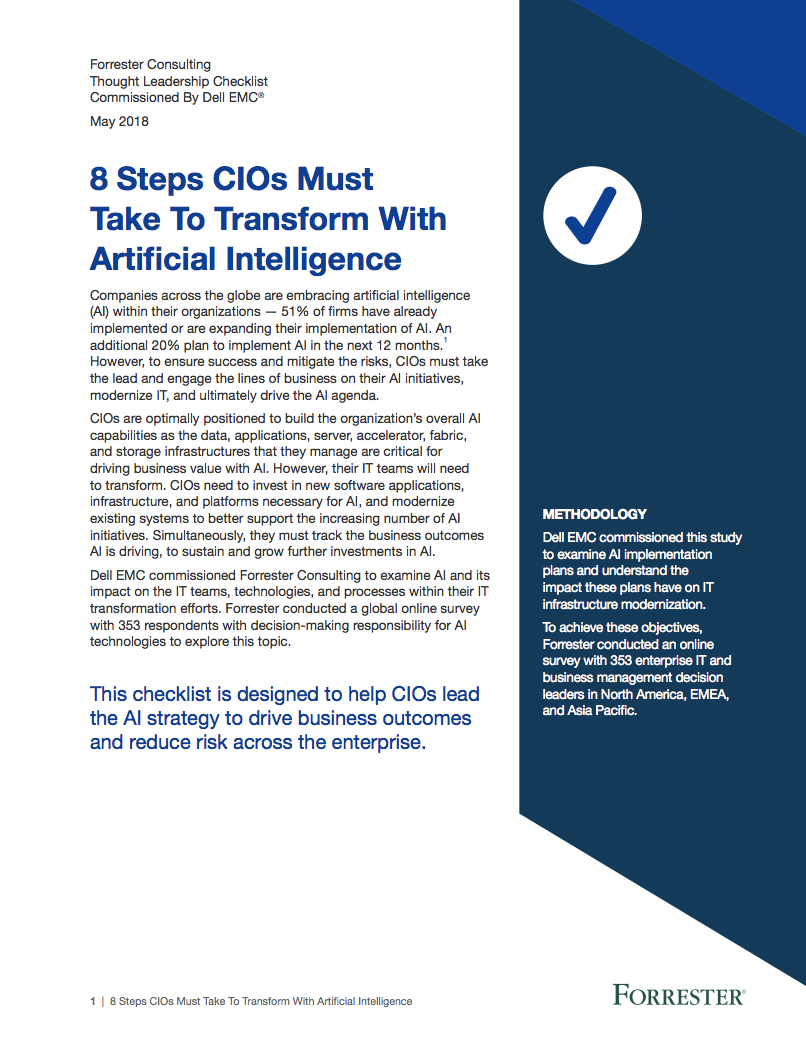
8 steps CIOs must take to transform with artificial intelligenceWhitepapers A checklist to help CIOs lead their AI strategy
-

AI and the CIO: How to develop a business caseIn-depth Convincing executives to look past the hype and bluster is often the biggest challenge for IT leaders
-

Mayor of London hails capital's AI firms as he reveals smart city roadmapNews Sadiq Khan outlines plans to use more data and urges startups to solve social challenges