Japan's Fugaku retains title as world’s fastest supercomputer
The device from Fujitsu holds the lead, although new additions from Microsoft and Samsung made the top 15


The Japanese supercomputer Fugaku has held the number one position in the Top500 world ranking for the fourth consecutive time, fending off competition from China and the US.
Fugaku, which has held this position since June 2020, had an HPL benchmark score of 442 Pflop/s and 7,630,848 cores, exceeding the performance of the second-place IBM-developed Summit by three times. Fugaku is installed at the Riken Centre for Computational Science in Kobe, Japan, and was co-developed by Riken and Fujitsu based on Fujitsu’s custom Arm A64FX processor.
In singly or further-reduced precision, often used in machine learning and AI applications, Fugaku had a peak performance above 1,000 Pflop/s, or one Exaflop/s, which is why the device is called the first “Exascale” supercomputer. Although there are reports that several Chinese supercomputers have reached an Exaflop performance level, none of the systems submitted an HPL result to the Top500.
“I am very happy to have won four crowns for four consecutive terms,” said Naoki Shinjo, director of Fujitsu. “We hope that the world's best performance of 'Fugaku' will be used by many researchers and will continue to be utilised, contributing to the development of science and technology and the realisation of a safe and secure society.”
Summit remains the fastest system in the US, with a performance of 148.8 Pflop/s on the HPL benchmark. It has 4,356 nodes each housing two Power9 CUs with 22 cores each and six Nvidia Tesla V100 GPUs. In third place came Sierra with 94.6 Pflop/s followed by China’s National Research Centre’s Sunway TaihuLight in fourth place with 93 Pflop/s.
The only new system in the top 10 was Voyager-EUS2, a Microsoft Azure system installed in the US which achieved 30.05 Pflop/s. Its architecture is based on an AMD EPYC processor with 48 cores and 2.4GHz working together with an Nvidia A100 GPU with 80GB memory.
Re-architecting for nonstop innovation
Unlocking productivity, scalability, and lower costs for cloud natives
Although there weren't many changes to the top 10 supercomputers, the new Voyager-EUS system from Microsoft made its way to the 11th spot, while Samsung’s SSC-21 followed it into the 12th spot.
Systems from China and the US dominated the list, although China dropped from 186 systems to 173 while the US increased from 123 machines to 150. These two countries account for nearly two-thirds of the supercomputers in the Top 500.


-
 AWS pledges $50 billion to expand AI and HPC infrastructure for US government clients
News The company said an extra 1.3 gigawatts of compute capacity will help government agencies advance America’s AI leadership
-
 Discover the six superpowers of Dell PowerEdge servers
whitepaper Transforming your data center into a generator for hero-sized innovations and ideas.
-
 Enhance end-to-end data security with Microsoft SQL Server, Dell™ PowerEdge™ Servers and Windows Server 2022
whitepaper How High Performance Computing (HPC) is making great ideas greater, bringing out their boundless potential, and driving innovation forward
-
 Dell PowerEdge Servers: Bringing AI to your data
whitepaper How High Performance Computing (HPC) is making great ideas greater, bringing out their boundless potential, and driving innovation forward
-
 Dell Technologies AI Fabric with Dell PowerSwitch, Dell PowerEdge XE9680 and Broadcom stack
whitepaper How High Performance Computing (HPC) is making great ideas greater, bringing out their boundless potential, and driving innovation forward
-
 Drive powerful AI insights with an open ecosystem
whitepaper Dell PowerEdge XE9680 server with AMD Instinct™ MI300X Accelerator and ROCm™ 6 open software platform
-
 Advance sustainability and energy efficiency in the era of GenAI
whitepaper Take a future-ready approach with Dell Technologies and Intel
-
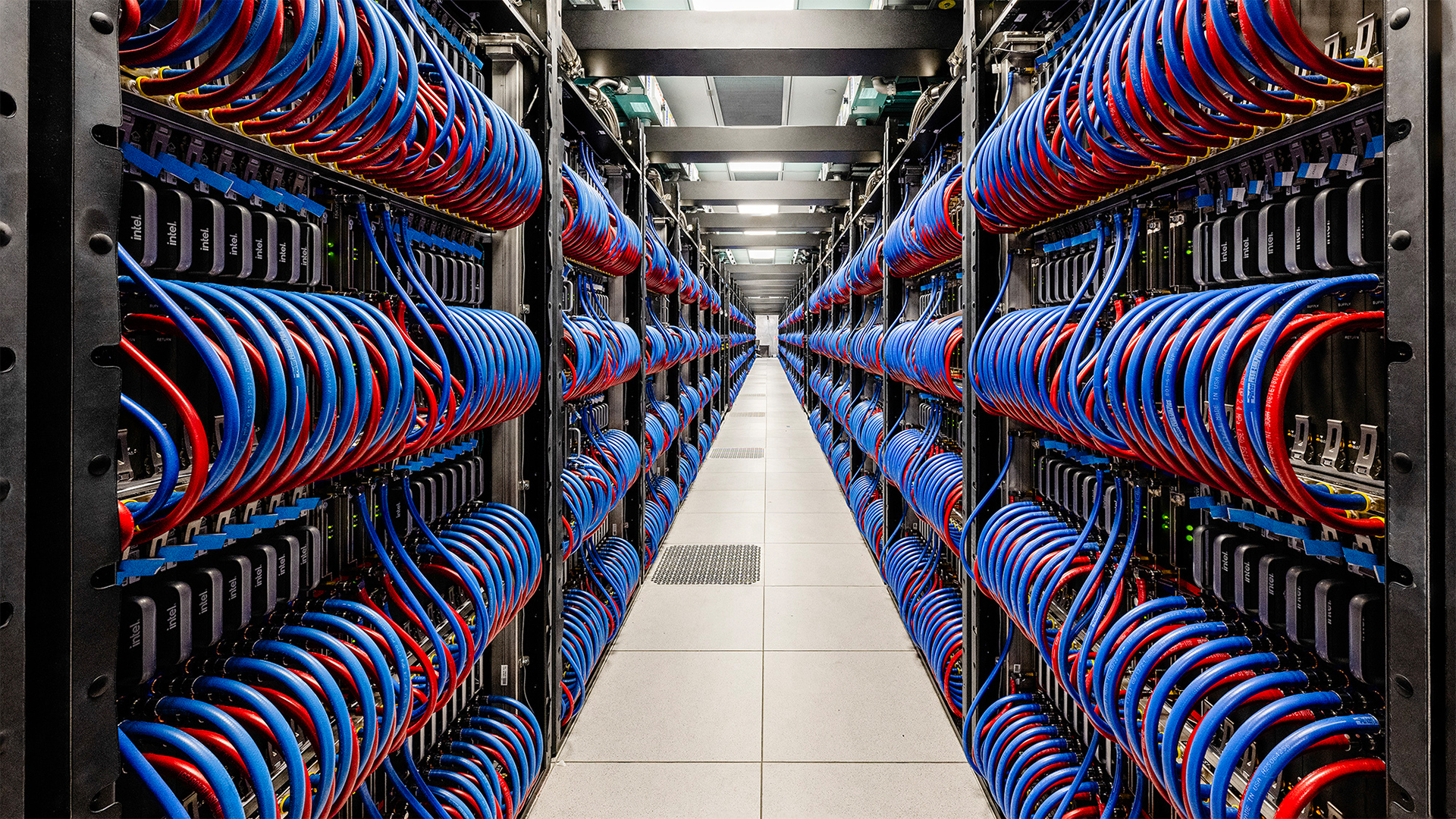 HPE supercomputer push continues with Aurora
The new HPE supercomputer is the ‘largest AI-capable system in the world’ and will support research into areas including neuroscience, particle physics, and pharmacology


