Sign up today and you will receive a free copy of our Future Focus 2026 report - the leading resource for IT decision-maker insight on priorities and investment areas in AI, security and more.
You are now subscribed
Your newsletter sign-up was successful
An account already exists for this email address, please log in.
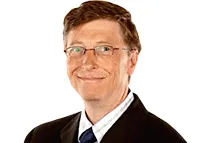
Bill Gates talks wearable tech, education and social media
"Software has only achieved a very small portion of what we want it to do," claims Microsoft co-founder.
Microsoft chairman Bill Gates took the stage at the firm's 2013 Faculty Summit and gave his thoughts on a number of subjects, ranging from the importance of software to education systems and social media.
Gates proclaimed that we are in a "golden age of computing" and - being a software pioneer - claimed that code was at the heart of advances.
"The progress we'll make in the next five and 10 years will be really unbelievable even our friends in the hardware industry are giving us better screens, better sensors things that let us exercise the magic of software," he told attendees.
"Software has only achieved a very small portion of what we want it to do and even what we need it to do. If you look at things like climate modelling and energy innovation, so much that this field has to contribute to solving broad science problems."
The Microsoft co-founder also had some interesting thoughts on a range of issues, including wearable computing, digital currency, social media and the problems facing developing countries.
Wearable technology
With seemingly all the Silicon Valley giants - from Apple through to Microsoft - developing some form of wearable device, Gates was inevitably asked about the benefits such products could bring, specifically in the education space.
Get the ITPro daily newsletter
Sign up today and you will receive a free copy of our Future Focus 2026 report - the leading resource for IT decision-maker insight on priorities and investment areas in AI, security and more.
Whilst he welcomed the creation of devices such as smartwatches, he suggested the benefits are yet to be seen, quipping that the only thing he could see students using it for is to cheat in exams.
"I think wearable technology is a very cool thing, but I don't couple it too much to education. I think the way you'll be able to review what you've learned, have the system understand the state of your knowledge, that's a very good thing, but I'm not sure how I connect that to wearable," he said.
Digital currency
Gates gave an example of how digital currency is taking off in developing countries such as Kenya, and having a positive impact on people's lives.
"The [Kenyan] economy is moving to digital currency it's amazing once it gets to critical mass, it's like credit cards or debit cards. [You can] transfer person-to-person and we can instrument what's going on with the economy in a way that wasn't possible in a currency-based approach. Lots of innovative products are coming out that serve the very poorest."
However, with digital payments there is always the concern about the centralisation of details and how the information is used something which Gates acknowledged needs to be figured out.
"Digital currencies are attributable and there's a tonne of laws about cash transfers ...that's actually quite painful for these systems to implement. But there are going to be political decisions and policies that go around these things."
Education
Having dropped out of Harvard to start Microsoft, unsurprisingly, Gates hinted that he's the biggest fan of the education system in its current form.
"To some degree, going to a four-year University and getting a degree isn't as much about what you learn in that experience as it is a badge that you're a certain type of person that's organised, and you like to achieve things, and like to be measured in terms of what you're doing. So employers, look at that and say: OK that person's is very employable'."
That's not to say that he completely discounts the value of a university qualification, especially with his own daughter about to embark on a degree. Gates takes the view that people should choose subjects they have enthusiasm and passion for, and then get a thorough grounding.
"I'm a big believer that you ought to have at least one or two subject areas that you actually know something about in a pretty deep way. Like everyone should know about machine language of course!"
Social media
Gates sees social media as a positive force in the world, but - despite the worldwide use of sites like Facebook and Twitter - claims it hasn't reached its potential.
"Communication is a good thing and social media is a form of communication," he said.
"People can make fun of it [social media] because a lot of it is used for what my cat had for breakfast'-type things, but I think of it in a more broader context, which is the enrichment of communications for people who have common interests. Social media will be profound in terms of people getting advice about their life and learning different things, [but] it's not at that level yet."
Malnutrition and disease
Interestingly, Gates also suggested the biggest factors preventing developing countries from moving forward are not the lack of resources or work ethic, but in fact malnutrition and disease.
"In poor countries about 40 per cent of kids (because of bad nutrition) or disease, their brain never develops and so they're not able to become literate and contribute and give back [to society]. Average IQ in sub-Saharan Africa is about 82 and that's nothing to do with genetics or race that's what disease does to you and that's why those things are such a poverty trap," he suggested.
"If you have kids with ill health, their brains don't develop also parents want to have very high chance of two kids growing up to support them in adulthood so they just have more children. So you get high population growth where there is high children death rate, which is the opposite of what you might think."
He suggested the progress of the poorest two billion in the world is dependent on "computer science software-driven advances" which can help to address health and agriculture issues.
Khidr Suleman was the Technical Editor at IT Pro and during his time with the site was responsible for the reviews section. Prior to joining IT Pro, Khidr worked as a reporter at Incisive Media. He studied law at the University of Reading and completed a Postgraduate Diploma in Magazine Journalism and Online Writing at PMA Training.
 TfL takes Oyster photocard systems offline following breach
 Irish credit unions hit by data breach after IT provider compromised


 Software licensing is becoming a minefield for IT leaders – and it’s driving them into the arms of the open source community
 Enterprises are doubling down on IT optimization strategies – and it’s delivering huge financial returns
 More than half of UK enterprises regret at least one software purchase – here’s how to prevent buyer’s remorse
 It’s time to ditch software subscriptions
 TestZone unveils new platform to keep employees socially distanced
 Building a digital business in uncertain times
 What is enterprise content management?
 NHS hires Martha Lane Fox to boost patients’ use of digital technologies


