For many years, businesses have been at the heart of an information revolution, with the volume of data that's generated, collected, and processed rising exponentially. This has presented numerous opportunities, but also major challenges.
There's plenty of potential for businesses to derive valuable insights from the raw data they collect and generate. Finding the most useful information, however, can feel like searching through a giant haystack for a single needle that may not even be there.
Enterprise data analytics systems have supported these efforts over the years, but the technology stack is ever-shifting. The focus now should be as much on hardware and infrastructure as it is on software, with the ideal setup being a combination of several layers configured to work together.
The rise of AI has added another dimension to this complex equation. It places a greater focus on the capabilities of the storage systems that enterprises can adopt, as well as the features available to help businesses make the most of the massive volumes of enterprise data available to them, while keeping that data protected and recoverable in the face of increasing cyber threats.
That's why reliability and dependability matter, alongside future-proofing and the scope for systems to grow as the technological capabilities do. The ultimate goal? Ensuring that storage systems can handle the evolving beast that is enterprise AI and support businesses in maximizing productivity gains.
Swimming in oceans of data
When Google scientists first outlined the transformer architecture at the heart of today's large language models (LLMs), the volume of data created, captured, copied, and consumed worldwide was 26ZB. This has surged to 181ZB in 2025 – seven years later – and it's expected to rise even further to 221ZB this year, according to Statista.
Meanwhile, the big data analytics market in 2025 was measured at $348 billion – a significant rise from $307 billion in 2023, as per Fortune Business Insights. Forecasts indicate this could rise further to reach $924 billion by 2032, outlining the opportunity in this space for not just the purveyors of big data analytics solutions but all enterprises hoping to get the most from the data they keep and process, particularly with generative AI added to the mix.
A study published last year in the journal Advances in Consumer Research highlighted the growing role of generative AI in the big data landscape. It found that integrating the two technologies can "create significant business value and serve as a foundation for strategic transformation across industries".
When generative AI is layered on top of a foundation of big data, comprising large volumes of structured and unstructured data, businesses can generate new content, insights, and solutions.
Storage is the hero for the AI era
Storage is the foundational infrastructure for AI. There's an essential need for reliable storage in 2026 and beyond, whether that's local storage in the form of a private cloud or even on the individual devices found throughout the enterprise.
Traditional storage systems could handle straightforward commands from several users at once, but advances in AI have fundamentally changed what enterprises should demand from their solutions. This includes aspects like agentic AI running countless commands in parallel and users running increasingly complex operations, which is far more demanding than the requests of the past.
Businesses today need scalable storage solutions that can help data flow seamlessly and without delay between different repositories – switching between storage and AI models, all while allowing for parallel processing and high-speed transfers between the different components that make up the layers of infrastructure.
The massive volumes of data that enterprises are now grappling with require reliable storage solutions. Only by securing dependable storage systems that can adapt to changing business needs – and that can scale as more layers of complexity are added, and the data collected and processed explodes – can businesses ensure that they are keeping pace with AI.
This is also where cyber-resilient data protection becomes critical. As AI pipelines span multiple environments and datasets, organizations need protection architectures that can safeguard training data, models, and outputs from ransomware and other threats. If data restoration is needed in the wake of an attack, the tools and infrastructure must work rapidly so AI initiatives are not derailed by a single incident.
Future-proofing storage
Storage requirements inevitably become more complex as businesses employ an increasing variety of workloads. As such, that foundational storage layer, which delivers flexibility and efficiencies, is critical to cost savings in key areas. These might include hardware purchases, maintenance, power, cooling, and software licensing in the case of hyperconverged infrastructure solutions.
The right tools are also essential in realizing how best to make operations more efficient. Sometimes simply purchasing more storage units isn't the best use of your organization's funds, not to mention physical space.
Data reduction is a key component in this equation and it's important to invest in systems that can guarantee models that will achieve the best data reduction ratio. This means operations that can instigate deduplication, compression, and pattern detection to ensure the data currently held is made more manageable.
Dell Technologies PowerScale is an example of a solution that can help businesses unleash AI at scale. It offers up to 220% faster data ingestion, up to 99% faster data retrieval, and up to 50% lower storage footprint than previous generations.
This ensures that businesses, such as Subaru, are primed to take advantage of AI workloads and truly unlock meaningful gains now and in the future.
“Systems and storage are ever-changing,” said Takashi Kanai, deputy chief of SUBARU Lab at Subaru Corporation.
“Dell PowerScale is up to the task of being the underlying infrastructure for AI development in our EyeSight Driver Assist Technology, allowing us to continue advancing our AI initiatives to improve drivers’ experiences.”
To find out how your business can maximize the potential of your storage systems and optimize these for the future, read Principled Technologies' report 'Lower storage costs and increase efficiency with the superior data reduction capabilities of Dell PowerStore'.

 How resellers can turn hybrid meeting pain into repeatable revenue
 Asus Zenbook 14 (Snapdragon X UX3480Q) review

 5 reasons every AI team needs a deskside agentic AI accelerator like the Dell Pro Max with GB10
 Dell’s NVIDIA-based AI powerhouses compared: The Dell Pro Max with GB10 versus the Dell Pro Max with GB300
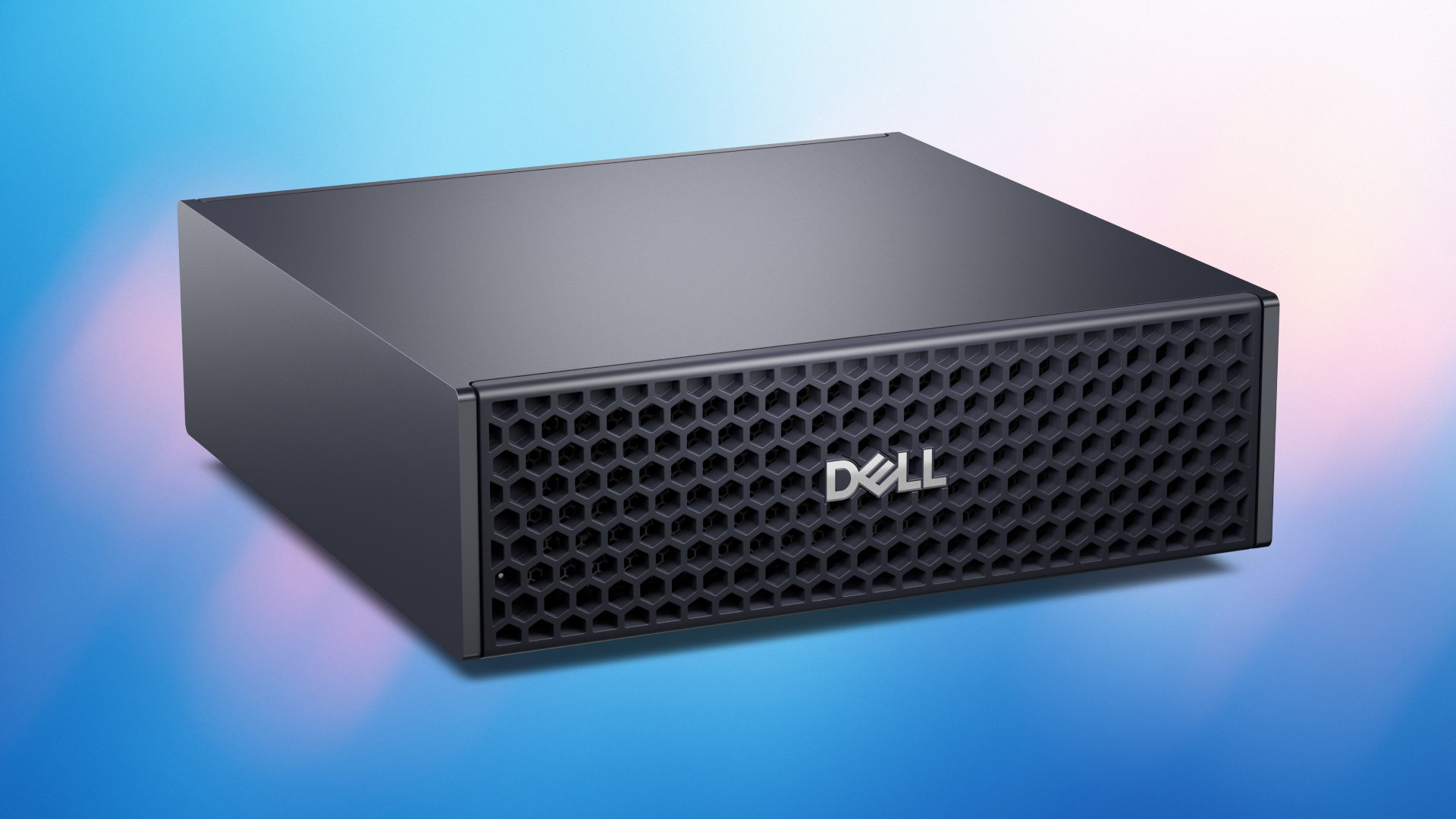 AI on the edge: 5 reasons to add a deskside AI accelerator like the Dell Pro Max with GB10
 Which form factor? When to choose the Dell Pro 7 in 13in, 14in, or 2-in-1 design
 How business leaders are using the Dell Pro 7 and Dell Pro 5
 The memory shortage is hitting PC sales hard, but vendor revenues are still growing at the expense of consumers
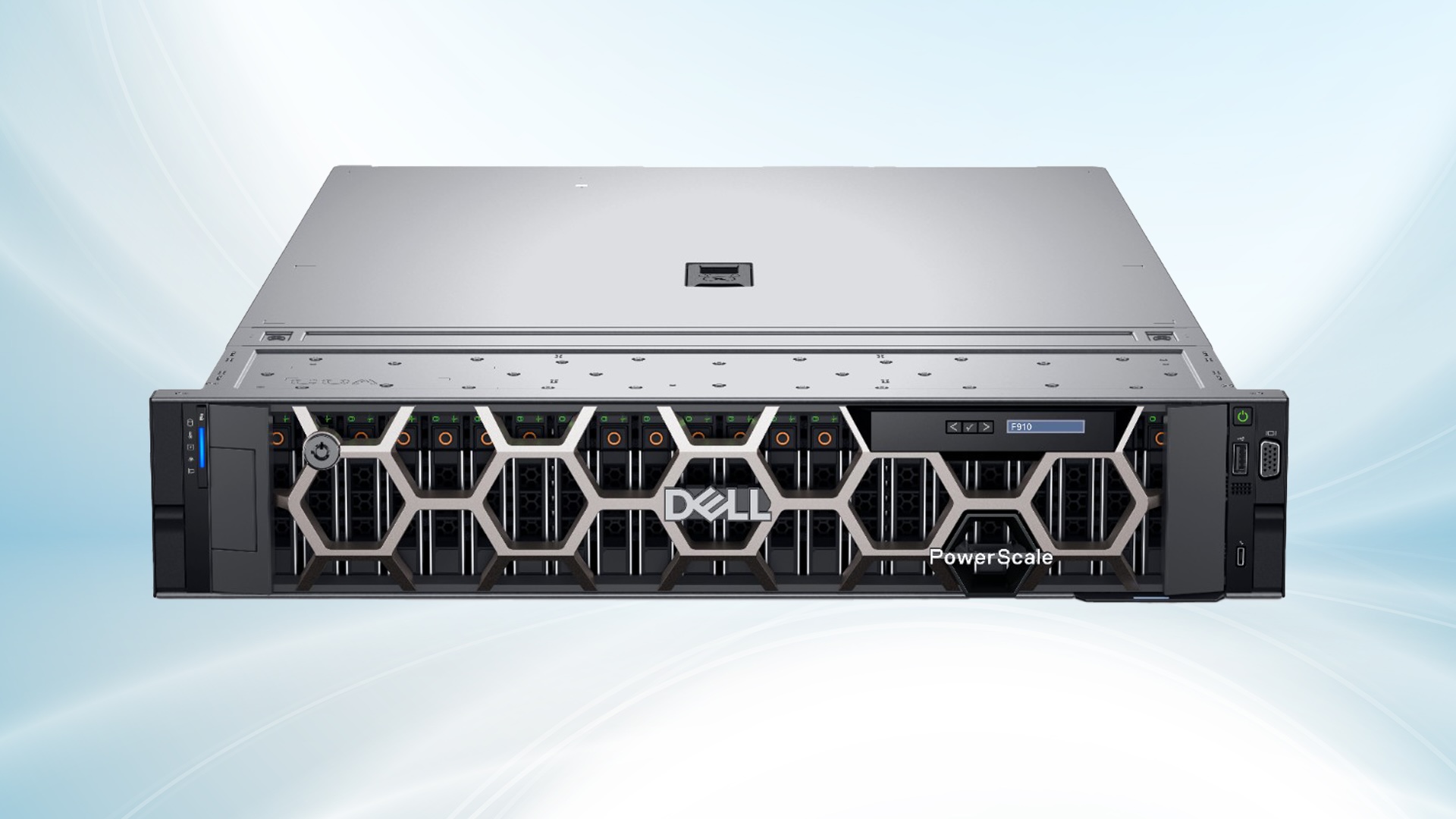 How the right automated storage management boosts AI and analytics pipeline performance and reliability
 10 future-ready security features of the Dell Pro 5 that growing businesses can rely on


