UK government to prioritize data center grid access, cut down on speculative applications
The new approvals system aims to put a halt to speculative connection applications
Sign up today and you will receive a free copy of our Future Focus 2025 report - the leading guidance on AI, cybersecurity and other IT challenges as per 700+ senior executives
You are now subscribed
Your newsletter sign-up was successful
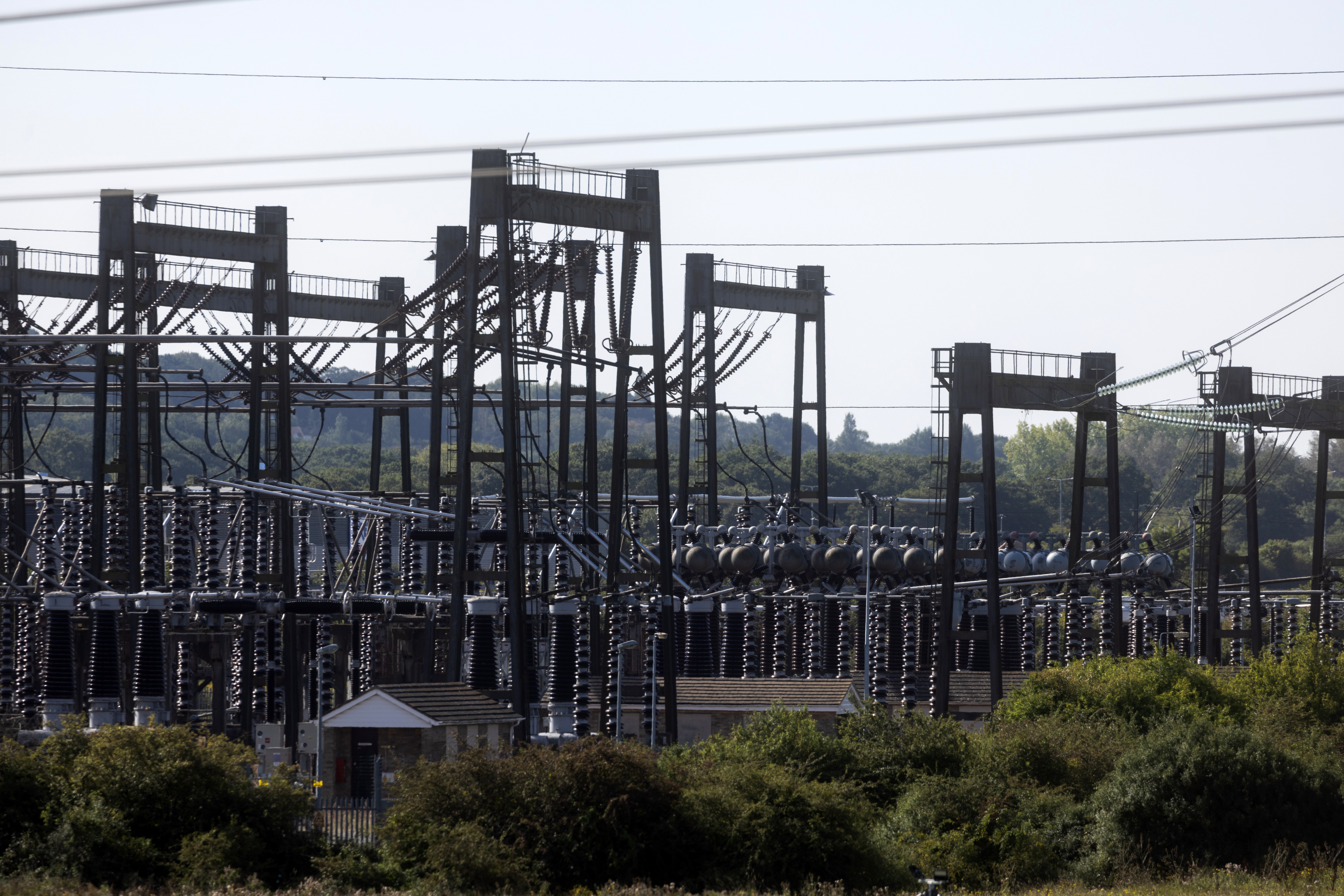
Frustrated by the rocketing number of requests to connect to the National Grid, the UK government is planning a new system that could see data centers prioritized.
Over the last six months, the queue for demand connections to the transmission network has grown by 460%, thanks largely to speculative applications.
These are swamping the pipeline, delaying connections for strategically important projects and leading to waits of up to 15 years.
The government’s answer is to prioritize certain projects, including AI data centers, AI Growth Zones, and industrial sites that can deliver growth and jobs.
"The UK is home to Europe’s leading AI ecosystem, with firms like Nscale and Wayve pulling in billions of pounds worth of investment," said AI minister Kanishka Narayan.
"Delivering data centers - which we’re turbo-charging through our AI Growth Zones - is fundamental to this work, and all of this relies on access to the grid. These timely reforms will help us move at pace, to seize AI’s potential to help build a wealthier and fairer Britain."
Along with prioritizing connections for key projects, the reforms aim to tackle speculative applications and create a fairer, more efficient system by making it harder to join and remain in the queue.
Sign up today and you will receive a free copy of our Future Focus 2025 report - the leading guidance on AI, cybersecurity and other IT challenges as per 700+ senior executives
Ofgem is now looking at how to achieve this, with measures likely to include increasing the financial requirements for developers in the queue – for example through deposits or fees which would be payable if key milestones are not met.
AI Growth Zones prioritized
The government will also publish a list of strategically important projects, particularly AI Growth Zones, which will be at the front of the queue as capacity is freed up or created.
It will also move to a “strategically aligned” process that prioritizes connections for facilities that are close to parts of the grid with high capacity, reducing the need for unnecessary new infrastructure.
"The surge in demand applications shows the strength of investment interest across Great Britain, but the demand connections pipeline must reflect projects that are credible, ready and committed to progressing," said Kayte O’Neill, COO of the National Energy System Operator (NESO).
"We are committed to working with government, industry and Ofgem to prioritise strategically important projects, while removing speculative applications. This will ensure data centres, industrial sites and vital public services can access clean, reliable power, while also supporting growth, innovation and jobs across Britain."
The initiative has been welcomed by the Confederation of British Industry (CBI), which has complained that delayed grid connections have consistently blocked business investment for several years.
“Prioritizing strategically important projects that bring jobs, investment and economic growth to communities across the country is the right approach to address a defunct and oversubscribed process that’s left major investors waiting up to 15 years to connect," said Jennifer Beckwith, CBI senior manager for energy transition.
“Alongside planning reforms, speeding-up grid connection is essential to give both domestic and international investors greater confidence that large-scale, high-value and economically significant projects can move more rapidly from development to delivery."
FOLLOW US ON SOCIAL MEDIA
Make sure to follow ITPro on Google News to keep tabs on all our latest news, analysis, and reviews.
You can also follow ITPro on LinkedIn, X, Facebook, and BlueSky.
Emma Woollacott is a freelance journalist writing for publications including the BBC, Private Eye, Forbes, Raconteur and specialist technology titles.
-
Thousands of Asus routers are being used to fuel a massive cyber crime spreeNews Black Lotus Labs has spotted a massive botnet of Asus routers built by malware that uses a common peer networking tool
-
New UK schemes aim to boost number of women in tech – and keep them in the sectorNews The initiative includes work placements and plans to help women return to the workforce after time away
-
Pulsant unveils high-density data center in Milton KeynesNews The company is touting ultra-low latency, international connectivity, and UK sovereign compute power to tempt customers out of London
-
Grid constraints are slowing down AWS infrastructure plans across Europe – and research shows it's only going to get worseNews Efforts by AWS to expand data center infrastructure across Europe face severe delays due to sluggish grid connection practices, a senior company figure claims.
-
AI’s future rests on copper, and global supply shortages could hamper big tech infrastructure plansNews Copper supply bottlenecks could put a huge dent future big tech infrastructure plans
-
Google drops $4.75bn on data center and energy firm IntersectNews The investment marks the latest move from Google to boost its infrastructure sustainability credentials
-
Pure DC’s announces 'Europe’s largest standalone hyperscale data center lease' in Amsterdam — but who is the mystery customer?News The company is now constructing a 78MW campus in Westpoort, Amsterdam
-
Can data center supply keep up with AI demand?News New research from Goldman Sachs points to a precarious balancing act for data center operators
-
UK to host largest European GPU cluster under £11 billion Nvidia investment plansNews Nvidia says the UK will host Europe’s largest GPU cluster, totaling 120,000 Blackwell GPUs by the end of 2026, in a major boost for the country’s sovereign compute capacity.
-
Plans announced to resurrect former steelworks as a ‘green’ data centerNews Plans have been put forward to transform the former Ravenscraig steelworks in Scotland into a green AI data center.