Nvidia CEO Jensen Huang says future enterprises will employ a ‘combination of humans and digital humans’ – but do people really want to work alongside agents? The answer is complicated.
Jensen Huang is the latest in a string of big tech execs to predict a hybrid human-AI workforce
Nvidia CEO Jensen Huang thinks future workforces will be made up of human and AI employees working in tandem, but this hybrid workforce could create challenges for enterprises.
Speaking during a recent interview at Citadel Securities’ 2025 Future of Global Markets conference, Huang pointed to recent advances in agentic AI – whereby autonomous agents conduct work on behalf of humans – as an indication that workforces will be fundamentally transformed.
This isn’t a case of firms building an array of autonomous workers, per se. Instead, these agents will essentially be akin to temps or agency staff that are brought in depending on their specific areas of “expertise”.
“I wouldn’t be surprised if you license some and you hire some, depending on the quality and depending on the deep expertise,” he said. “So future workforces in enterprise(s) will be a combination of humans and digital humans.”
Naturally, these agents will be provided by some of the leading companies operating in the space, such as OpenAI, and also spanning a range of areas.
The Nvidia chief specifically highlighted providers such as Replit, Cursor, and Lovable – all of which offer AI tools for use in software development.
The rise of AI workforces
Huang is by no means the first big tech exec to predict a shift toward AI-augmented workforces in recent months.
Sign up today and you will receive a free copy of our Future Focus 2026 report - the leading resource for IT decision-maker insight on priorities and investment areas in AI, security and more.
Indeed, since the advent of the generative AI ‘boom’, industry stakeholders have touted the potential for enterprises to cut down on human staff and replace them with AI.
While warnings over a complete disintegration of human workforces in place of AI were widespread in late 2022 and early 2023, the prevailing sentiment among some tech execs now points toward Huang’s prediction – somewhat of a hybrid setup.
Salesforce CEO Marc Benioff, for example, has been a highly vocal proponent of this idea. During an interview with Axios at the 2025 World Economic Forum, Benioff said current CEOs could be the last industry leaders to manage an all-human workforce as a result of AI agents.
“We are really moving into a world now of managing humans and agents together,” he told the publication.
Prepare to work alongside agents, but not for them
Predictions of a more collaborative human-machine workforce are gaining traction, with Microsoft’s Work Trend Index suggesting that workers will eventually be leading entire teams of agents.
Exactly how this relationship will work is still a point of contention, however. A recent survey from Workday found employees are warming to the use of AI agents at work – providing there are strict boundaries.
Three-quarters (75%) of respondents told Workday they’re comfortable working alongside agents, however, only 30% said they’d be comfortable being managed by one. The company noted that 12% were “not at all comfortable” at the prospect of being managed by an agent.
Huang pointed to the looming management-related quandaries facing enterprise leaders with this new workforce, suggesting the “hiring” process should still be viewed as the same as with humans.
“I tell my CIO, our company’s IT department [that] they’re going to be the HR department of agentic AI in the future,” he said. “They’re going to be the HR department of digital employees of the future”
“Those digital employees are going to work with our biological ones, and that’s going to be the shape of our company in the future.”
Nvidia appears to be putting its money where its mouth is on this front so far, with Huang revealing that in specific areas – such as cybersecurity – the company has more agents keeping watch than human staff.
"We home grow a lot of our AI's because we have a lot of proprietary knowledge and data that we want to protect, and we have skills in developing those AI's," he said.
In other domains such as software engineering and chip design, the company is also “augmenting” staff with AI, he added.
“At Nvidia today, 100% of our software engineers, 100% of our chip designers, every single engineer is augmented by Cursor,” Huang said.
Make sure to follow ITPro on Google News to keep tabs on all our latest news, analysis, and reviews.
MORE FROM ITPRO
- Jensen Huang has taken Nvidia to the top – but he says the 'suffering' wasn't really worth it
- Jensen Huang changes his tune on quantum computing after January stock shock
- Jensen Huang says AI will make workers ‘busier in the future’ – so what’s the point exactly?

Ross Kelly is ITPro's News & Analysis Editor, responsible for leading the brand's news output and in-depth reporting on the latest stories from across the business technology landscape. Ross was previously a Staff Writer, during which time he developed a keen interest in cyber security, business leadership, and emerging technologies.
He graduated from Edinburgh Napier University in 2016 with a BA (Hons) in Journalism, and joined ITPro in 2022 after four years working in technology conference research.
For news pitches, you can contact Ross at ross.kelly@futurenet.com, or on Twitter and LinkedIn.
-
CISA warns hackers are targeting Siemens industrial controllersNews Security agencies are warning that attackers are exploiting Siemens S7 Series programmable logic controllers to target critical infrastructure
-
Colt DCS names Quy Nguyen as chief executive officerNews The experienced leader steps into the role on a full-time basis following a four-month spell as acting CEO
-
“Enterprises are becoming much more rigorous about the economics of AI”: Snowflake wants to help you cut AI costs by choosing the right model for the right taskNews New dynamic model routing capabilities aim to help customers box clever when it comes to their AI model choice
-

Microsoft has joined the growing list of companies cracking down on ‘tokenmaxxing’News The company is updating internal guidance to reduce rising costs
-

‘AI cost management has the same problems that cloud had’: Enterprises are still facing huge AI bills thanks to ‘tokenmaxxing’ – that means FinOps practices are more important than everNews With firms facing surging AI bills, FinOps techniques are more important than ever
-
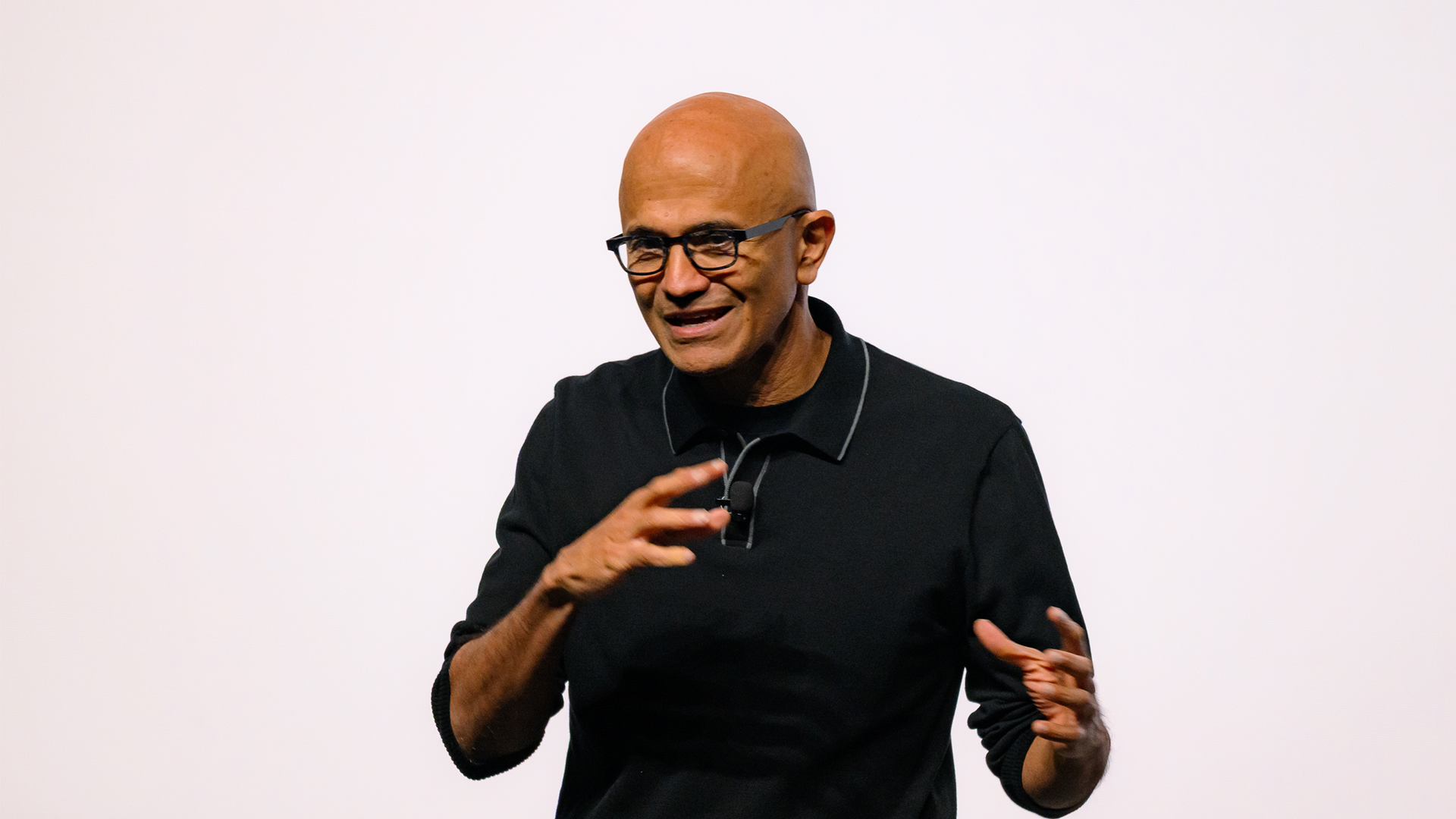
‘We are now seeing MAI models outperform general-purpose frontier models’: Microsoft CEO Satya Nadella touts in-house models to cut spiralling AI costs – and reduce growing reliance on frontier labsNews The Microsoft chief says pricey frontier models don't have to be used for every task, and its own in-house MAI models could be the key to reducing costs.
-

3 ways to get your data AI-readySponsored Data placement, preparation, and orchestration make or break an AI project – and the Dell AI Data Platform reduces the strain on enterprise IT teams across both storage and the data foundation
-

AI agents could make living off the land attacks ‘much more dangerous’, says CrowdStrike Field CTOAnalysis Living off the land attacks are evolving rapidly as threat actors target agents with deep access to enterprise networks and sensitive data
-
‘A company should be able to use a model without giving up the knowledge that makes it unique’: Microsoft CEO Satya Nadella says enterprises shouldn’t be sharing so much data with AI providersNews The Microsoft chief warned that corporate data could be at risk thanks to AI models
-
‘What we’re seeing right now is just rapid escalation in AI token spend’: Accenture tells staff to stop using AI for unnecessary tasks amid surging costsNews Accenture has told some staff to roll back the use of AI for basic tasks while the consultancy grapples with surging AI token costs.