Everything you need to know about Nvidia
A brief guide to Nvidia, a driving force behind technological innovation and one of the most valuable companies operating today

Nvidia stands as a pioneer in the technology sector, celebrated for its transformative contributions to graphics processing units (GPUs) and its influential role in driving advancements in artificial intelligence (AI) and high-performance computing.
Headquartered in Santa Clara, California, Nvidia's innovations have significantly shaped industries ranging from gaming and professional visualization to data centers and automotive technology. Its state-of-the-art AI platforms and technologies have been pivotal in fostering the widespread adoption of AI across various domains, solidifying Nvidia's reputation as a cornerstone of the AI revolution.
Beyond its technological achievements, Nvidia has also championed sustainability and inclusive development efforts. By integrating energy-efficient designs into its products and supporting initiatives that promote diversity in tech, the company actively contributes to building a future where innovation is matched by responsibility and equity.
History of the company
Quick Facts about Nvidia

Founded: April 5, 1993
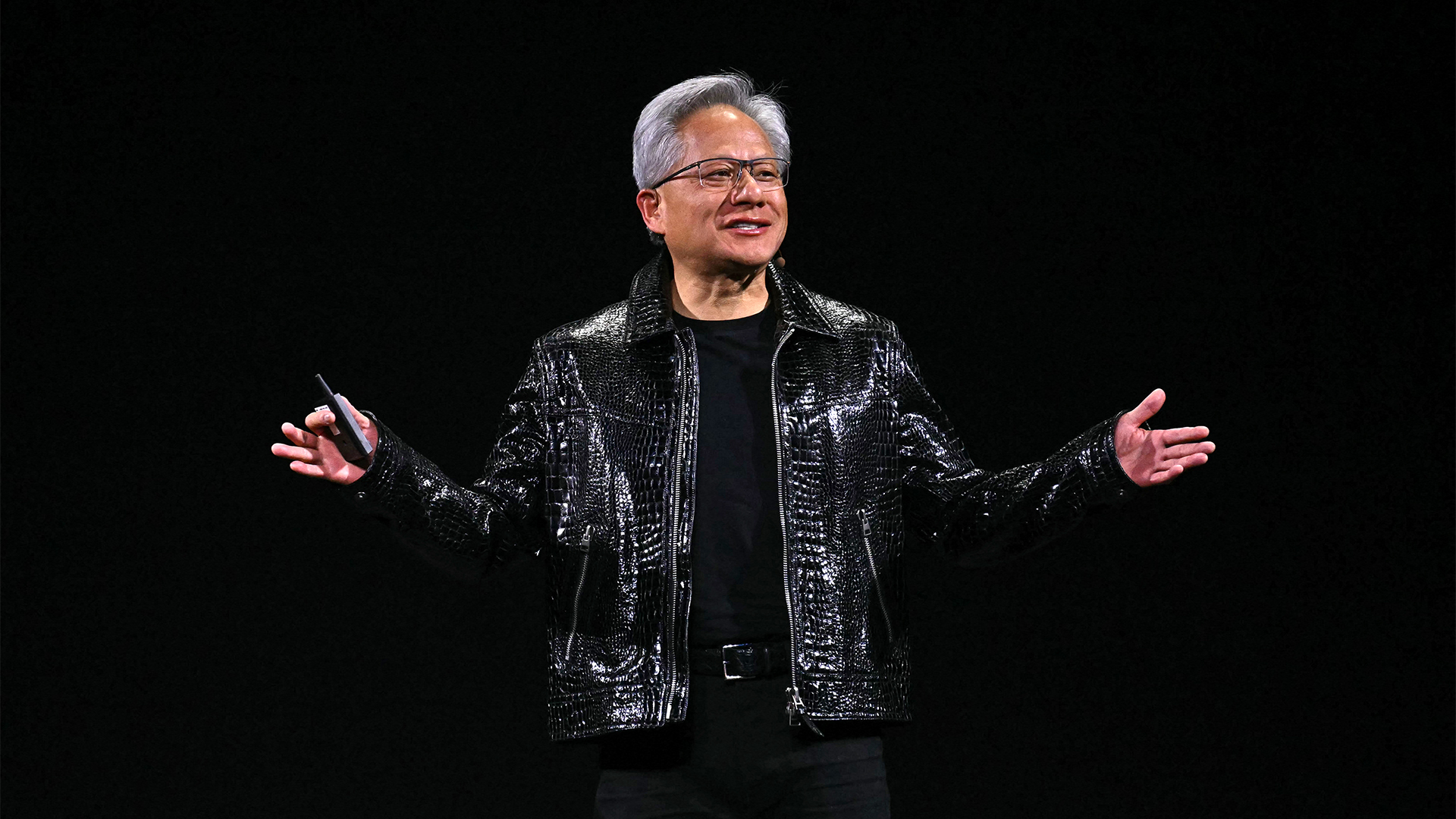
Founders: Jensen Huang (pictured), Chris Malachowsky, and Curtis Priem
Current CEO: Jensen Huang
Headquarters: Santa Clara, California, USA
Annual Revenue: $60.92 billion (2024)
Number of Employees: Approximately 36,000 as of early 2025
Market Capitalisation: Surpassed $3 trillion in June 2024
Nvidia was established in 1993 with a mission to bring advanced graphics to mainstream computing. Initially focused on 3D graphics for gaming and multimedia, the company made its first major inroad in 1999 with the release of the GeForce 256, recognized as the world’s first GPU. This invention not only transformed gaming graphics but also solidified Nvidia’s place in the industry as a leader in visual computing.
Over the following years, Nvidia expanded its focus from consumer graphics to professional applications, laying the groundwork for future innovations. In 2006, Nvidia introduced the CUDA (Compute Unified Device Architecture) platform, enabling developers to use GPUs for a wide range of computational tasks beyond graphics. This was a game-changer for high-performance computing, scientific research, and engineering, providing the power needed for complex simulations, data processing, and research in fields like genomics and weather forecasting.
As AI technology began to surge, Nvidia was well-positioned to capitalize on the trend, becoming a vital player in the AI and data center sectors. The company launched its DGX systems, designed specifically for AI research, providing researchers and organizations with the computational power to advance deep learning and machine learning models. Additionally, Nvidia's Omniverse platform has brought new capabilities to industries in need of 3D design and simulation, such as architecture, automotive, and media, offering collaborative, real-time environments for complex virtual worlds and digital twins.
Nvidia has utilised its knowledge in AI and machine learning to contribute to advancements in various sectors, including healthcare, autonomous vehicles, and cloud computing.
In 2024, Nvidia achieved significant milestones, notably surpassing Apple to become the world's most valuable company by market capitalization, reaching approximately $3.44 trillion. This surge was driven by increased demand for its AI chips from tech giants like Meta and Alphabet. Additionally, Nvidia addressed a design flaw in its Blackwell AI chips, collaborating with TSMC to resolve production delays and maintain its leadership in AI hardware.
From 2024 through mid‑2025, Nvidia has continued accelerating as an AI powerhouse. In June 2024, the company executed a 10‑for‑1 stock split and briefly became the world’s most valuable firm with a market cap exceeding $3.3 trillion.
At GTC 2025 in March, Jensen Huang unveiled the Blackwell Ultra AI platform designed for scalable AI inference and introduced both the Vera Rubin superchip (shipping late‑2026) and its successor Rubin Ultra (2027), aimed at dramatically boosting AI compute performance.
Nvidia also reported record fiscal Q4 2025 revenue of $39.3 billion, with datacenter sales up 93 percent year‑on‑year to $35.6 billion. The company forged strategic partnerships most notably with GM on autonomous vehicle AI and with Saudi‑backed Humain for GB300 Blackwell chip deployments supporting its $3 trillion+ valuation and fueling future growth. As of June 2025, Nvidia was preparing for its Rubin era (2026), while investors eagerly awaited the next catalyst to push its stock beyond the current ~$3.5 trillion valuation.
What does Nvidia sell?

Nvidia's product offerings span a wide range of industries, supporting everything from gaming and professional visualization to AI, data centers, and autonomous vehicles.
Nvidia is particularly dominant in the gaming industry; its GeForce GPUs are at the heart of PC gaming systems, delivering high-performance graphics that power immersive experiences.
The company is estimated to hold approximately 88% of the GPU market, significantly outpacing its closest rival, AMD. The Nvidia Shield series extends the company's reach into home entertainment, offering devices that combine streaming, gaming, and smart home capabilities. For cloud gaming, Nvidia provides GeForce Now, a subscription-based service that enables gamers to play high-quality games on virtually any device via cloud streaming.
For professionals in media, entertainment, and design, Nvidia offers its Quadro GPUs, known for their precision and reliability in 3D modeling, animation, and high-end visualization tasks.
In the data center sector, Nvidia has become a powerhouse with its AI-focused GPUs, particularly the A100 Tensor Core GPU, which supports demanding workloads in machine learning and inference. These GPUs are widely adopted by companies looking to scale AI operations and enable deep learning applications, ranging from natural language processing to image recognition.
Nvidia has also made significant advancements in the automotive industry, where its Nvidia DRIVE platform provides end-to-end solutions for autonomous vehicle development. DRIVE integrates powerful AI computing with sensor data processing, enabling advanced driver assistance systems (ADAS) and supporting fully autonomous driving features. This platform is central to Nvidia's vision of an AI-driven future for automotive safety and efficiency.
In addition to hardware, Nvidia offers platforms that streamline AI and machine learning development, such as the Jetson platform, designed for edge AI and robotics. Jetson provides compact, energy-efficient modules that support AI-driven applications at the edge, making it ideal for autonomous machines, drones, and IoT devices.
Nvidia’s product ecosystem also includes Omniverse, a collaboration platform for 3D design and simulation, allowing professionals across industries to work together in real time on complex digital projects. Through its comprehensive range of hardware, software, and cloud-based services, Nvidia is positioned as a key technology provider for industries undergoing rapid digital transformation.
Most recently, Nvidia has expanded its software capabilities with the launch of NIM (Nvidia Inference Microservices), a suite of prebuilt, containerized AI inference microservices optimised for its GPU platforms across cloud, data center, workstation, and edge environments. These microservices, unveiled at GTC 2025, support a growing catalogue of models, including Llama 3, Mistral, and domain‑specific systems, and integrate with frameworks like Triton, TensorRT‑LLM, and Kubernetes for scalable deployment.
At GTC, Nvidia also showcased its latest AI hardware innovation: the Blackwell Ultra NVL72 GPU for inference (shipping late 2025), alongside its Dynamo "AI‑factory" OS, Nvidia Cosmos for robotics, and the Groot N1 humanoid‑robot model demonstrating a tightly integrated stack from chips through software to real‑world AI use cases.
Nvidia’s mergers and acquisitions
To bolster its technological capabilities, Nvidia has made several strategic acquisitions.
In 2020, the company acquired Mellanox Technologies, enhancing its data center offerings.
Nvidia acquired DeepMap in 2021 to improve mapping solutions for autonomous driving, and in 2022, it strengthened its AI and high-performance computing capabilities by acquiring Bright Computing.
Although Nvidia's proposed acquisition of ARM Holdings was terminated in 2022 due to regulatory challenges, it underscored the company's ambition to expand its influence in the semiconductor industry.
In 2024, Nvidia continued its strategic expansion through several notable acquisitions aimed at enhancing its capabilities in AI and cloud computing.
In April 2024, Nvidia announced its agreement to acquire Run, an Israeli startup specializing in AI workload management and orchestration software. This acquisition is intended to optimize AI computing resources for customers, facilitating more efficient deployment and management of AI workloads across various infrastructures.
In July 2024, Nvidia acquired Brev.dev, a San Francisco-based startup that provides a development platform for building, training, and deploying AI and machine learning models on cloud-based GPU instances. This acquisition aims to simplify access to GPU resources across multiple cloud service providers, thereby enhancing Nvidia's cloud AI offerings.
In September 2024, Nvidia acquired OctoAI, a Seattle-based startup specializing in tools for building and running generative AI models more efficiently. This acquisition is expected to bolster Nvidia's capabilities in AI model deployment and optimization, further strengthening its position in the AI industry.
In 2025, Nvidia’s acquisition activity continued, with advanced talks to acquire Lepton AI, a startup that rents out Nvidia-powered servers for AI development, and the anticipated acquisition of Gretel, a synthetic data platform, to address data scarcity challenges and further integrate into the AI development pipeline. These moves signal Nvidia’s intent to expand its AI playbook and build a full-stack AI ecosystem.
Beyond acquisitions, Nvidia has ramped up its venture capital activity, participating in 49 funding rounds for AI companies in 2024 and increasing its investments through its corporate VC arm, NVentures. Notable investments include backing OpenAI, Scale AI, Crusoe, Mistral AI, and Lambda, among others.
According to Nvidia’s financial reports, the company invested over $1 billion in AI-related acquisitions, partnerships, and startup funding rounds during 2024, including these deals signalling its aggressive push to build a comprehensive AI ecosystem.
Nvidia’s financial strength, with fiscal 2025 revenue of $130.5 billion and net income of $72.9 billion, underscores its capacity to continue expanding through strategic acquisitions and investments
Key figures at Nvidia
Jensen Huang co-founded Nvidia and currently serves as its president and CEO. He has been a central figure in the company since its inception, providing ongoing leadership and direction for its strategic initiatives and innovation activities.
Colette Kress holds the position of executive vice president and CFO at Nvidia. In this capacity, she is responsible for managing the company’s financial strategy, as well as overseeing its financial operations and supporting its growth objectives.
Tim Teter is Nvidia’s executive vice president, general counsel, and secretary. He leads the company’s legal and regulatory affairs, ensuring compliance and managing legal matters relevant to the technology industry.
Jay Puri serves as executive vice president of worldwide field operations. His responsibilities include directing global sales and marketing strategies, which play a key role in Nvidia’s expansion and presence in international markets.
What can customers expect from doing business with Nvidia?

.Nvidia's customers work with a company that develops technology for a range of applications. The company's products are designed for high performance and are used in sectors from gaming and professional visualization to AI development. This positions Nvidia as a supplier of computing hardware and software for individuals and enterprises.
The company's core products, its GPUs, are segmented into different lines for specific markets. The GeForce series targets the consumer gaming market, focusing on graphics rendering capabilities. For the professional market, Nvidia's RTX series is designed for applications in fields like computer-aided design (CAD), media content creation, and scientific visualization. These products provide the computational power required for such specialized and demanding tasks.
In its product development, Nvidia includes energy efficiency as a key consideration. Its data center GPUs, including the A100 and subsequent architectures, are designed to manage power consumption while performing large-scale AI and high-performance computing (HPC) tasks. For customers, a focus on energy efficiency can lead to reduced operational costs. As part of its corporate strategy, Nvidia has also stated a goal of sourcing 100% of its global electricity from renewable energy.
Nvidia offers an ecosystem that encompasses hardware, software, and services. A component of this is the Omniverse platform, which is used for 3D simulation and the development of digital twins to model industrial and scientific processes. Through its combination of hardware for accelerated computing and software platforms for development, Nvidia provides tools used across various segments of the technology industry.
RELATED WHITEPAPER

- How Nvidia took the world by storm
- Northern Data Group becomes first company in Europe to acquire Nvidia H200 GPUs
- Nvidia thinks it’s time to start measuring data center efficiency by other metrics — is this the end of PUE?

-
 8 reasons the NVIDIA-powered Dell Pro Precision with GB10 could become every AI developer’s favorite tool
Sponsored How Dell Pro Precision with GB10 puts frontier-level AI compute on your desk (and could save you money on token spend)
-
 $3k a day on tokens? Dell’s deskside agentic AI Accelerators will save you money on AI development
Sponsored Enterprises are facing rising AI bills, but it doesn’t have to be that way


-
 Nvidia’s Hugging Face acquisition could pose a big threat to hyperscalers
News Nvidia already holds great sway in the AI infrastructure space, this could help “shape where AI workloads are built and deployed”
-
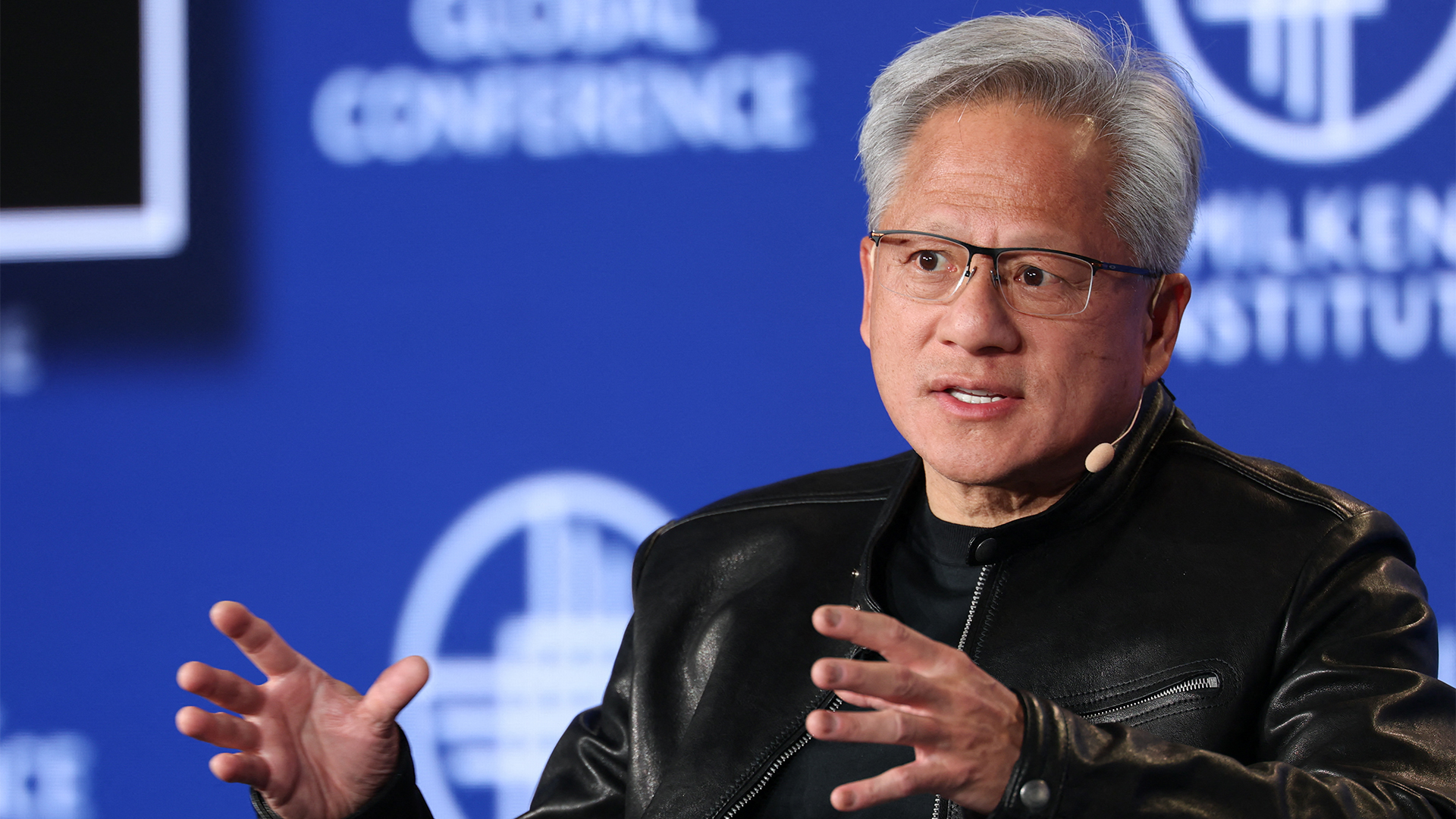 Nvidia CEO Jensen Huang says these professions will be the big winners of the generative AI boom
News White collar workers might be sweating, but Jensen Huang thinks skilled tradespeople will be in the vanguard of the AI revolution
-
 Startups get seal of approval from CrowdStrike, AWS, and Nvidia
News 35 startups are promised mentorship, technical expertise, go-to-market support, and ecosystem visibility
-
 Microsoft and Nvidia are teaming up again to support UK startups
News Agentic Launchpad will offer participants AI expertise, training and networking, and marketing support
-
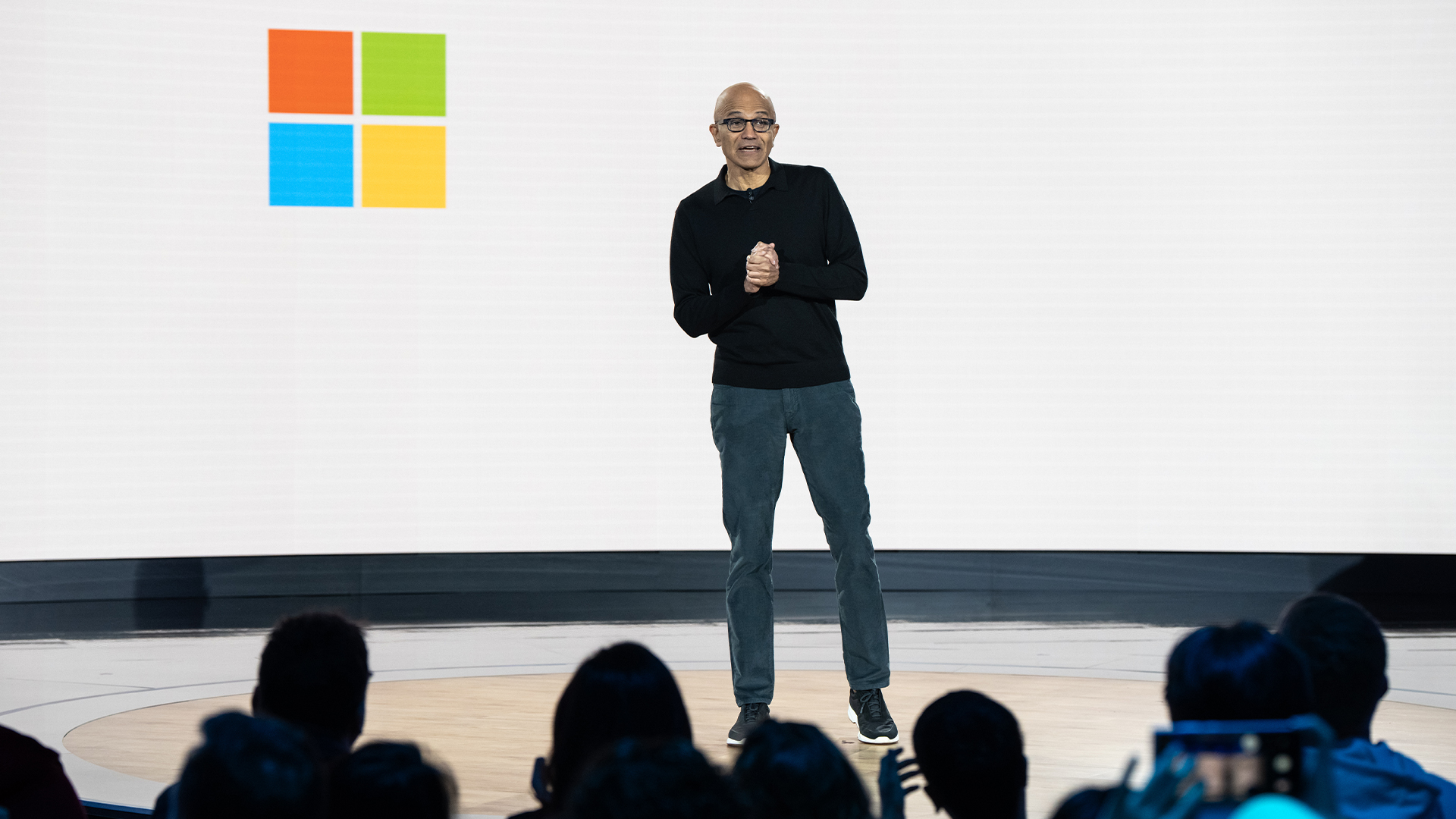 Microsoft CEO Satya Nadella says UK ties are 'stronger than ever' as tech giant pledges $30bn investment
News Microsoft CEO Satya Nadella says it's commitment to the UK is "stronger than ever" after the tech giant pledged $30bn to expand AI infrastructure and build a new supercomputer.
-
 Europe's first exascale supercomputer, Jupiter, is now live
News Planned uses for Jupiter include climate research, medical research and the development of multi-language LLMs
-
 Why does Nvidia have a no-chip quantum strategy?
As the world’s leading manufacturer of GPUs, Nvidia’s approach to quantum computing has left many experts baffled
-
 AMD to cut around 1,000 staff to focus on "growth opportunities"
News The AMD layoffs come after rival Intel cut staff on the back of flagging AI returns


