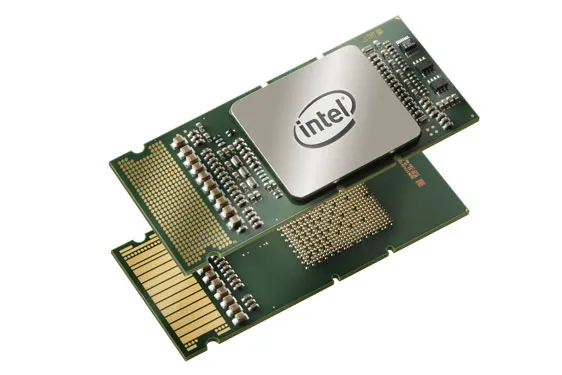

COMMENT It hasn't been a good year for HP. Besides all the furore over the change of CEOs and the very public indecision over webOS and its PC division, it has also gotten into controversy over Intel's Itanium server processors. HP has called on European regulators to investigate Oracle's decision to drop Itanium from its servers a move which it has publicly criticised as against customer interests and even sued its rival in the Californian courts.
Despite this surprisingly frank, public criticism of a major rival, HP itself helped cast doubt on the future of Itanium by announcing Project Odyssey. This initiative is supposed to replicate some of the advantages of HP-UX, the company's Unix-based operating system that runs on Itanium-based HP servers handling business critical tasks, in Windows or Linux running on servers using standard X86 processors.
Why would you make that inference that because I announce support for X86 that I'm less committed to Itanium? I'm very committed to Itanium!
We caught up with Martin Fink, Senior Vice President and General Manager of HP's Business Critical Systems unit, at the HP Discover event in Vienna and asked him whether Odyssey was a sign that HP was de-emphasising Itanium for its customers.
He strongly refuted this saying "You're making a statement that because I support X86, I can't support Itanium! But Oracle supports the X86 platform, but they still push SPARC and they haven't deemphasised. IBM pushes X86, but still push POWER and they haven't deemphasised. Why would you make that inference that because I announce support for X86 that I'm less committed to Itanium? I'm very committed to Itanium! It's a very common thing in the industry to support X86 and a proprietary hardware."
Fink added "our competitors have two completely separate families of computers. In the case of IBM, X86 and Power. We have one infrastructure which everything goes into. This is so much better for customers because they can deploy one infrastructure and can fill half of it with Itanium and half with X86. They can't do that with IBM or with Oracle."
Sign up today and you will receive a free copy of our Future Focus 2026 report - the leading resource for IT decision-maker insight on priorities and investment areas in AI, security and more.
-
Oracle expands HPE Juniper Networking deal to support AI infrastructure build-outNews The deal is aimed at supporting scale, performance, and availability as Oracle expands its AI superclusters
-
Intel to expand European chip production with €5bn Ireland investmentNews The company said the plans will create hundreds of jobs and help secure semiconductor supply chains across the EU
-
“A lot of other cloud vendors have been let off the hook”: Oracle leans hard on one-size-fits-all appeal of OCI for enterprisesOpinion Oracle sees its neutral approach to AI deployment, full-stack scalability, and commitment to sovereign deployment as its USPs in the age of agentic AI
-

MoD and Oracle forge closer ties as IT modernization acceleratesNews The UK’s defence ministry will move legacy systems to Oracle Cloud Infrastructure as part of the expanded agreement
-

Oracle’s new marketplace is a one-stop shop for enterprise AI agentsNews The cloud giant is the latest in a string of firms to launch AI marketplaces
-

Nvidia’s Intel investment just gave it the perfect inroad to lucrative new marketsNews Nvidia looks set to branch out into lucrative new markets following its $5 billion investment in Intel.
-

Oracle is reaping the rewards of OpenAI’s compute power spending spreeNews Blockbuster infrastructure deals have sent Oracle shares skyrocketing
-

The US government's Intel deal explainedNews The US government has taken a 10% stake in Intel – but what exactly does the deal mean for the ailing chipmaker?