FCC to consider huge update to minimum broadband speed
A new required speed of 100 Mbits/sec down would give consumers and small businesses a boost, but could raise prices

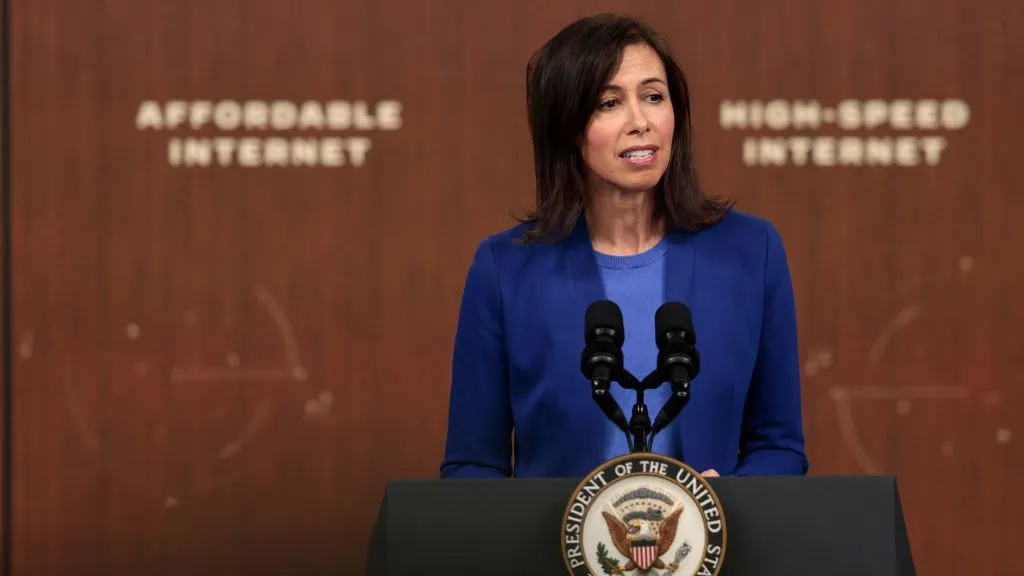
Under a new proposal by Federal Communications Commission (FCC) Chairwoman Jessica Rosenworcel, the minimum broadband speeds in America would be raised to 100 Mbits/sec down and 20 Mbits/sec up.
Rosenworcel's Notice of Inquiry raises the issue to her colleagues and will need to be voted on down the line. In 2015, the FCC set the minimum speeds required for an internet service to be considered ‘broadband’ at 25 Mbits/sec down and 3 Mbits/sec up. Internet service providers (ISPs) are currently required to meet these speeds to sell a service as ‘broadband’.
Under Rosenworcel’s predecessor Ajit Pai, the FCC declined to further raise the required speeds. This is despite the increased demand for internet services for working from home and the availability of services such as 4k streaming. Rosenworcel's Notice of Inquiry also proposes a goal of a minimum 1 Gbps/500 Mbits/sec for the future of American internet infrastructure.
If the changes went ahead, ISPs such as Comcast and Verizon might be forced to change pricing to fit the mandated speeds into their packages.
Last year, AT&T executive vice president Joan Marsh criticised proposals to subsidise rollout of fibre to homes and small businesses as unnecessary, stating in a blog post:
“There would be significant additional cost to deploy fiber to virtually every home and small business in the country when at present there is no compelling evidence that those expenditures are justified over the service quality of a 50/10 or 100/20 Mbps product.”
On the likelihood of price increases, Marsh highlighted the “consumer cost challenge” of providing fibre broadband to rural areas at an FCC estimated cost of $100 per month.
“Even the increased Emergency Broadband Fund $50 subsidy will deliver a low-income household less than half of the support it would need to fund such a high-speed service.
“As higher speed networks get deployed to rural America, the current availability challenge could easily become an affordability one.”
A 2021 report by the Government Accountability Office found that current broadband speeds are insufficient to support small businesses, raising the possibility of broadband speed increases to provide support for companies that do not have access to the high speeds enjoyed by larger corporations based in or near major cities.

Your key to digital differentiation and competence
Database services fit for app modernisation, cloud-native innovation, and data-driven strategies
The report further cites data from the National Federation of Independent Business and from Google to highlight that 8% (2 to 3 million) of small businesses in the US lack access to broadband entirely.
The Biden administration reached an agreement with 20 broadband providers in May to improve internet speeds or cut prices of existing broadband packages to improve broadband access. The move comes as part of the wider Internet for All initiative, a $45 billion plan to expand high-speed broadband connectivity currently in the early stages of deployment.
Last year's Rural Digital Opportunity Fund (RDOF) had been earmarked to provide nearly $10 billion to ISPs via reverse auction to expand internet access in rural areas. Shortly into the bidding process, however, the FCC called the legitimacy of some companies into question.
Expanding high-speed broadband to all Americans would also impact the business model of companies such as SpaceX.
Through their service Starlink, the spacecraft manufacturer and satellite communications company currently provides internet access to tens of thousands of customers in the United States, with a specific goal to give those in remote wilderness areas internet at speeds around 50-250 Mbits/sec down.
The consistency of wired internet versus the frequent outages suffered by satellite internet services could drive rural customers away from Starlink if they were offered a viable, high-speed internet package from a traditional provider.

-
 TfL takes Oyster photocard systems offline following breach
News Security experts warn the Oyster photocard breach could lead to follow-up attacks on victims
-
 Irish credit unions hit by data breach after IT provider compromised
News Wellington IT reportedly delayed alerting customers by multiple weeks


-
 Meta is building the world’s longest subsea cable: Project Waterworth will span 50,000 km and connect five continents – and it aims to boost global connectivity and AI services
News Meta has announced plans to build the world's longest subsea cable in a bid to supercharge global connectivity and drive AI innovation.
-
 Biden sets June deadline for $42 billion broadband funding outline
News The announced deadline come prior to a much-awaited update to the FCC's US broadband map, giving a clearer image of the internet challenges facing the nation
-
 US telcos request $5.6 billion to rip out Huawei, ZTE equipment
News The FCC says it has received 181 applications from small carriers to access its funding
-
 FCC expels China Telecom from the US
News The Commission states it is safeguarding the nation’s telecommunications infrastructure from potential security threats
-
 Biden signs executive order calling for net neutrality to be restored
News The president is aiming to 'restore competition' in the US economy
-
 FCC commissioner calls for big tech to help bridge digital divide
News FCC’s senior Republican wants the likes of Amazon, Apple, Facebook, and Google to help pay for broadband expansion
-
 FTC and states sue Frontier Communications for misrepresenting internet speeds
News Suit alleges Frontier offered higher speeds than it could offer in rural areas
-
 Most comments in FCC net neutrality consultation were reportedly fake
News Subcontractors allegedly used stolen data for government petitions