World’s fastest supercomputer to power tsunami evacuation drills
Fujitsu will use Fugaku and a smartphone app to notify residents about the arrival time and flooding height of a predicted tsunami

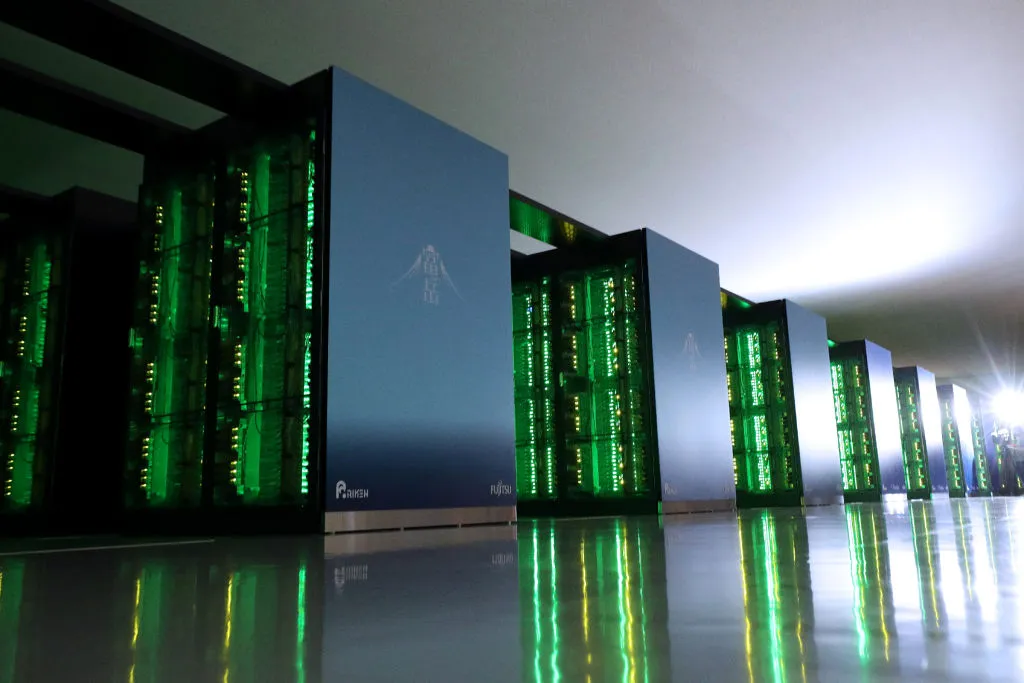
Fujtisu’s Fugaku supercomputer is going to be used in tsunami evacuation drills in Japan to help identify ways the technology can support local communities during a natural disaster.
The supercomputer’s AI will be put through a field trial to provide high-resolution, real time tsunami flooding forecasting to support safe and efficient evacuations during drills in Kawasaki later this month.
The trial, announced today, is being organised by the International Research Institute of Disaster Science (IRIDeS) at Tohoku University, the Earthquake Research Institute at the University of Tokyo, the city of Kawasaki, and Fujitsu itself.
Participants from the surrounding community will be notified about the arrival time and flooding height of a predicted tsunami through a smartphone app developed by Fujitsu. The exercise hopes to identify the best ways to use the technology to support local communities in sharing information between residents and avoid cases of people being left behind during evacuations.
The project is the latest milestone in an ongoing initiative between the parties. Fujitsu and Kawasaki city signed a framework agreement in 2014 to prompt the creation of sustainable communities. As part of this, the four entities have been engaging in research and development activities since 2017 as part of the “Joint Project Aiming for Tsunami Disaster Risk Reduction Using ICT in the Kawasaki Coastal Area”.
After the trial has finished, and based on feedback of its participants, the parties will further investigate methods to transmit and use AI disaster forecasting to carry out safer and more efficient community-based evacuation.
How will the trial work?
A number of participants will be briefed in advance of the field trial and will act as disaster information leaders. They will receive detailed information about the tsunami, including its predicted arrival time and flooding height, while others will receive a text message on the app indicating that AI has forecast flooding for their location. These participants will also be told that there exists a possibility the AI forecast information isn’t 100% certain.
During evacuation, disaster information leaders will be able to check the current location of participants in the same community and alert those who are slow to move using the app’s messaging function.
Following the trial, there will be an online prevention course in which the actions of participants will be reviewed.
How does the app work?
The app has two display modes. The first is a detailed mode, in which AI-generated tsunami flooding forecast data is displayed on a map in different colours, corresponding to the arrival time and flooding height of the incoming wave.
The second mode is a simple display that allows users to check the location of other community members on a map and help each other to communicate and gather safely during the evacuation.

Users can also post and share information on points along evacuation routes that may be damaged or difficult to pass, a function that has been trialled in the past, and also share real-time information about the number of people who have successfully evacuated and gathered at evacuation centres.
Why is this technology needed?
Why smart businesses view a data fabric as an inevitable approach to becoming data driven
Adopting a data-driven strategy for success
Fujitsu said that during recent years, several different technologies have been developed for real time tsunami flooding forecasts that make use of the capabilities of high-speed supercomputers and AI. However, there are barriers to the practical deployment of such technologies, including how to share relevant information in an inclusive and effective manner with the public, taking into account individual differences of users and varying levels of digital literacy.
The trial aims to address some of these challenges by using the technology with real residents of the community in circumstances that replicate the uncertainty of an actual disaster. This includes the possibility that the AI forecast information itself isn’t 100% certain.
This isn’t the only project Fugaku has been involved in, as the supercomputer was used in Covid-19 research in June last year. The project was aiming to use Fugaku to identify small molecule inhibitory compounds that can be used as potential drugs in treatments for Covid-19, leading to the eventual development of small molecule therapeutic drugs. The project began in June 2021 and is set to finish this month.


-
 AWS pledges $50 billion to expand AI and HPC infrastructure for US government clients
News The company said an extra 1.3 gigawatts of compute capacity will help government agencies advance America’s AI leadership
-
 Discover the six superpowers of Dell PowerEdge servers
whitepaper Transforming your data center into a generator for hero-sized innovations and ideas.
-
 Enhance end-to-end data security with Microsoft SQL Server, Dell™ PowerEdge™ Servers and Windows Server 2022
whitepaper How High Performance Computing (HPC) is making great ideas greater, bringing out their boundless potential, and driving innovation forward
-
 Dell PowerEdge Servers: Bringing AI to your data
whitepaper How High Performance Computing (HPC) is making great ideas greater, bringing out their boundless potential, and driving innovation forward
-
 Dell Technologies AI Fabric with Dell PowerSwitch, Dell PowerEdge XE9680 and Broadcom stack
whitepaper How High Performance Computing (HPC) is making great ideas greater, bringing out their boundless potential, and driving innovation forward
-
 Drive powerful AI insights with an open ecosystem
whitepaper Dell PowerEdge XE9680 server with AMD Instinct™ MI300X Accelerator and ROCm™ 6 open software platform
-
 Advance sustainability and energy efficiency in the era of GenAI
whitepaper Take a future-ready approach with Dell Technologies and Intel
-
 HPE supercomputer push continues with Aurora
The new HPE supercomputer is the ‘largest AI-capable system in the world’ and will support research into areas including neuroscience, particle physics, and pharmacology


