AMD launches 16-core chips for cloudy goodness
The 16-core chips should benefit cloud users looking for scalability and efficiency.
AMD has launched its first 16-core Opteron chips, designed with cloud servers in mind.
It has been a long wait for the chips, which contain more cores than any other x86 chips on the market today, as the industry has known about them for a year now.
With more cores on board, AMD is hoping cloud-focused manufacturers will jump on the new chips, which the vendor believes are the "natural choice for heavy-threaded cloud computing environments."
The wait for the most anticipated new product and architecture for servers is over.
Designed on AMD's new Bulldozer architecture, the Opteron 6200 will appear in Acer, Cray, Dell, HP and IBM servers in the "coming days and weeks," the vendor said.
There are 10 different models of the Opteron 6200, ranging from four cores to 16, with the maximum clock speed hitting 3.3GHz. AMD's Turbo CORE Technology allows for an extra power boost of up to 500MHz.
AMD claimed the new chips offered up to 89 per cent greater performance than other server processors costing the same price.
Sign up today and you will receive a free copy of our Future Focus 2026 report - the leading resource for IT decision-maker insight on priorities and investment areas in AI, security and more.
"Our industry is at a new juncture; virtualisation has provided a new level of reliable consolidation and businesses are now looking to the cloud for even more agility and efficiency. We designed the new AMD Opteron processor for this precise moment," said Paul Struhsaker, corporate vice president and general manager for Commercial Business, AMD.
"The wait for the most anticipated new product and architecture for servers is over. Leading OEMs are now offering cloud, enterprise and HPC customers a full suite of solutions based on the industry's most comprehensive server processor portfolio, the new AMD Opteron family of processors which deliver an inspired balance of performance, scalability and efficiency."
The chip maker is looking to make a big impact on the x86 market, which Intel still dominates. Much emphasis has gone on the power savings of the Opteron models.
"When these energy efficient processors are used in servers, the server power savings can be dramatic as much as a 20 per cent reduction in server active idle power and an 18 per cent increase in server performance-per-watt," said Andy Parma, a product marketing manager for at AMD, in a blog post.
AMD also announced its new Opteron 4200 chips, claiming it is the "world's lowest power-per-core server processor built to deliver unparalleled efficiency for complex, technical workloads."
There are eight different models for the Opteron 4200 design, with a top clock speed of 3.3GHz. Customers can choose between six and eight-core models.
Tom Brewster is currently an associate editor at Forbes and an award-winning journalist who covers cyber security, surveillance, and privacy. Starting his career at ITPro as a staff writer and working up to a senior staff writer role, Tom has been covering the tech industry for more than ten years and is considered one of the leading journalists in his specialism.
He is a proud alum of the University of Sheffield where he secured an undergraduate degree in English Literature before undertaking a certification from General Assembly in web development.
-
Why the MSSP model is broken, and how to fix itIndustry Insights CISOs are struggling to differentiate between MSSPs due to confusing metrics and SLAs
-
eSentire partners with CMS Distribution to expand UK and Ireland channel reachNews CMS Distribution’s partner ecosystem now has access to eSentire’s cyber security and managed detection and response services
-
EuroHPC selects Bull to lead €387m Lumi-AI supercomputer contractNews The announcement marks the first major deal for Bull since it was renationalized by the French government
-
AMD talks up sustainability efforts with rack-scale energy efficiency gainsNews The company says it can help deliver more AI performance without increasing power, improve cost of ownership, and help customers scale faster
-

AMD partners with Cerebras for ultra-low latency AI infrastructureNews The solution brings together AMD Helios and Cerebras Wafer-Scale Engine into a single solution
-
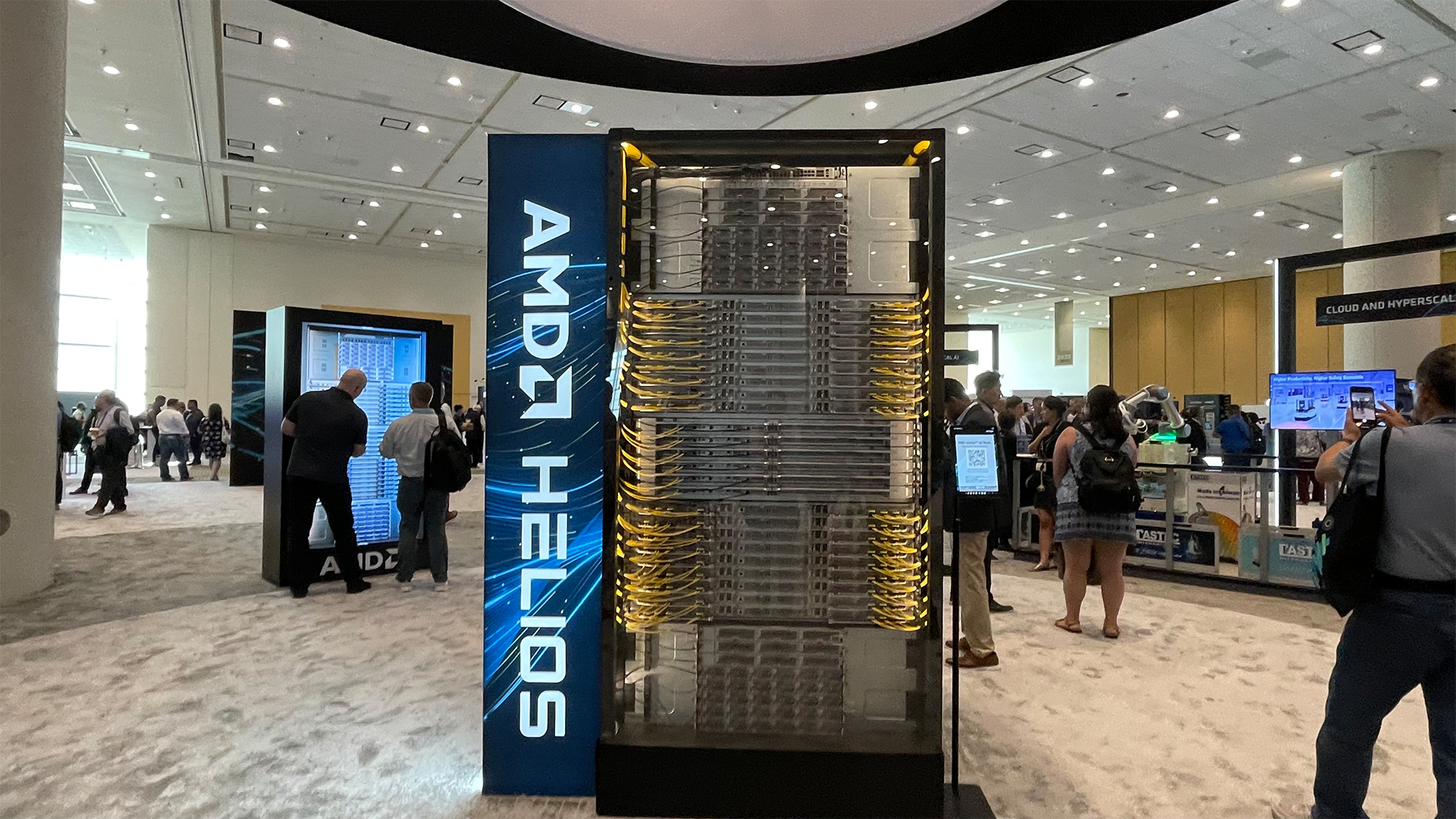
AMD Advancing AI 2026: Helios on the rise, with launch of new Instinct GPUsNews The rack-scale architecture announced in 2025 is finally rolling off the production line
-
AMD adds Microsoft to its growing roster of Helios customers as firm launches three new VMs for Azure usersNews The collaboration marks the latest big tech customer for AMD’s “game changer” Helios system
-

What to expect at AMD Advancing AI 2026Here are three things I expect to hear about at AMD’s annual get together – and one I don’t
-

Looking to build an AI data center? Here’s five reasons to go with AMD EPYC CPUsHigh core density, inference, and scalability are just some of the benefits of an AMD EPYC CPU
-
How AMD EPYC CPUs and AMD Instinct GPUs are powering the world's HPC facilitiesSponsored AMD offers powerful chipsets for AI and traditional HPC workloads, including native FP64 support