AMD CEO Lisa Su hails ‘excellent quarter’ as data center sales underpin ‘record revenue and profitability’
The record-breaking quarter comes as AMD prepares to roll out its Helios rack-scale architecture later this year
AMD CEO Lisa Su has hailed the company’s record second quarter earnings as revenue surged 50% at the chipmaker.
Figures from AMD’s quarterly earnings report show revenue at the firm reached $11.54 billion, a sharp increase on the $7.69bn recorded in the same period last year.
“We delivered an excellent quarter, with record revenue and profitability as data center revenue more than doubled year-over-year,” Su said in a statement.
A key factor in this growth, the company noted, lies in surging data center hardware sales. Figures show revenue from its data center segment reached $6.7 billion, marking a 107% year-on-year increase.
“Revenue increased 50% year-over-year to a record $11.5 billion, driven by continued strength in our Data Center business, which represented 58% of company revenue in the quarter,” said Jean Hu, AMD’s executive vice president and chief financial officer (CFO).
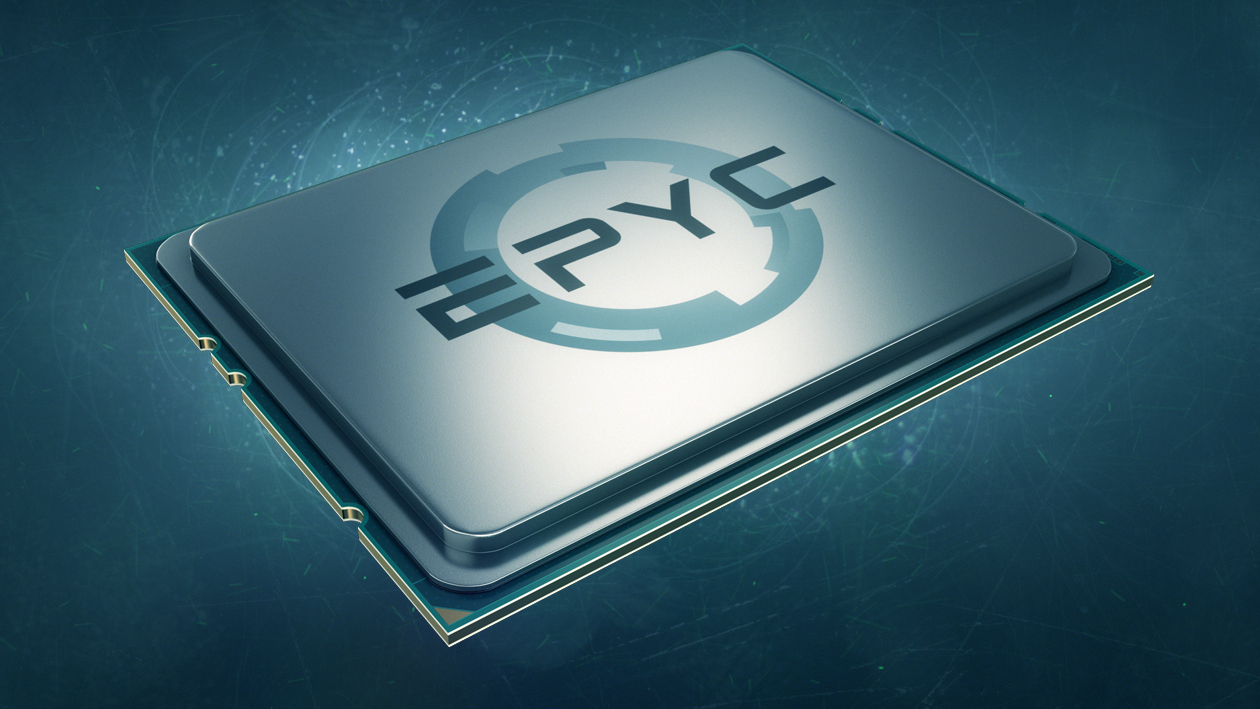
This revenue growth comes as the firm begins the roll-out of the Helios system, AMD’s first rack-scale AI architecture. The system combines Epyc CPUs, Instinct GPUs, Pensando networking, and Rocm software, and competes directly with Nvidia’s Vera Rubin rack.
As ITPro reported at AMD Advancing AI last month, a host of big tech companies including Microsoft, OpenAI, Anthropic, Meta, and Oracle have confirmed plans to purchase the system. AMD expects to ramp up shipments of Helios in the fourth quarter of 2026.
Sign up today and you will receive a free copy of our Future Focus 2026 report - the leading resource for IT decision-maker insight on priorities and investment areas in AI, security and more.
Advancing AI 2026 also saw the firm launch the new Instinct MI400 Series GPU family, as well as the sixth-generation Epyc CPU range.
AMD chief executive Lisa Su said the company expects continued demand for Helios as well as its flagship CPU and GPU ranges across the rest of 2026.
“We enter the second half with strong momentum as Epyc demand accelerates, Instinct deployments scale and Helios begins to ramp,” she said.
“More broadly, AI is driving a significant expansion in demand for compute across all of our markets, and our leadership portfolio and growing customer visibility position us exceptionally well to capture this expanding opportunity and deliver substantial revenue and earnings growth in the years ahead.”
AMD expects further data center growth
In an earnings call, Su told analysts the firm projects data center sales to double in 2027, with server revenue expected to surge around 80% in the second half of 2026.
“Demand for both accelerators and CPUs is growing well above our prior expectations,” she said. Demand for Epyc CPUs is also growing, with hyperscale providers flocking to the processor series.
“Hyperscalers continued expanding Epyc across their internal infrastructure and public cloud offerings, including AWS, Microsoft, Google, Oracle, and others,” Su added.
The AMD chief noted that heightened interest in Epyc processors has enabled the firm to capture market share from Intel, a key competitor on this front.
CPUs have become increasingly important for AI inference, particularly since the advent of agentic AI. As ITPro previously reported, GPU demand surged during the early days of the generative AI boom, powering AI training processes.
However, the processing demands placed on infrastructure by agents means CPUs and other specialized chips, such as application-specific integrated circuits (ASICs), have grown in popularity.
FOLLOW US ON SOCIAL MEDIA
Follow ITPro on Google News and add us as a preferred source to keep tabs on all our latest news, analysis, views, and reviews.
You can also follow ITPro on LinkedIn, X, Facebook, and BlueSky.

Ross Kelly is ITPro's News & Analysis Editor, responsible for leading the brand's news output and in-depth reporting on the latest stories from across the business technology landscape. Ross was previously a Staff Writer, during which time he developed a keen interest in cyber security, business leadership, and emerging technologies.
He graduated from Edinburgh Napier University in 2016 with a BA (Hons) in Journalism, and joined ITPro in 2022 after four years working in technology conference research.
For news pitches, you can contact Ross at ross.kelly@futurenet.com, or on Twitter and LinkedIn.
-
WatchGuard Firebox M4850 reviewReviews The powerful and flexible M4850 delivers a wealth of easily managed security services and heaps of high-speed ports all at a sensible price
-
After OpenAI-Hugging Face, how do IT leaders need to change the way they think about AI?In depth The OpenAI-Hugging Face incident and Anthropic admission soon after have opened up new conversations about controls around AI. How should IT leaders change their thinking about the technology?
-
Is AMD EPYC the right CPU for your AI models?These top tips will help you decide if AMD EPYC CPUs are the right fit for your AI models
-
AMD and Samsung forge closer ties on AI memory, potential foundry dealNews The pair are forging closer ties on chip development and future foundry opportunities
-

AMD thinks ‘AI on the PC has crossed an important line’ – the rise of ‘Agent Computers’ will be the next big breakthroughNews The chipmaker believes “Agent Computers” will be the next big breakthrough with on-device AI capabilities
-
Framework Desktop review: Modular design and ferocious AMD performanceReviews AMD's Ryzen Max CPUs debut in Framework's impressive modular self-build small-form desktop PC
-
AMD chief exec Lisa Su says its new Helios AI rack is a 'game changer' for enterprises ramping up inference – here's whyNews The integrated hardware offering will feature upcoming AMD chips and networking cards
-
AMD Advancing AI 2025: All the latest news and updates from San JoseFollow all the news and updates live from AMD's latest Advancing AI conference
-
What enterprises need to be Windows 11 readySupported Hardware purchasing will play a key role in delivering success during the Windows 11 migration rush
-
Why the CPU you chose is the key to Windows 11Supported The end of Windows 10 is on the horizon – it’s time to upgrade to an fTPM-protected processor