UK launches national body to develop quantum standards
The Quantum Standards Network will work to align standardization across sectors and strengthen the UK's global presence


-
 Gartner: here's how AI will remake business in the next three years
News You've got three years to prep for these new attacks and challenges thanks to AI, says Gartner
-
 Two-thirds of cyber threats still require manual resolution
News Security teams are spending most of their time on reactive alert triage and manual data gathering, with little left over for proactive threat hunting


-
 Lloyds Bank touts quantum potential in anti-fraud activities
News The bank said quantum algorithms showed long‑term promise, especially when used to complement AI and classical machine learning
-
 IBM is targeting 'quantum advantage' in 12 months – and says useful quantum computing is just a few years away
News Leading organizations are already preparing for quantum computing, which could upend our understanding of linear mathematical problems
-
 Sundar Pichai thinks commercially viable quantum computing is just 'a few years' away
News The Alphabet exec acknowledged that Google just missed beating OpenAI to model launches but emphasized the firm’s inherent AI capabilities
-
 Future-proofing cybersecurity: Understanding quantum-safe AI and how to create resilient defenses
Industry Insights Practical steps businesses can take to become quantum-ready today
-
 IBM and AMD are teaming up to champion 'quantum-centric supercomputing' – but what is it?
News The plan is to integrate the two technologies to create scalable, open source platforms
-
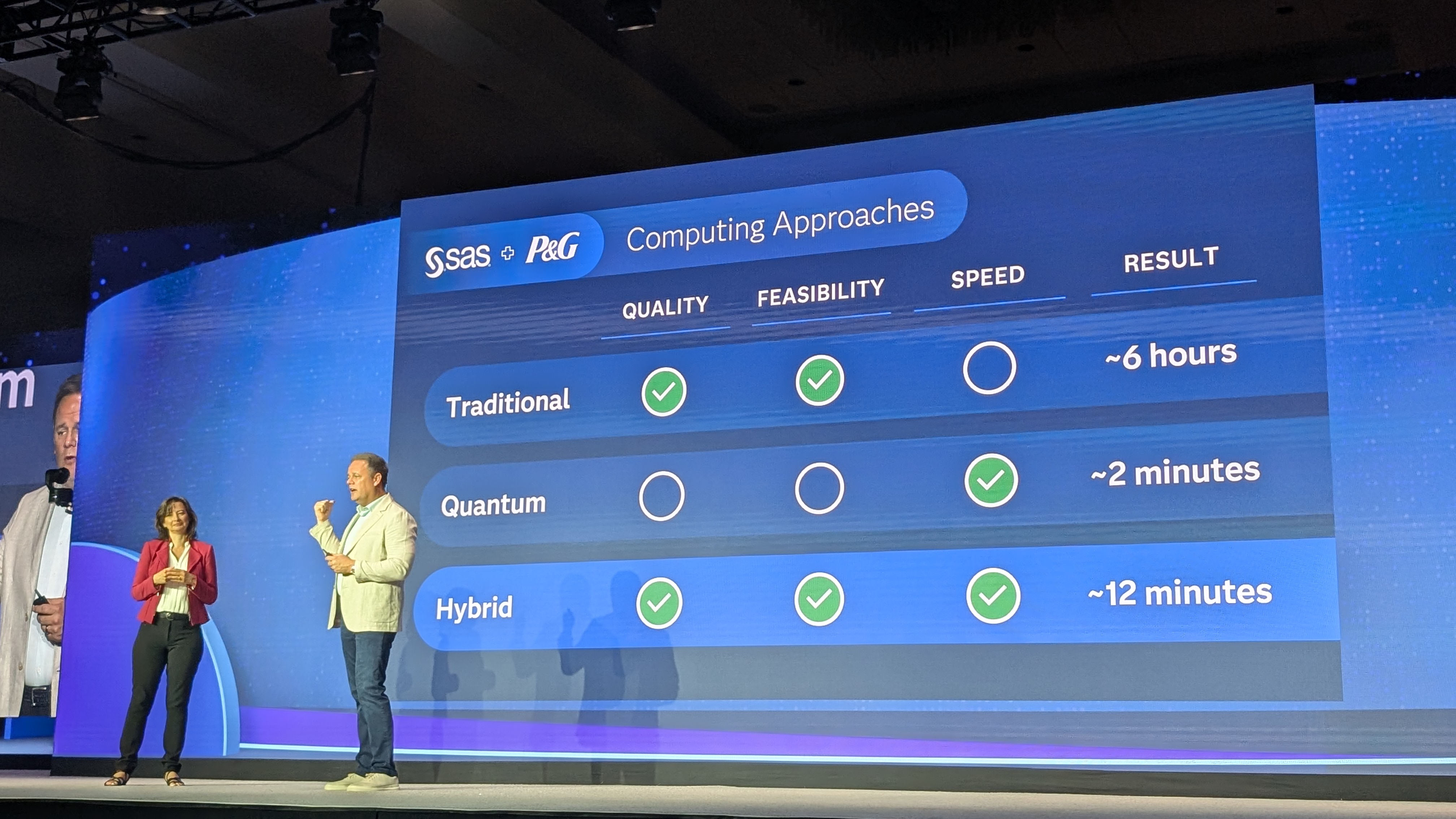 SAS thinks quantum AI has huge enterprise potential – here's why
News The analytics veteran has shone a light on three crucial quantum partnerships, as it warns organizations must innovate or fall prey to new threats
-
The UK government wants quantum technology out of the lab and in the hands of enterprises
News The UK government has unveiled plans to invest £121 million in quantum computing projects in an effort to drive real-world applications and adoption rates.
-
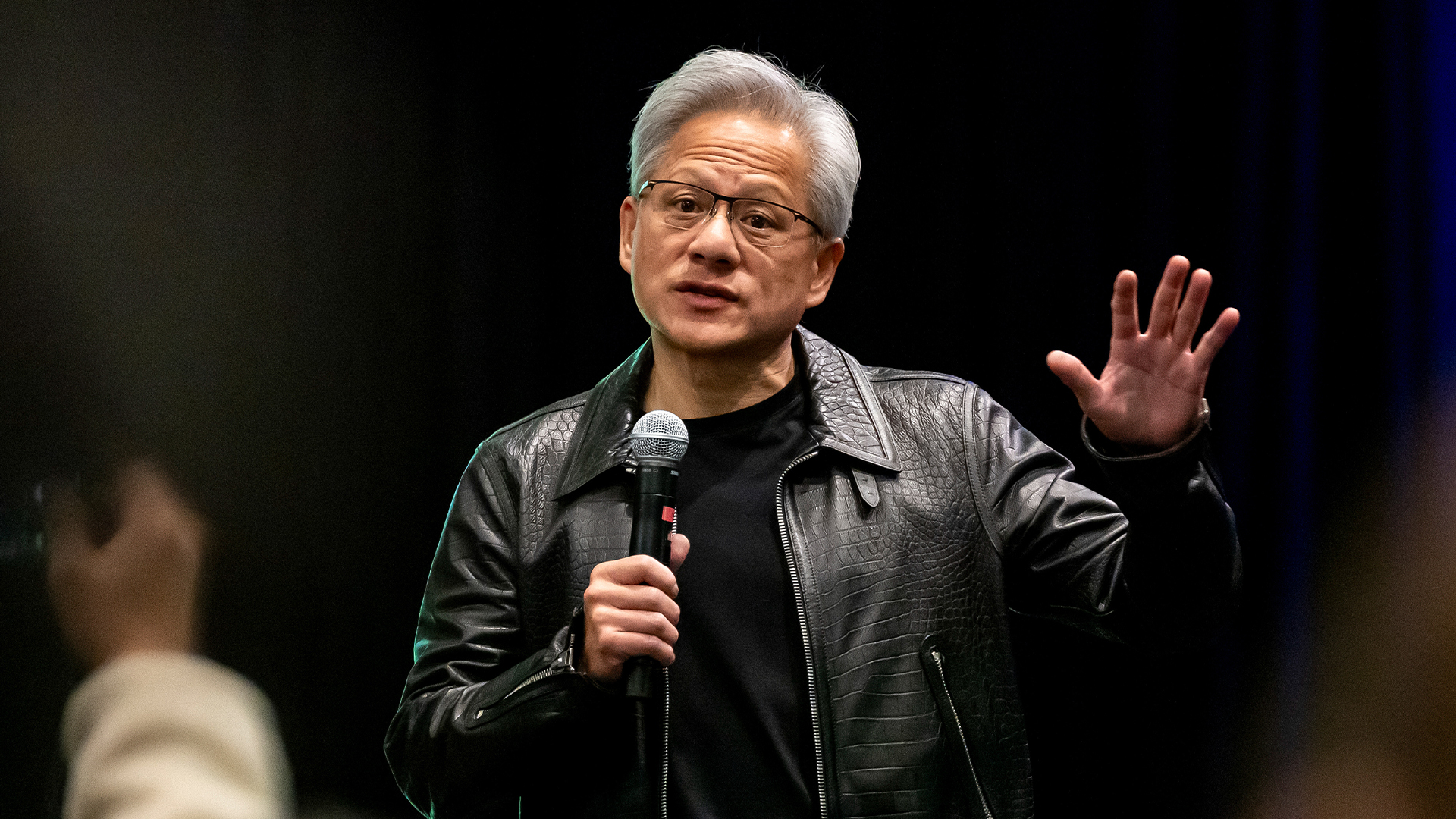 ‘This is the first event in history where a company CEO invites all of the guests to explain why he was wrong’: Jensen Huang changes his tune on quantum computing after January stock shock
News Nvidia CEO Jensen Huang has stepped back from his prediction that practical quantum computing applications are decades away following comments that sent stocks spiraling in January.


