
Apple has carried out a minor refresh of the MacBook Air - increasing the clock speed of the processor by 100MHz and dropping the price by 100.
But is it worth investing more in an older MacBook Pro with Retina Display? We break down the key differences between the laptops to help you decide. Categories include:
Which Mac is best for you?
MacBook Pro vs MacBook Air - Pricing and Verdict
8 reasons to switch to Mac
Display/DimensionsPerformance Battery lifeWireless connectivity & portsRepairabilitySoftwarePrice
Display & Dimensions
There is a huge difference in display quality between the two ranges. The MacBook Airs don't include Apple's Retina Display technology so are not ideal for video/image editing and multimedia. In terms of dimensions, it's closely run.
MacBook Air - Available in 11.6in and 13.3in sizes, these are the smallest laptops Apple offers.
The 11in Air weighs in at 1.08kg, making it the lightest Apple laptop. However, it also has the lowest resolution 1366 x 768, which isn't going to cut it for anything other than basic word processing and web browsing.
The 13in model ships with a better 1440 x 900 resolution and isn't too much heavier at 1.35kg.
MacBook Pro w/Retina display - The starting size of this machine is 13.3ins, with a larger 15.6in model available. This latter, in particular, can be used as a desktop replacement.
As their name indicates, the Pro models ship with Apple's best display technology. The 13in (2560 x 1600) and 15.4in (2880 x 1800) are streets ahead of the Airs in quality terms.
The 13in Pro is a couple of hundred grams heavier than its Air equivalent at 1.57kg, but it's still portable. However, the 15in device is noticeably chunkier at 2.02kg.

Winner - MacBook Pro w/Retina Display
The MacBook Airs are lightweight, but have inferior screens. The 13in Pro strikes the balance between portability and high-res screen technology.
-
 TfL takes Oyster photocard systems offline following breach
News Security experts warn the Oyster photocard breach could lead to follow-up attacks on victims
-
 Irish credit unions hit by data breach after IT provider compromised
News Wellington IT reportedly delayed alerting customers by multiple weeks


-
 Dell sets the stage for a MacBook Neo showdown with budget XPS 13 laptop range
News The XPS 13 and MacBook Neo could be slugging it out in the budget hardware space
-
 The MacBook Neo is the most disruptive product Apple has released since the iPhone – but it's probably Chromebooks that will lose out
Reviews Surprisingly good across the board, and affordable – the MacBook Neo is a mid-level marvel
-
 MacBook Neo: everything you need to know about Apple's £599 laptop
News £599 for a MacBook? Meet Apple's MacBook Neo – which could disrupt education markets and rival Microsoft
-
 Touchscreen laptops are always a bad idea – MacBook or otherwise
Opinion If the rumors of a touchscreen MacBook prove correct, it will kill my confidence in the brand
-
 Apple unveils redesigned MacBook Pro with M1 Pro, M1 Max chips
News Apple's latest high-end laptops pack the company's second-generation homegrown silicon
-
 Apple delays controversial CSAM detection feature
News The mobile phone giant has backtracked on plans to scan images on its devices
-
 Apple is experimenting with attention sensors to save battery life
News Your next Apple device may shut down if you are not paying attention to it
-
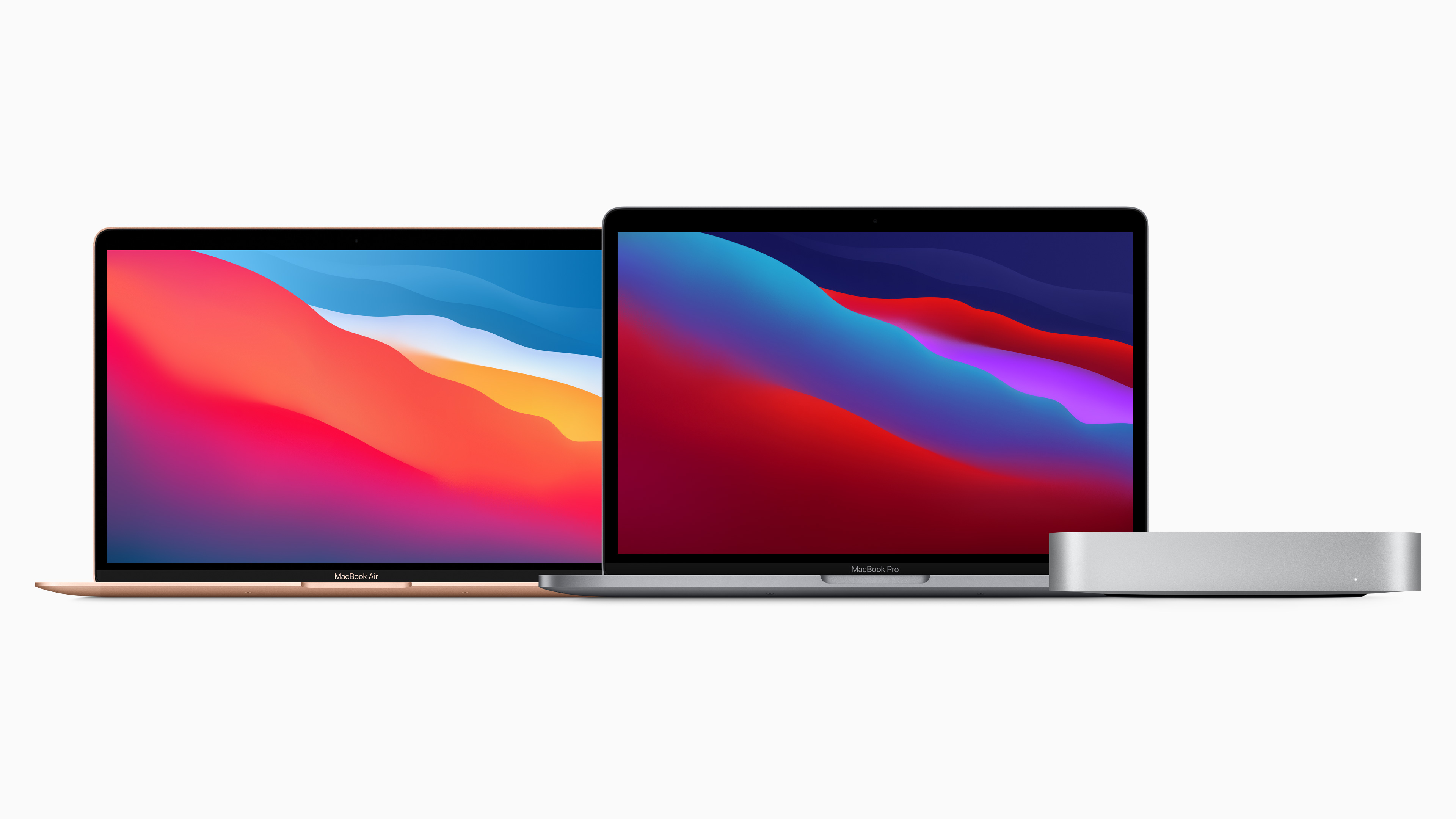 Apple unveils updated Mac lineup powered by its new M1 chip
News The M1 chip is the first-ever personal computer chip built using 5-nanometer process technology


