2023 Spring Statement brings 'enhanced' tax incentives to tech SMBs
A package of incentives for quantum and AI research was also announced in pursuit of cementing the UK's status as a ‘science superpower’


UK chancellor Jeremy Hunt said the government plans to introduce tax incentives for UK-based small and medium-sized businesses (SMBs) as part of a broader set of plans to boost the UK's technology sector.
Delivering the government's 2023 Spring Statement to the House of Commons on Wednesday, Hunt said the incentives will include an ‘enhanced’ tax relief credit for SMBs.

The move will see qualifying firms that spend 40% or more of their total expenditure on R&D being able to claim a credit worth £27 on every £100 spent.
“This is a £1.8 billion package of support helping 20,000 cutting-edge companies, who day-by-day are turning Britain into a science superpower,” Hunt said.
The announcement, which has been widely welcomed by individuals across the industry who spoke to IT Pro, represents only a partial rolling back of widely criticised changes outlined in November's Autumn Statement.
A reshuffling of the R&D tax credit scheme in November resulted in reduced support for small businesses seeking tax incentives and was criticised as a move that favoured larger enterprises.
An open letter published by Coadec in response to the move claimed that the changes would likely cost UK startups an average of £100,000.
Julian David, CEO at techUK, suggested at the time that the changes would "disappoint many tech SMEs" and continue to frustrate business owners.
Additional tax relief for UK businesses will also be rolled out over the next three years, Hunt confirmed. A new policy of full capital expensing will be implemented with the intention of making this permanent.
This, the chancellor said, means that "every single pound a company invests in IT equipment, plant, or machinery, can be deducted in full and immediately from taxable profits".
Amanda Brock, CEO at OpenUK, said startups and scaleups "will very much welcome" the news.
"This - if easily accessible - could be a major benefit to the UK’s tech sector and offer a true opportunity for growth but still will not work without the right skills and IP environment."
Spring Statement 2023: AI innovation
The chancellor said the government plans to draw on “British ingenuity” to position the country as a global science and technology superpower - an ambition expressed repeatedly in recent campaigns.
Hunt told MPs that the government plans to accelerate support for quantum computing and AI innovation over the next ten years with a raft of incentives and investment packages.
“I will take measures to strengthen our position in artificial intelligence, where the UK hosts one-third of all European companies,” he told the Commons.
This will include the launch of an ‘AI sandbox’ aimed at providing greater support for companies and researchers in the AI space to drive innovation and “get cutting edge products to market”.
Hunt added that the government will also work “at pace” with the Intellectual Property Office to “provide clarity on IP rules so that generative AI companies can access the material they need”.
Intellectual property rights in the generative AI space have sparked controversy in recent months amid a flurry of lawsuits claiming that generative AI models – specifically image-generating models – frequently breach IP legislation.
In a pledge of additional support for individual companies and researchers, Hunt said the government will introduce an annual prize fund that will award up to £1 million for outstanding examples of AI innovation.
“I also want to encourage the best AI research to happen in the UK,” the chancellor said. “So will award a prize of £1 million every year for the next ten years to the person or team that does the most groundbreaking British AI research.”
Spring Statement 2023: Quantum ambitions
Alongside this focus on AI innovation, the chancellor confirmed the government will commit £900 million in funding to implement recommendations outlined in the Future of Compute review to deliver an ‘exascale’ computer and drive investment in quantum computing.
“The power needed by AI’s complex algorithms can also be provided by quantum computing,” he added. “So today we’ll publish a quantum strategy that will set out our vision to be a world-leading quantum-enabled economy by 2033 with a research and innovation programme totalling £2.5 billion.”

Achieving transformative business results with machine learning
How seven leading organisations are using machine learning to resolve key challenges and reveal new opportunities
The government’s sharpened focus on quantum capabilities comes amid an exciting period in the space globally.
While China and the United States remain the two major leaders in global quantum computing, the government has been keen to emphasise its potential for the future of the British economy.
Recent analysis shows that the UK holds a commanding lead with regard to the number of quantum startups in Europe, hosting 39 companies compared to 18 in Germany, and 15 in both the Netherlands and France respectively.
Reacting to the Spring Statement, Julian David said the government has "put the UK back on the pitch" when it comes to global competitiveness in science and technology.
"By introducing a strategy on quantum, putting £900 million into new UK computing capacity, accepting the recommendations of Sir Patrick Vallance on emerging technologies, and providing new business incentives, the government has taken steps to advance the UK’s science and tech capabilities."


-
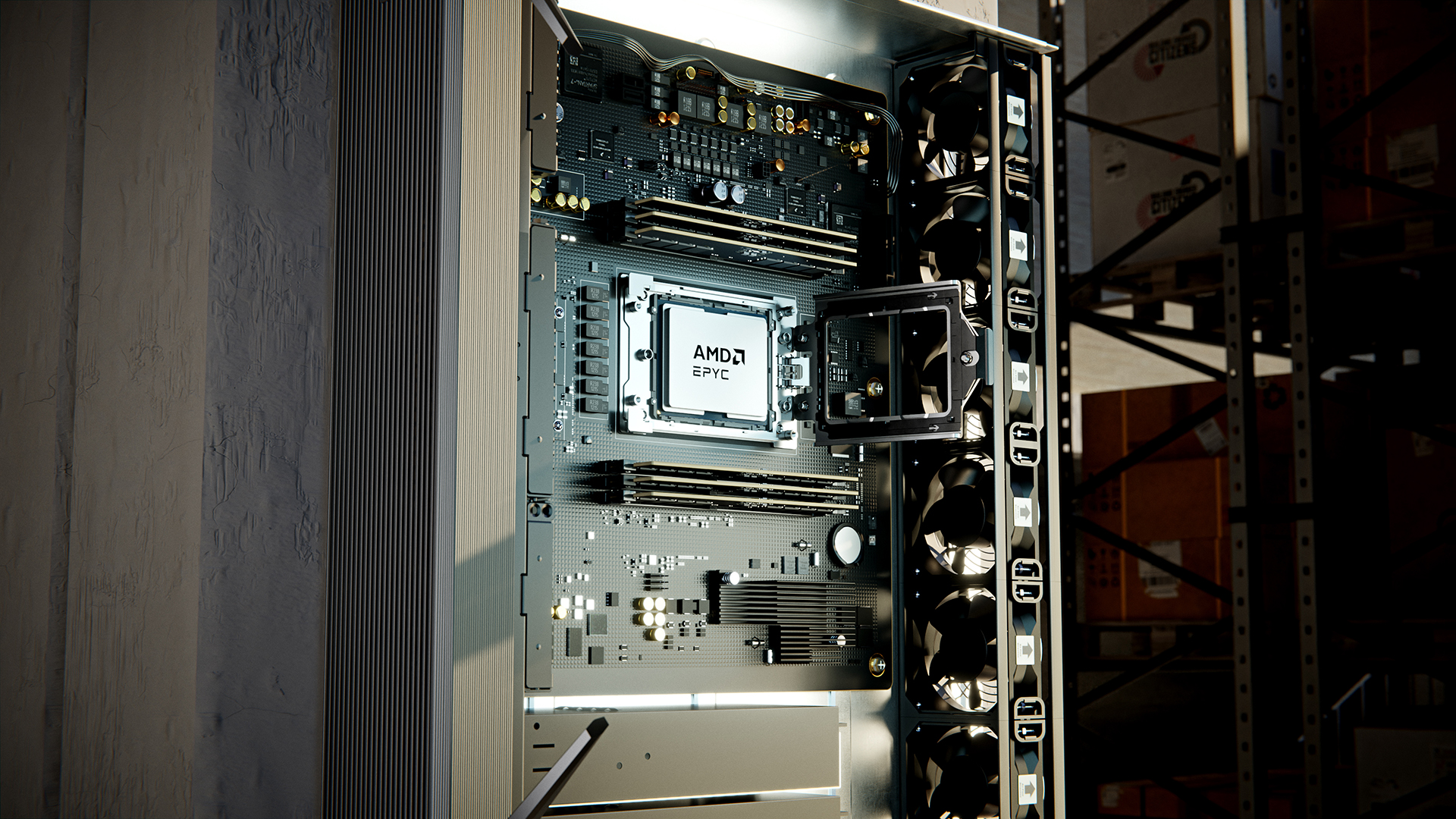 How AMD EPYC CPUs and AMD Instinct GPUs are powering the world's HPC facilities
Sponsored AMD offers powerful chipsets for AI and traditional HPC workloads, including native FP64 support
-
 AWS pledges $50 billion to expand AI and HPC infrastructure for US government clients
News The company said an extra 1.3 gigawatts of compute capacity will help government agencies advance America’s AI leadership
-
 US Department of Energy’s supercomputer shopping spree continues with Solstice and Equinox
News The new supercomputers will use Oracle and Nvidia hardware and reside at Argonne National Laboratory
-
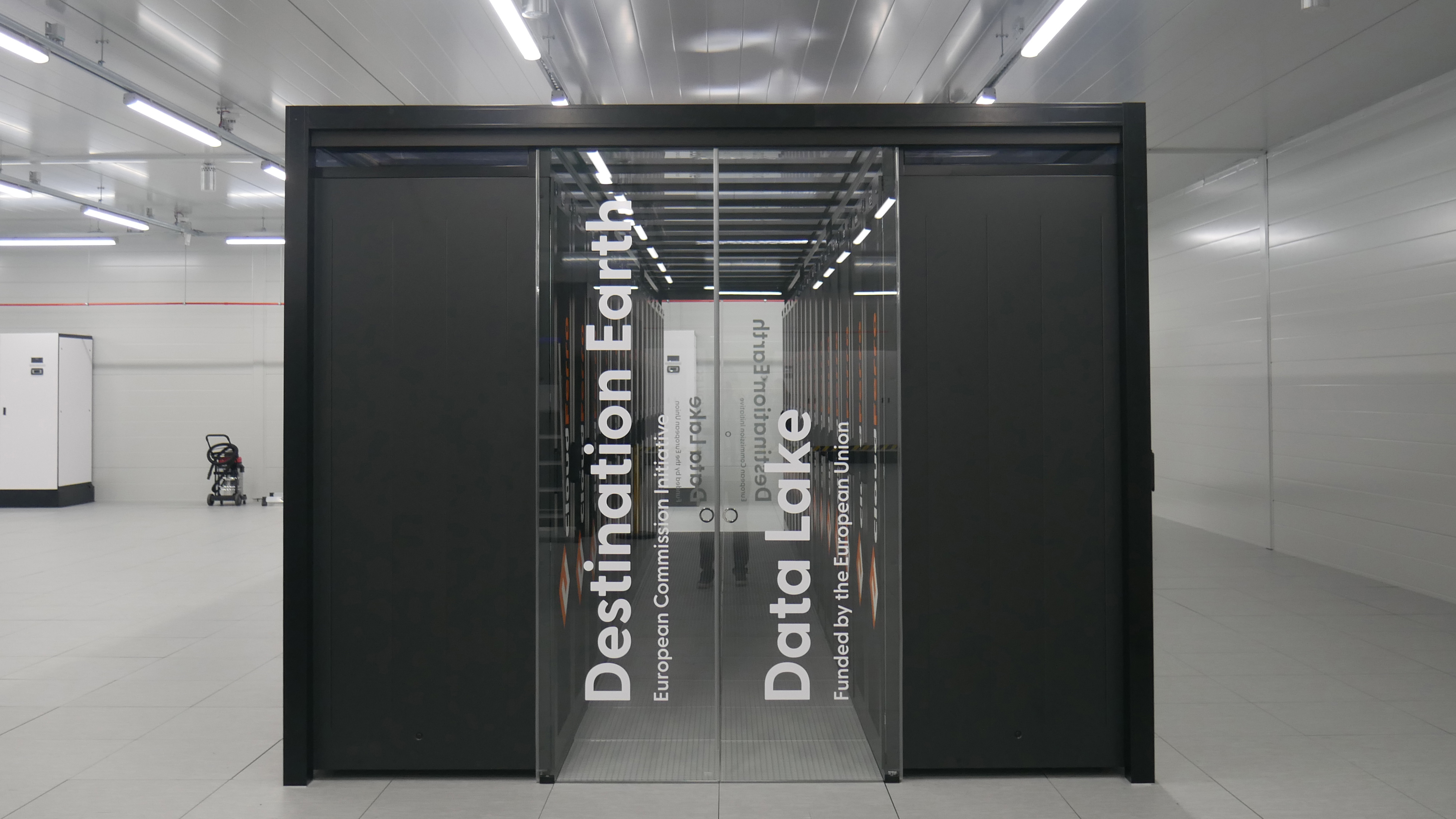 Destination Earth: The digital twin helping to predict – and prevent – climate change
Supported How the European Commission is hoping to fight back against climate change with a perfect digital twin of our planet, powered by Finland's monstrous LUMI supercomputer
-
Supercomputing in the real world
Supported From identifying diseases more accurately to simulating climate change and nuclear arsenals, supercomputers are pushing the boundaries of what we thought possible
-
 What is exascale computing? Exploring the next step in supercomputers
Supported 60 years after the birth of the first supercomputers, we are entering a new era
-
 Discover the six superpowers of Dell PowerEdge servers
whitepaper Transforming your data center into a generator for hero-sized innovations and ideas.
-
 HPE Discover Barcelona 2024: All the news and updates live
Live coverage of the keynote at HPE Discover Barcelona


