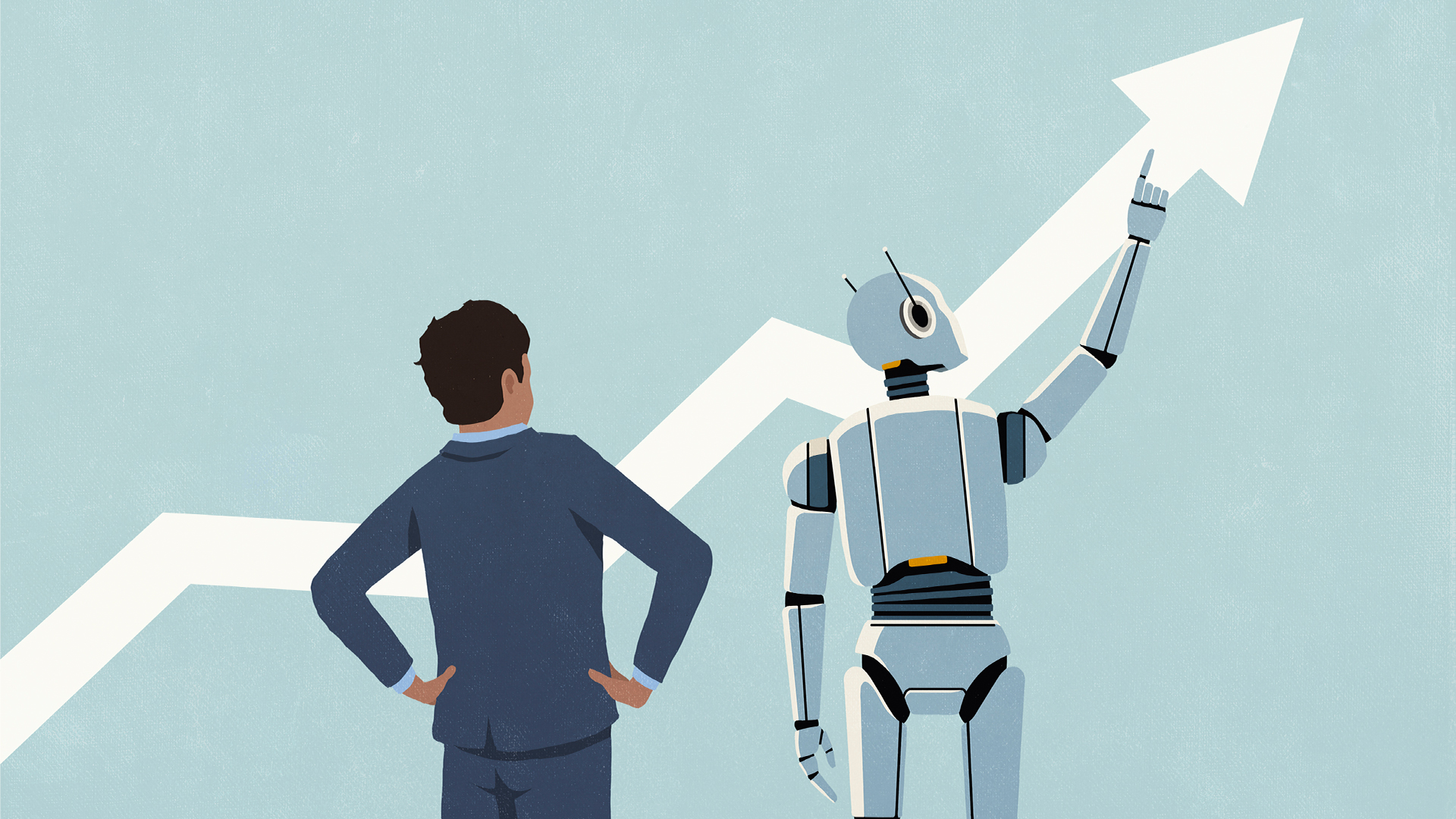
Google has come up with five rules to create human-friendly AI - superseding Isaac Asimov's Three Laws of Robotics.
The tech giant, whose DeepMind division recently devised an AI capable of beating the world's best Go player - believes AI creators should ask themselves these five fundamental questions to avoid the risk of a singularity in which robots rule over humankind.
Google Research's Chris Olah outlined the questions in a research paper titled Concrete Problems in AI Safety, saying: "While possible AI safety risks have received a lot of public attention, most previous discussion has been very hypothetical and speculative.
"We believe it's essential to ground concerns in real machine learning research, and to start developing practical approaches for engineering AI systems that operate safely and reliably."
Published in collaboration with OpenAI, Stanford and Berkley, the paper takes a cleaning robot as an example to outline the following five rules.
Avoiding negative side effects: Ensuring that an AI system will not disturb its environment in negative ways while completing its tasks.
Avoiding reward hacking: An effective AI needs to complete its task properly without cutting corners.
Sign up today and you will receive a free copy of our Future Focus 2026 report - the leading resource for IT decision-maker insight on priorities and investment areas in AI, security and more.
Scalable oversight: AI needs to learn from feedback, and should not need continuous feedback from a human programmer.
Safe exploration: AI needs to avoid damaging objects in its environment as it performs its task.
Robustness to distributional shift: AI should be able to adapt to an environment that it has not initially been conditioned for, and still perform.
Google has thrown much of its resources at developing deep learning and AI, amid a backdrop of fear of robots, voiced by luminaries including SpaceX founder Elon Musk and scientist Stephen Hawking.
DeepMind is working on a failsafe that would effectively shut off AI in the event it attempted to disobey its users.
Other firms including Microsoft are exploring AI, getting AI to tell stories about holiday photos, and debuting its tween chatbot, Tay, which spouted rude replies on Twitter.
-
UK tech leaders are implementing AI faster than related governanceNews IBM research shows that chief AI officers are being given strategy roles, but not full control
-

11:11 Systems appoints new EVP in EMEA growth driveNews The experienced executive will oversee the provider’s operations and strategic execution across the region as it targets further growth
-
Where will AI take security, and are we ready?whitepaper Steer through the risks and capitalize on the benefits of AI in cyber security
-

Beyond VPN replacementWebinar Other ZTNA superpowers CISOs should know
-
Defence in depth: Closing the gaps in Microsoft 365 securityWhitepaper Exploring the security challenges facing organisations with a reliance on Microsoft 365
-
Recommendations for managing AI risksWhitepaper Integrate your external AI tool findings into your broader security programs
-
Bigleaf Networks’ AI-powered feature translates network events into actionable risksNews AI-widget identifies risks triggered by a site and highlights only the top three with actionable solutions
-

Microsoft targets .NET Core with new bug bounty rewardsNews Redmond offers more cash prizes for sourcing errors in its upcoming web frameworks
-

Cambridge University boffins to combat rise of the machinesNews Scientists to look at ways to see off Terminator-style threat
-
Facial recognition software for the massesNews A software tool, which may have remained in Government hands up until now, is achieving popularity in the public sphere thanks to Face.com.