‘This is about as close as you can get to a personal supercomputer’: AMD has Nvidia in its crosshairs with the Threadripper Halo AI workstation
The new device boasts 3.4x the total system memory compared to the Nvidia DGX Station, according to AMD
AMD has unveiled a new workstation designed to support developers with local AI inference and agent orchestration.
The Threadripper Halo comes equipped with a 96-core Threadripper Pro 9995WX CPU alongside two MI350P GPUs, with the option to expand this to four GPUs.
Elsewhere, it boasts up 576 GB of HBM3e as well as 2.6TB of combined memory and up to 16.4TB/s of system memory bandwidth, making it a powerful device aimed primarily at running frontier models and fleets of agents.
Announced at IFA 2026, the Threadripper Halo is expected to launch next year and looks primed to compete with Nvidia’s DGX Station. Indeed, the company specifically noted that it boasts 3.4x the total system memory compared to the Nvidia offering.
Exact details on a release timeline or pricing are yet to be revealed.
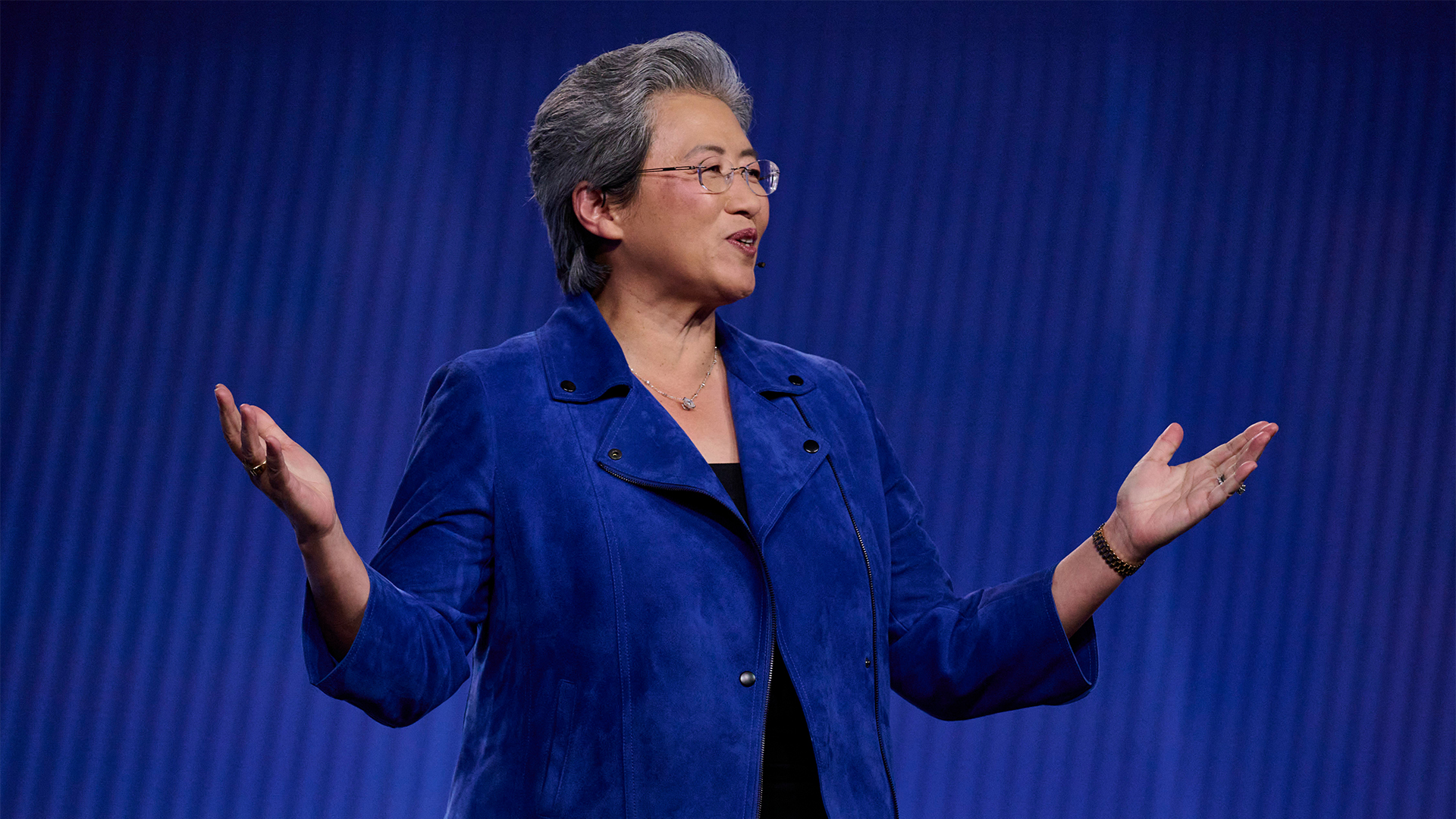
Speaking at IFA, Jack Huynh, SVP and general manager of AMD’s computing and graphics group, said the new workstation will “redefine personal AI”.
“This is the most powerful workstation in the world, designed and engineered for a complete new era of computing, capable of running AI models with more than a trillion parameters,” he told attendees.
Sign up today and you will receive a free copy of our Future Focus 2026 report - the leading resource for IT decision-maker insight on priorities and investment areas in AI, security and more.
“This is about as close as you can get to a personal supercomputer.”
According to AMD, the Threadripper Halo is catered primarily toward “individuals and small teams doing serious AI work who are currently constrained by cloud access or shared infrastructure”.
This spans AI researchers, engineering teams, model developers, and creators working with large language models (LLMs), the company said.
Local AI in the spotlight
The announcement by AMD comes amidst a sharpened focus on local AI capabilities for enterprises. A host of manufacturers have unveiled PCs and laptops with embedded AI capabilities.
As ITPro previously reported, devices such as the Dell Pro Max range also target local AI inference gains for enterprises.
In the wake of Nvidia GTC this year, IDC highlighted AI-powered workstations as an exciting new growth area for manufacturers.
“Traditional workstations are evolving beyond the familiar tower form factor toward a new class of high-density, near-user AI systems that IDC identifies as part of an emerging “sidetop” category,” the consultancy noted at the time.
The focus on local AI capabilities also looks to tackle rising costs associated with the technology, particularly since the advent of agents.
Token consumption rates – and costs – are now a recurring pain point for enterprises, with research from Gartner showing token costs could exceed developer salaries by 2028.
A key talking point for providers lies in the cost disparity between local agent inference and cloud-based API costs. Separate research from Signal65, for example, found that agentic AI workloads consume up to fifteen-times more tokens compared to traditional chatbot interactions.
Equipping developers with local AI capabilities could reduce costs on this front, Signal65 found. Benchmark tests conducted on Dell Pro Max GB10 and GB300 workstations - equipped with Nvidia hardware - markedly reduced token costs.
FOLLOW US ON SOCIAL MEDIA
Follow ITPro on Google News and add us as a preferred source to keep tabs on all our latest news, analysis, views, and reviews.
You can also follow ITPro on LinkedIn, X, Facebook, and BlueSky.
Ross Kelly is ITPro's News & Analysis Editor, responsible for leading the brand's news output and in-depth reporting on the latest stories from across the business technology landscape. Ross was previously a Staff Writer, during which time he developed a keen interest in cyber security, business leadership, and emerging technologies.
He graduated from Edinburgh Napier University in 2016 with a BA (Hons) in Journalism, and joined ITPro in 2022 after four years working in technology conference research.
For news pitches, you can contact Ross at ross.kelly@futurenet.com, or on Twitter and LinkedIn.
-
Cyber criminals are adapting ASCII smuggling for mass phishing campaignsNews Usually known for its use in prompt injection attacks, ASCII smuggling is now being used to evade spam filters on email platforms
-
O2 launches direct-to-device satellite connectivity for UK businessesNews The new O2 Business service aims to bolster connectivity outside of traditional mobile networks
-
AMD CEO Lisa Su hails ‘excellent quarter’ as data center revenue surges 107%News The record-breaking quarter comes as AMD prepares to roll out its Helios rack-scale architecture later this year
-
The Dell Pro Max with GB10 is the most sophisticated mini AI workstation you can get – but also the most priceyReviews This juggernaut of a machine can be a gateway to AI productivity, with plenty of power and playbooks to get you started – but it comes at a high cost
-
Is AMD EPYC the right CPU for your AI models?These top tips will help you decide if AMD EPYC CPUs are the right fit for your AI models
-
‘This is the new PC. The personal AI computer’: Nvidia wants its RTX Spark ‘superchip’ to fuel the AI PC boomNews The new RTX Spark chip is designed to keep AI inference local for security and safety
-
AMD and Samsung forge closer ties on AI memory, potential foundry dealNews The pair are forging closer ties on chip development and future foundry opportunities
-

AMD thinks ‘AI on the PC has crossed an important line’ – the rise of ‘Agent Computers’ will be the next big breakthroughNews The chipmaker believes “Agent Computers” will be the next big breakthrough with on-device AI capabilities
-
The Asus Ascent GX10 is a MiniPC with supercomputer ambitions for AI developers – but it's not cheapReviews The Ubuntu-on-ARM operating system could limit its appeal, but for both serious and neophyte AI developers, it's a great desktop box
-

Nvidia’s Intel investment just gave it the perfect inroad to lucrative new marketsNews Nvidia looks set to branch out into lucrative new markets following its $5 billion investment in Intel.