Meet Claude Tag, Anthropic’s new AI teammate that works in Slack
The new Claude Tag tool will replace the existing Claude in Slack application


Anthropic has unveiled a new agent designed to act as a virtual teammate within Slack as the company eyes deeper integration with the workplace productivity platform.
Dubbed Claude Tag, the new feature is underpinned by Opus 4.8 and builds on existing tools offered by Anthropic, with the company noting it views the feature as “the beginning of an evolution of Claude Code”.
“We’re launching Claude Tag on Slack, since it’s a natural home for collaborative work between teams and AI, and where much of Anthropic’s day-to-day work already happens,” the company said in a blog post.
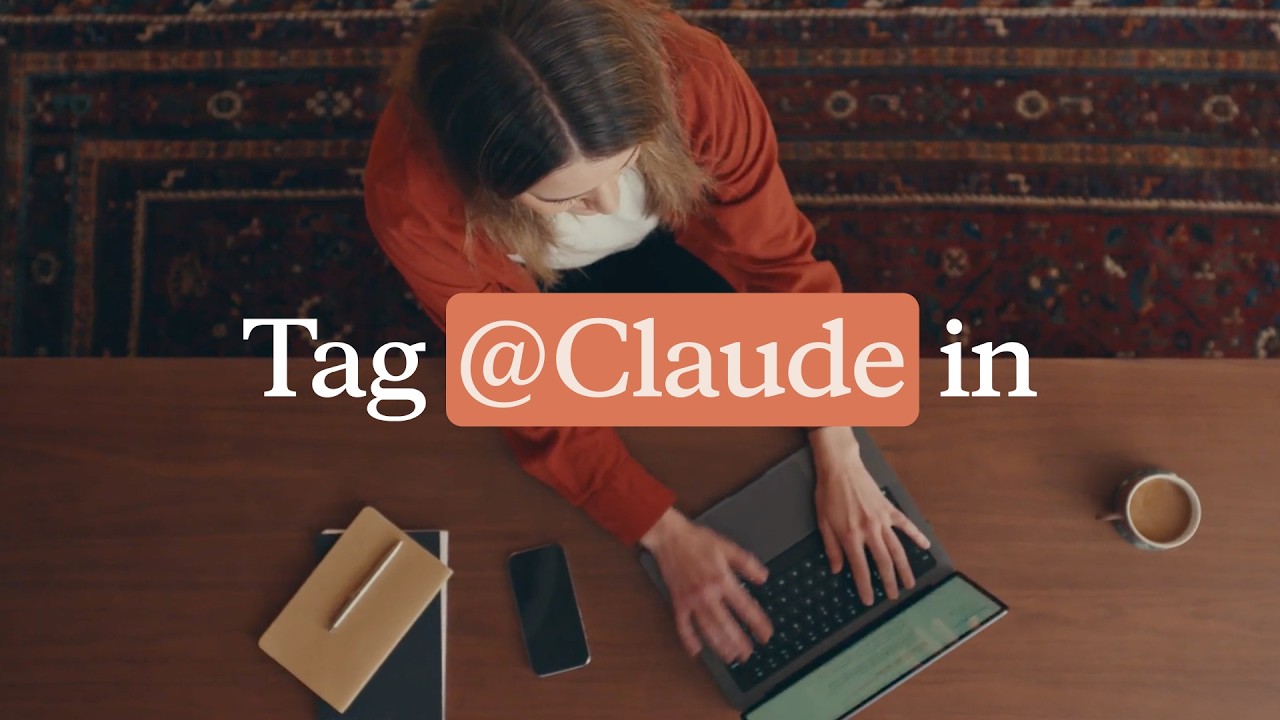
Claude Tag works by allowing users to @ the agent within Slack channels. Users can essentially allocate tasks to the agent, helping automate processes to support various projects across any given organization.
According to Anthropic, internal teams have been using the feature for some time, noting that it’s “one of the main ways we get things done”. Indeed, the company said around 65% of its product team’s code is created by its own internal version.
“The same pattern is now spreading well beyond engineering — we’re tagging Claude to chase down product metrics and data, work through support tickets, or even help find the root cause of tricky bugs,” Anthropic said in a blog post.
Using Claude Tag
Anthropic said using Claude Tag will be a familiar process for those already using its AI tools in the productivity platform, or those who have worked with Claude Code or Claude Cowork.
When a user tags the agent with a request, it will “break its task down into stages and then work through them in turn” depending on the tools it has accessed to.
“Once it’s done, it’ll respond in a Slack thread with that it’s created,” the company explained.
Compared to previous Claude-based tools, Tag has several new features. Anthropic noted that the new tool is now “multiplayer”, meaning that each Slack channel will have an individual agent that everyone can interact with.
“This means that anyone can see what it’s working on, and can pick up the conversation from where the last person left off,” Anthropic explained.
This marks a significant change from previous processes, whereby individual employees interacted with Claude within a single chat, or on a specific task.
“It’s much more like interacting collaboratively with a teammate.”
The new agent also learns continuously based on the tasks it’s been assigned, building more context as time goes on. This is a key feature touted by the company, meaning that users don’t need to provide detailed explanations from scratch for each individual task.
Cross-channel context is also another key feature, according to Anthropic. The agent can learn and build context based on conversations in other Slack channels and data sources, provided it’s granted permission.
The company confirmed that it does not learn based on conversations in private channels.
Elsewhere, a new ‘ambient’ mode is available for Claude Tag, which provides users with interactive updates on project progress, tasks, or "whatever it thinks you might need to know”.
“It’ll flag relevant information from across the channels it’s in and the tools it’s connected to, and follow up on threads or tasks that have gone quiet without being resolved,” Anthropic explained.
How to access Claude Tag
Claude Tag will replace the existing Claude in Slack application, and is available now in beta for users working on Claude Enterprise or Team subscriptions.
Given the agent has deep access to sensitive information, the company says it has introduced “tight controls” and system administrators will be needed to provide access.
“To get up and running, system administrators specify which tools and information the model should have access to, in which channels,” the company explained, adding that users should view this as “creating separate Claude identities” for different uses.
“Everything, including its memories, will stay scoped to the channels defined by the administrators,” Anthropic noted. “For example, a model set up for sales work won’t pass on memories to one set up for engineering; nor will it give engineers access to any sales data or tools.”
Notably, administrators can set limits for token consumption, both for individual teams and the broader organization.
The introduction of token limits comes amidst rising concerns over spiralling costs associated with popular AI tools such as Claude and ChatGPT.
Deeper Slack integration
The move by Anthropic marks the latest attempt to provide deeper integration of its tools with the popular workplace collaboration platform over the last year.
In December 2025, the company announced integration of its Claude Code tool within the platform. This integration aimed to embed the AI tool within software developer workflows, also helping to provide updates on project progress.
Notably, users are able to ask Claude Code to investigate and fix potential bugs, conduct code reviews, and improve collaborative debugging efforts for teams.
FOLLOW US ON SOCIAL MEDIA
Follow ITPro on Google News and add us as a preferred source to keep tabs on all our latest news, analysis, views, and reviews.
You can also follow ITPro on LinkedIn, X, Facebook, and BlueSky.

-
 Acer Swift Spin 14 AI review
Reviews An effective and versatile laptop that makes good sense for professionals and small-business uses, with a garaged stylus for making notes
-
 Why secure behavior management Is becoming the channel's next growth opportunity
Industry Insights Channel partners must shift from just selling tools to capitalizing on secure behavior management


-
 Anthropic is increasing Claude Code usage limits — here’s everything you need to know
News The new deal will help Anthropic increase Claude Code usage limits, and API rate limits for Claude Opus models
-
 Slackbot just got a big update with MCP and desktop access
News With increased connectivity, Slackbot can now take action across the enterprise, including in third-party apps and through internet searches
-
 Anthropic says ‘code review has become a bottleneck’ – this new Claude Code feature aims to solve that
News Anthropic’s new tool aims to address code review bottlenecks with AI tool — but it won't come cheap
-
Claude Code flaws left AI tool wide open to hackers – here’s what developers need to know
News The trio of Claude code flaws could have put developers at risk of attacks
-
 Claude Code creator Boris Cherny says software engineers are 'more important than ever’ as AI transforms the profession – but Anthropic CEO Dario Amodei still thinks full automation is coming
News There’s still plenty of room for software engineers in the age of AI, at least for now
-
 Anthropic Labs chief Mike Krieger claims Claude is essentially writing itself – and it validates a bold prediction by CEO Dario Amodei
News Internal teams at Anthropic are supercharging production and shoring up code security with Claude, claims executive
-
 Claude Code is coming to Slack — here’s how to use it, what it can do, and how to get access
News Users can get access to Claude Code in Slack today and begin delegating tasks
-
 Anthropic’s new Claude Code web portal aims to make AI coding even more accessible
News Claude Code for web runs entirely in a user’s browser of choice rather than in a command-line interface and can be connected directly to chosen GitHub repositories.


