British public deeply fearful of AI – with one-in-five even thinking it will lead to civil unrest
Research by King's College London suggests people think AI's impact will be worse than a normal recession
The British public is deeply fearful of AI, with one-in-five even thinking it will lead to civil unrest.
New research by King's College London's Institute for Artificial Intelligence and Policy Institute has found that seven-in-ten people are worried about the economic impacts of AI, six-in-ten think it will eliminate more jobs than it creates, and half think its impact will be worse than a normal recession.
Almost half the public – 48% – said they'd rather avoid AI, while 41% are afraid of it. Only 24% think it's positive for humanity, compared with 39% who disagree.
There's a noticeable gender gap here, with women more likely to disagree than agree that AI is positive for humanity, at 44% versus 18%; positive for the UK (34% vs 23%; and that AI will improve their lives (41% vs 22%).
University students are more optimistic than the wider public, with 47% saying AI is positive for the UK and 43% that it is positive for humanity, compared with just 28% and 24% of the general public, respectively.
Meanwhile, seven-in-ten workers are worried about the economic impact of AI job losses – and the figure's almost as high for employers, at 64%. Most of the public (57%) thinks AI will lead to widespread unemployment.
People are particularly worried about the impacts on entry-level jobs and young people more generally, with nearly six-in-ten agreeing with Anthropic CEO Dario Amodei's 2025 prediction that AI could eliminate half of all entry-level white-collar jobs within five years.
Sign up today and you will receive a free copy of our Future Focus 2025 report - the leading guidance on AI, cybersecurity and other IT challenges as per 700+ senior executives
"The public, workers, young people, and university students are watching the rapid development of AI with more fear than excitement, with real concern for what it will do to jobs, particularly at entry levels, and, therefore, the prospects for our young people and the economy in general, said Professor Bobby Duffy, director of the Policy Institute at King's College London.
Just one-in-five members of the public believe the education system is preparing young people well for a world shaped by AI. And public appetite for government intervention is strong, with two-thirds saying AI companies should be closely regulated, even if that slows development.
And, across all groups, more than half supported both government-guaranteed retraining for workers displaced by AI and a tax on companies that replace workers with AI to fund retraining.
"This survey gives a really interesting window into how British students, workers, and employers feel about AI. Some of the main concerns held by the public, such as fewer job openings, a contraction in entry-level roles, and increased pressure on white-collar work, echo what I find in my own research on AI and the UK labour market," said Dr Bouke Klein Teeselink, lecturer in philosophy, politics and economics at KCL.
"But none of these effects is fixed. With the right training, policies, and institutional support, there is a clear path forward to a more hopeful future, with rising productivity, broader opportunity, higher incomes, and faster scientific progress."
Emma Woollacott is a freelance journalist writing for publications including the BBC, Private Eye, Forbes, Raconteur and specialist technology titles.
-
Are AI tools making us less intelligent?News Growing reliance on AI tools that provide instant answers could be eroding skills, GoTo report warns
-

Pope Leo launches AI commission over concerns that people will turn into “passive consumers of unthought thoughts and anonymous products without ownership or love"News With a new encyclical expected to focus on the technology, the Pope is concerned about its effects on human dignity
-

Mistral CEO calls for AI cultural levyNews Foreign AI firms should pay for European content, says Arthur Mensch – and the European Commission is tending to agree
-
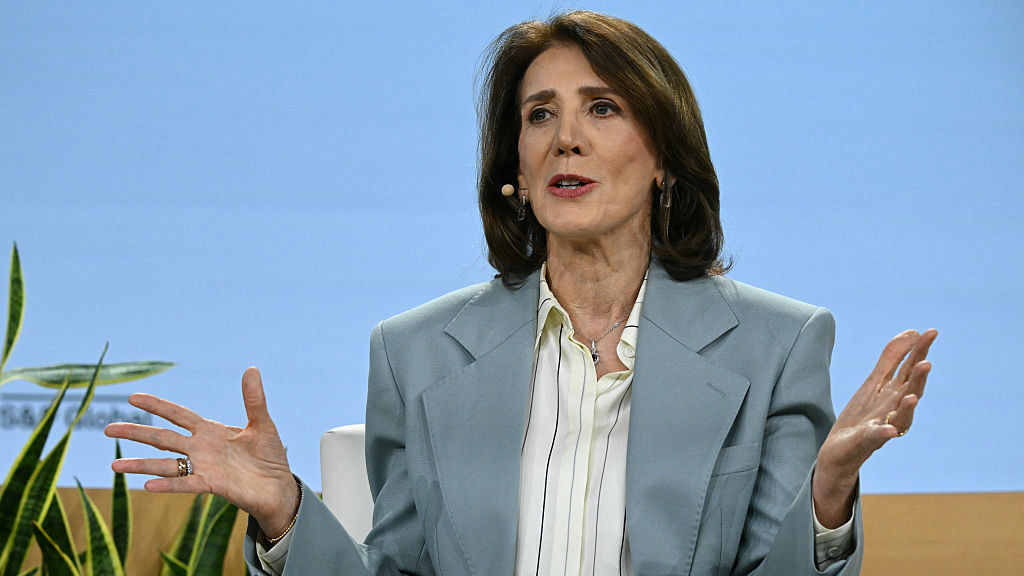
Google: we need more energy for AINews Alphabet president calls for US to step up power generation to feed her company's AI ambitions
-
Scottish government sets out AI plans for the next five yearsNews Deputy first minister Kate Forbes says the aim is to establish Scotland as a world leader in the technology
-
Swamped with decisions to make, managers turn to AINews Worryingly, many UK leaders are outsourcing key judgments to AI, despite a lack of data
-
Empowered Intelligence: The Impact of AI Agents -
Businesses finding it hard to distinguish real AI from the hype, report suggestsNews An Ernst & Young survey finds that CEOs are working to adopt generative AI, but find it difficult to develop and implement