
The global semiconductor shortage has forced Nissan and Suzuki to halt production at some of their automotive plants in Japan and Mexico.
The shortage has already stopped or cut back production of vehicles such as the Ford F-150, Jeep Grand Cherokee, and Chevy Camaro.
Nissan will idle its huge factory in Kyushu, Japan for part of June and lower production at two other Japanese plants, Reuters reported Friday. The company is also temporarily stopping the production of some of its models built at its plant in Mexico.
“A global shortage of semiconductors has affected parts procurement in the auto sector,” a Nissan spokeswoman said.
Suzuki plans to idle three auto plants in Japan’s Shizuoka prefecture for three to nine days, according to Reuters.
This comes on top of recent news that Mitsubishi, another Japanese automaker, will reduce its output of vehicles by a whopping 30,000 in June at five auto plants in Japan, Thailand, and Indonesia.
Meanwhile, in the United States, the worldwide semiconductor shortage has already forced General Motors and Ford to slash production at automotive plants in three states, Canada, and Mexico.

Creating a sense of value for your workforce
Sample our exclusive Business Briefing content
Due to the chip shortage, the global auto industry is expected to make 1.5 million to 5 million fewer vehicles this year than originally planned, according to the consulting firm AlixPartners.
Ford and other automakers have asked the US government to help secure a steady supply of semiconductors to keep their auto factories running. However, a new tech lobbying group called the Semiconductors in America Coalition is arguing the government shouldn’t favor a single industry, such as automakers.
The White House says it’s exploring options to address the global chip shortage. President Joe Biden has already asked Congress for $50 billion to fund a bill that would help build more chip manufacturing capacity in the US.
Cisco CEO Chuck Robbins recently predicted it would take “another six months to get through the short term” of the shortage. Robbins added the crisis is unlikely to be fully resolved until 2022. Meanwhile, Dell Technologies founder and CEO Michael Dell recently said he expects that the chip crisis “will probably continue for a few years.”
-
 TfL takes Oyster photocard systems offline following breach
News Security experts warn the Oyster photocard breach could lead to follow-up attacks on victims
-
 Irish credit unions hit by data breach after IT provider compromised
News Wellington IT reportedly delayed alerting customers by multiple weeks


-
 More than a number: Your risk score explained
Whitepaper Understanding risk score calculations
-
 Four data challenges holding back your video business
whitepaper Data-driven insights are key to making strategic business decisions that chart a winning route
-
 Creating a proactive, risk-aware defence in today's dynamic risk environment
Whitepaper Agile risk management starts with a common language
-
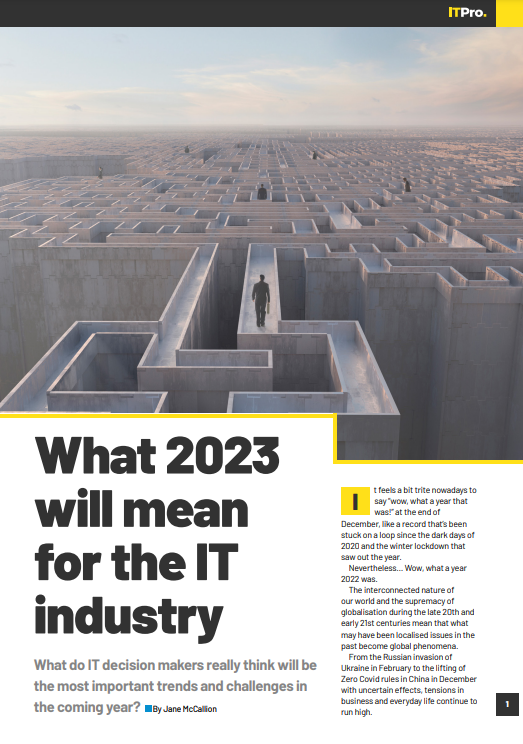 What 2023 will mean for the industry
Whitepaper What do most IT decision makers really think will be the important trends and challenges in the coming year?
-
 What is small data and why is it important?
In-depth Amid a deepening ocean of corporate information and business intelligence, it’s important to keep things manageable with small data
-
 MI5 and FBI warn businesses over mass Chinese IP theft
News The security services urged organisations to consolidate security practices and approach Chinese business relationships with caution
-
 Microsoft finally adds Power BI integrations to PowerPoint and Outlook
News Businesses can now add live Power BI feeds to presentations and manipulate data points on the fly
-
 Extending APM into observability
Whitepaper Understand the new world of automated observability


