Google claims its AI chips are ‘faster, greener’ than Nvidia’s
Google's TPU has already been used to train AI and run data centres, but hasn't lined up against Nvidia's H100


Google has announced that its newest chips for training AI models are more powerful and efficient than competing chips from Nvidia, and have been used to train its large language models in a supercomputer.
Its 4th generation tensor processing unit (TPU) is better equipped for AI training than its predecessors, and offers 1.7 times speed improvements over Nvidia’s competing GPU the A100, the company claimed.
Google outlined the technical details of TPU v4 in a research paper published on Tuesday. It stated that the chip formed the basis for its third supercomputer specifically intended for machine learning (ML) models, which contains 4,096 TPUs for ten times greater power overall than previous clusters.
High-performance chips such as the TPU are necessary components for supercomputers, which are seeing particularly high use right now as the hardware used to train large language models (LLMs) for generative AI.
Google trained its own 540 billion-parameter PaLM LLM using two TPU v4 supercomputer clusters, which partially forms the basis for Bard, its answer to ChatGPT.
Last month, Google also announced that the AI image generation program Midjourney was trained using Google TPUs, GPU VMs, and Google Cloud infrastructure.
The firm highlighted the TPU v4's optical circuit switches, a high-speed, low-power alternative to Infiniband node connectors that can be used to dynamically reconfigure the chip's topology to fit user needs.
The TPU also uses 1.3-1.9 times less power than Nvidia’s A100 chips, a crucial statistic in the interest of keeping energy costs low and maintaining carbon budgets for energy centres and supercomputers.
Amid ongoing energy price volatility, Gartner predicted that data centres could face cost increases of up to 40%, and the UK government reportedly held crisis talks with data centre operators in October over blackout concerns.
Google TPUs are used throughout Google Cloud data centres, and the firm stated that the 4th generation chips in Google Cloud warehouse computers use three times less energy, producing 20 times fewer CO2 emissions than contemporary data centres.
Gartner additionally identified sustainability as the key strategic technology trend for 2023, and with this in mind, the TPU v4 could make Google Cloud an attractive proposition for firms looking to train AI with minimal carbon impact.
Why aren’t factories as smart as they could be?
How edge computing accelerates the journey to a remarkable factory
Absent from the paper was any mention of Nvidia’s H100, the firm’s new AI accelerator of choice announced in March 2022.
Nvidia has stated that the H100 delivers 6.7 times greater performance than its predecessors in ML benchmarks, with the A100 delivering 2.5 times performance improvements by the same measurements.
Big tech has flocked to Nvidia for AI hardware, and the GPU giant has even announced that its DGX Cloud supercomputer service will soon be available through Google Cloud.
It remains one of the most trusted choices for powerful and energy-efficient hardware for AI, and provided the chips for Microsoft’s supercomputer used to train OpenAI’s GPT-4 model.
An Nvidia spokesperson told ITPro that the firm's H100 chip delivers the best performance across categories including natural language understanding, recommender systems, computer vision, speech AI and medical imaging.
“Three years ago when we introduced A100, the AI world was dominated by computer vision. Generative AI has arrived,” said NVIDIA founder and CEO Jensen Huang in a blog post.
“This is exactly why we built Hopper, specifically optimized for GPT with the Transformer Engine. Today’s MLPerf 3.0 highlights Hopper delivering 4x more performance than A100."
This article was updated to include a statement from Nvidia.

-
 UK tech leaders are implementing AI faster than related governance
News IBM research shows that chief AI officers are being given strategy roles, but not full control
-
 11:11 Systems appoints new EVP in EMEA growth drive
News The experienced executive will oversee the provider’s operations and strategic execution across the region as it targets further growth


-
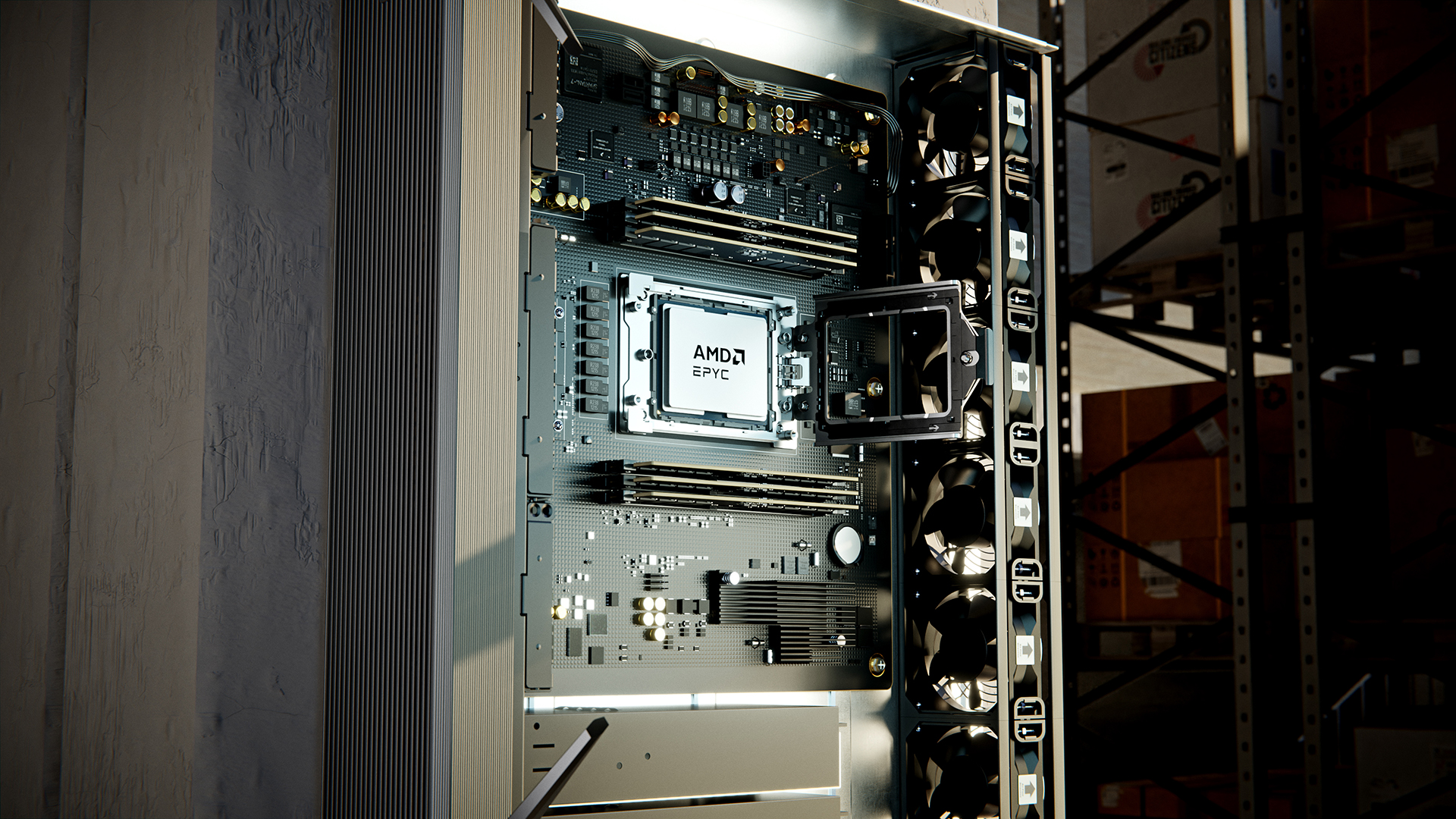 How AMD EPYC CPUs and AMD Instinct GPUs are powering the world's HPC facilities
Sponsored AMD offers powerful chipsets for AI and traditional HPC workloads, including native FP64 support
-
 AWS pledges $50 billion to expand AI and HPC infrastructure for US government clients
News The company said an extra 1.3 gigawatts of compute capacity will help government agencies advance America’s AI leadership
-
 US Department of Energy’s supercomputer shopping spree continues with Solstice and Equinox
News The new supercomputers will use Oracle and Nvidia hardware and reside at Argonne National Laboratory
-
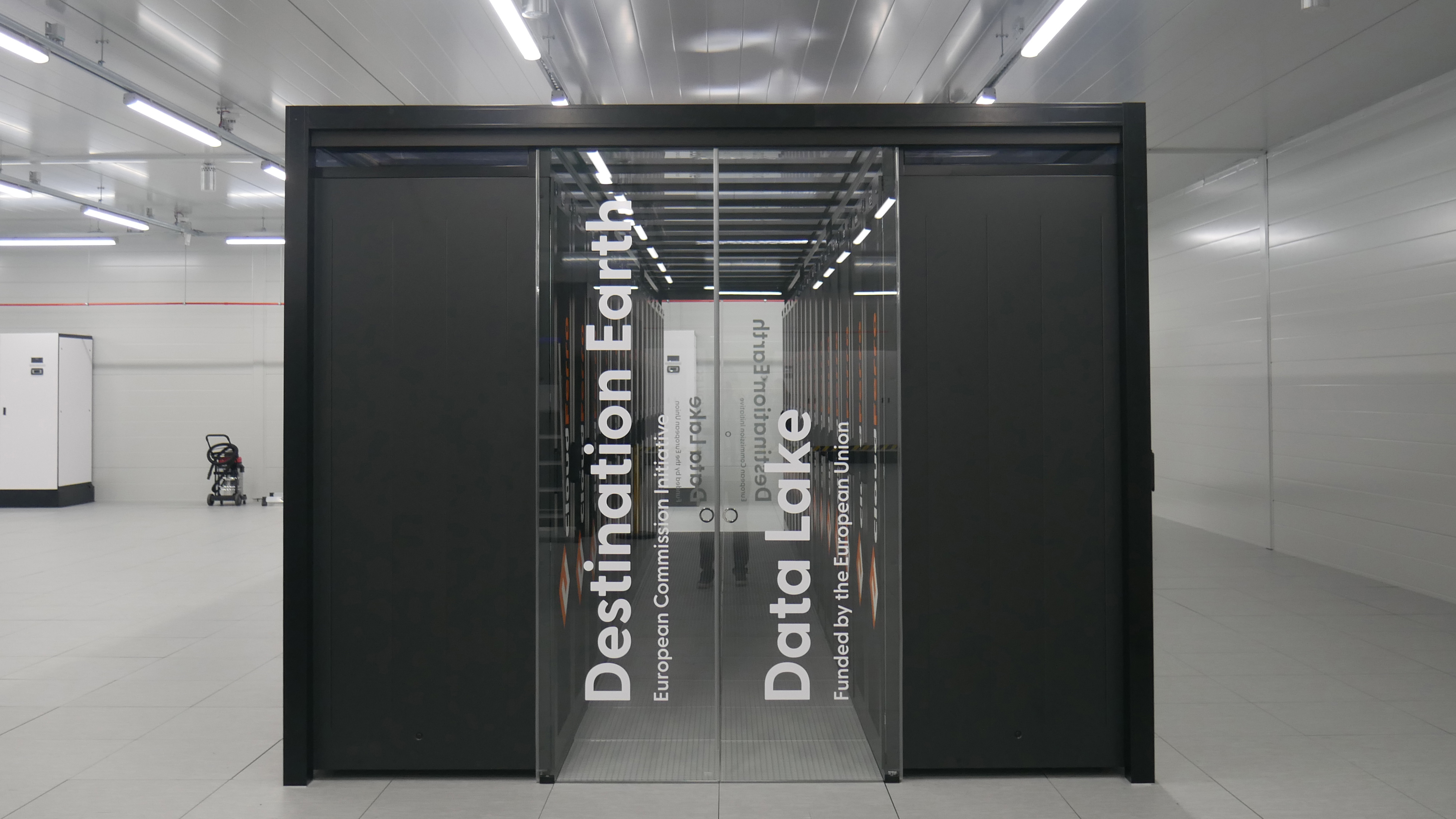 Destination Earth: The digital twin helping to predict – and prevent – climate change
Supported How the European Commission is hoping to fight back against climate change with a perfect digital twin of our planet, powered by Finland's monstrous LUMI supercomputer
-
Supercomputing in the real world
Supported From identifying diseases more accurately to simulating climate change and nuclear arsenals, supercomputers are pushing the boundaries of what we thought possible
-
 What is exascale computing? Exploring the next step in supercomputers
Supported 60 years after the birth of the first supercomputers, we are entering a new era
-
 Help skilled workers succeed with Dell Latitude 7030 and 7230 Rugged Extreme tablets
whitepaper Help skilled workers succeed with Dell Latitude 7030 and 7230 Rugged Extreme tablets
-
 Empowering enterprises with AI: Entering the era of choice
whitepaper How High Performance Computing (HPC) is making great ideas greater, bringing out their boundless potential, and driving innovation forward


