Microsoft quantum supercomputer goals one step closer after R&D breakthroughs
Microsoft unveiled its ambitious quantum supercomputer roadmap was published this week


The creation of a “reliable and practical” quantum supercomputer could be reached within the next decade, according to researchers at Microsoft.
In an announcement outlining its quantum computing roadmap this week, the tech giant said it has achieved the “first milestone” towards developing next-generation computing capabilities.
Chetan Nayak, technical fellow and corporate VP of quantum hardware at Microsoft, said the firm's ambitions rest on recent advances in the development of ‘topological qubits’.
Microsoft announced last year it had reached a breakthrough with the development of these qubits, which offer far greater reliability and stability compared to traditional techniques.
Harnessing topological qubits, Nayak said the company will be able to develop a quantum supercomputer capable of performing 1 million reliable quantum operations per second (rQOPS), which marks a step change compared to current capabilities.
A peer-reviewed paper published by Microsoft researchers outlines these capabilities, noting that the breakthrough has significant long-term potential.
Quantum development challenges
The announcement follows years of development in the quantum computing space for Microsoft, which Nayak noted has proved challenging in terms of ‘scaling up’ capabilities.

How intelligent insights drive business innovation
Understand why you need an intelligent insights and automation approach to storage
“A quantum supercomputer must be powered by reliable logical qubits, each of which is formed from many physical qubits. The more stable the physical qubit is, the easier it is to scale up because you need fewer of them,” he said.
“Over the years, Microsoft researchers have fabricated a variety of qubits used in many of today’s NISQ computers, including spin, transmon, and gatemon qubits. However, we concluded that none of these qubits is perfectly suited to scale up.
“That’s why we set out to engineer a brand-new qubit with inherent stability at the hardware level. It has been an arduous development path in the near term because it required that we make a physics breakthrough that has eluded researchers for decades.”
Microsoft’s quantum supercomputer roadmap
Having established a breakthrough, Microsoft said the next phase of its roadmap will focus on several key areas, starting with the development of hardware-protected qubits.
Hardware-protected qubits will have built-in error protection for computation processes, the company said, and will be smaller, faster, and more controllable for reliability.
“This unique qubit will scale to support a reliable qubit, and will enable engineering of a quantum supercomputer,” Nayak wrote. “Each qubit operation will take less than one microsecond. This means problems can be solved in weeks, rather than decades or centuries.”
“Our qubits will be controlled by digital voltage pulses to ensure that a machine with millions of them doesn’t have an excessive error rate or require unattainable input/output bandwidth.”
High-quality hardware-protected qubits, which are the next phase of development on the roadmap, will then help reduce computational error rates.
The development of a ‘multi-qubit system’ is also on the horizon, the company added. This will create a series of quantum algorithms that can be “executed when multiple qubits operate together as a programmable Quantum Processing Unit (QPU) in a full stack quantum machine”.
Longer-term, the goal for Microsoft is to create what it describes as a “resilient quantum system” before finally reaching a fully-operational quantum supercomputer.
This quantum system, the firm said, will be capable of solving “impactful problems even the most powerful classical supercomputers cannot”.


-
 Security leaders brace for an overhaul of public key infrastructure as quantum risks rise
News The scale of the work ahead is becoming clearer across cryptographic discovery, automation, architecture, governance and investment
-
 ‘This new system will help you do more quantum computing, faster’: IBM says its Nighthawk r2 quantum processor marks a step change in compute capability
News Nighthawk r2 is the firm's fastest-ever system and is now available for researchers
-
 NIST eyes quantum gains with new research and manufacturing center
News The move comes in response to a recent executive order aimed at accelerating the commercialization of quantum technologies
-
 UK launches national body to develop quantum standards
News The Quantum Standards Network will work to align standardization across sectors and strengthen the UK's global presence
-
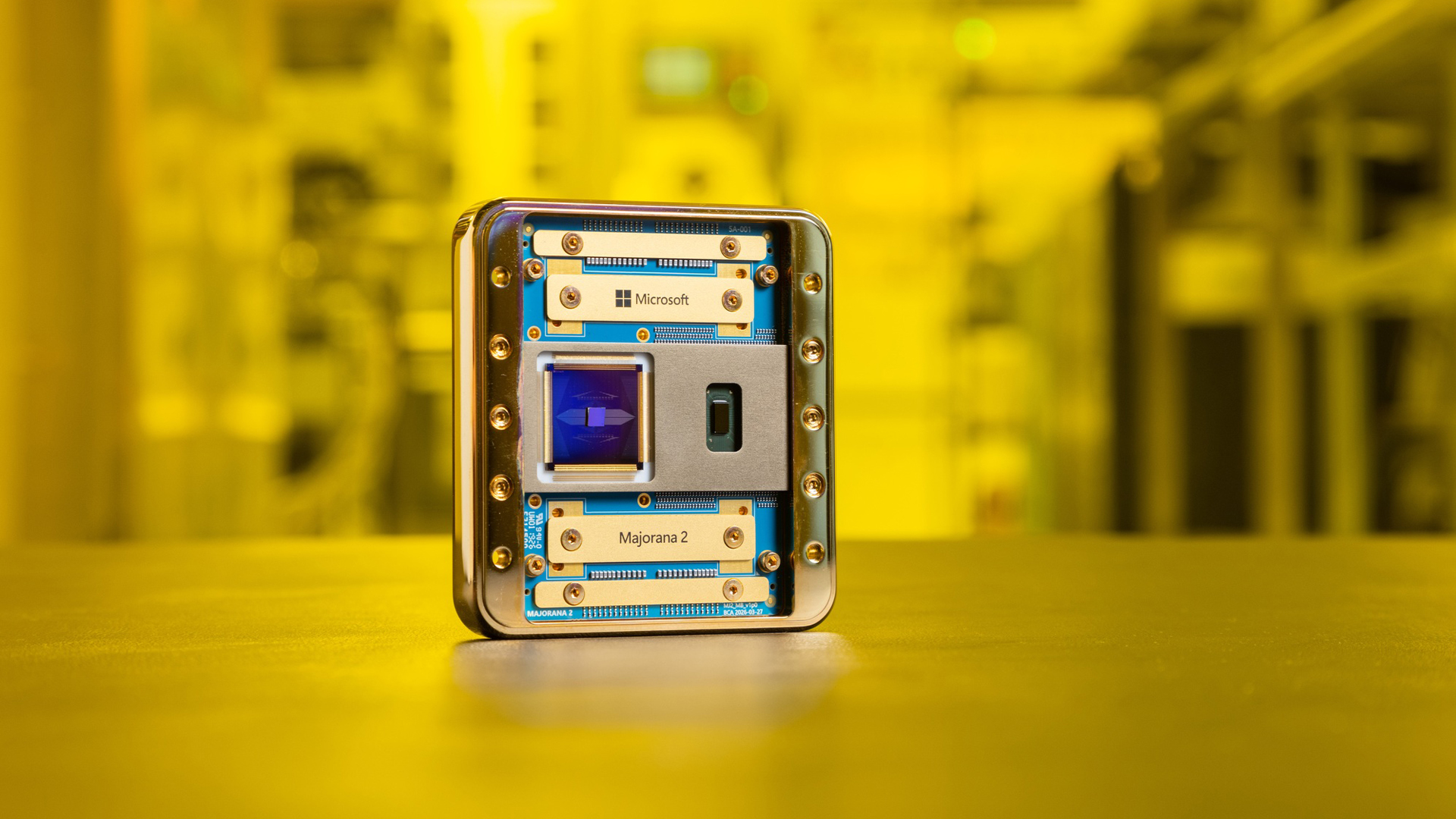 Microsoft says its Majorana 2 chip was built using AI – and it helped deliver huge performance gains
News The Majorana 2 quantum chip was developed with the help of the Microsoft Discovery platform
-
 UK businesses brace for quantum disruption – and it could come sooner than expected
News A third of businesses have made quantum a strategic priority, an EY survey has revealed
-
IBM wins biggest slice of $2bn US gov investment in domestic quantum firms
News The Department of Commerce says it wants to strengthen the country's presence in this critical technology sector
-
 C-suites want concrete quantum use-cases, not hype
News New research shows the hype around quantum computing isn’t translating to investment


