Sign up today and you will receive a free copy of our Future Focus 2026 report - the leading resource for IT decision-maker insight on priorities and investment areas in AI, security and more.
You are now subscribed
Your newsletter sign-up was successful
An account already exists for this email address, please log in.
Salesforce targets better data, simpler licensing to spur Agentforce adoption – and its acquisition of Informatica is key
The combination of Agentforce 360, Data 360, and Informatica is more context for enterprise AI than ever before
Salesforce is moving to meet enterprise AI demand by remaining as flexible as possible on pricing and moving to more helpfully capture business data.
At Agentforce World Tour London 2025, the firm looked to double down on its messaging around agentic AI and stress what makes Salesforce so capable at meeting enterprise AI needs.
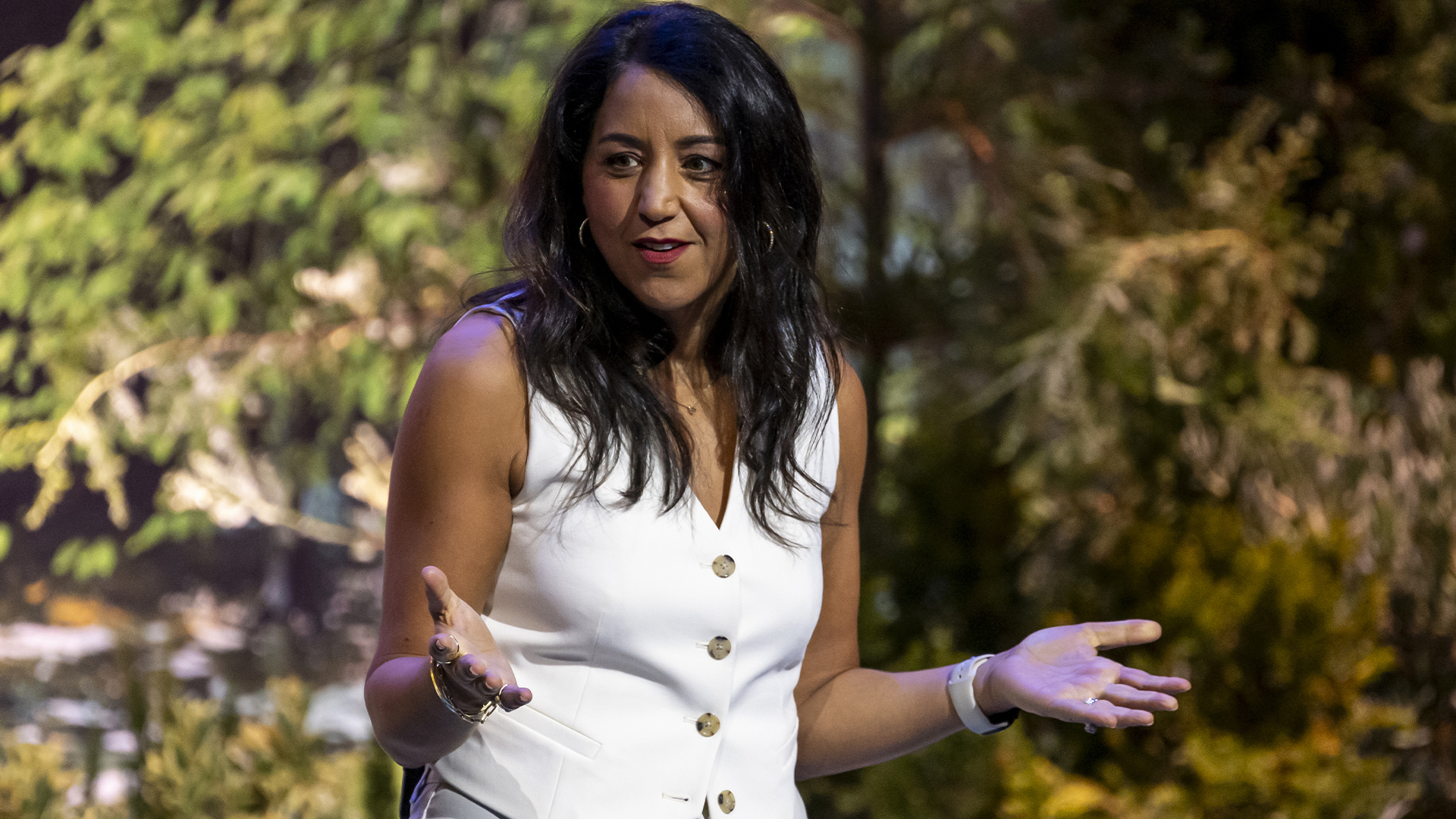
Zahra Bahrololoumi, UKI CEO at Salesforce, explained in her opening keynote address that failed AI pilots are still widespread among businesses due to poor data and fragmented implementation.
“We are seeing a widening agentic divide between customer expectations and enterprise capability – and it’s really not for want of trying,” said Bahrololoumi.
The core issue, Bahrololoumi said, is a lack of cohesion and sophistication at the data and infrastructure layer.
“Every week, I speak to customers that are trying to DIY their AI and they are spending fortunes on infrastructure, on engineering capabilities, on model testing.
“And I can tell you now many of these projects will not get into production. That is because the data quality in these companies are typically very poor and the technology is bolted on, it’s not built in.”
Get the ITPro daily newsletter
Sign up today and you will receive a free copy of our Future Focus 2026 report - the leading resource for IT decision-maker insight on priorities and investment areas in AI, security and more.
Data 360 is a key offering for agentic AI adoption within Salesforce, as it unifies both structured and unstructured customer data into a single source of truth.
Salesforce’s recent acquisition of Informatica for approximately $8 billion, which closed on 18 November, will expand these capabilities further.
Bill Patterson, EVP Corporate Strategy at Salesforce, told ITPro that Informatica’s operations synergize with existing products like Data 360 and Mulesoft.
“The best way I would articulate it is, Data Cloud is an incredible platform for customer data to be activated, whereas Informatica is an incredible platform for enterprise data to be activated,” Patterson said.
“So, it sort of gives us a bigger universe of data to taxonomize and make accessible to things like Agentforce, if you will.”
Patterson added that clients had already been asking for compatibility between the two products prior to the acquisition being announced.
In Salesforce’s recent Q3 2026 earnings call Marc Benioff, CEO and founder at Salesforce, hailed the acquisition as a key move for Salesforce’s Data Foundation which is projected to do around $10 billion in business next year.
“When you look at a $10 billion business, that's the first layer, that's data,” Benioff said.
“So Informatica with Data 360, MuleSoft, that is taking everything to this new level. And you get into the world of harmonization, integration, federation, and then you're trying to deliver to the AI, the intelligence, the accuracy, the reliability to wipe out the hallucinations delivering the AI context.”
Addressing AI worries with new pricing
Many public AI models are only available to businesses via pay-per-token pricing, which can rack up costs depending on the desired use case. But this doesn’t always fit the need for AI experimentation, nor shifting business interests, Patterson explained.
“Most companies, if you were to ask them ‘how many tokens would I need to qualify a lead?’, that would be a very complicated calculation,” Patterson said.
“The metaphor I use is companies come to Salesforce to buy a house, they don’t want to buy all the nails, parts, labor, glue, all that to get there.”
In response, Salesforce has invented an economic model that considers agents as labor, Patterson told ITPro, with a focus on conversational AI first. Quite quickly, Salesforce realized this wasn’t the best approach for customer needs.
“We just learned that one size did not fit all for conversations, so that sometimes a long conversation that was two dollars, was the same as a one and done conversation which was two dollars – it just wasn’t equitable for companies.
“We still have the conversation model for companies that maybe want that as an experience, but we also invented something called our action model, which is really paying for work that is done by the platform.”
All of this shows how Salesforce focuses on how to meter access to AI via Agentforce, without focusing on tokenization which Patterson added “wouldn’t be appropriate” for Salesforce.
“I think others can do that. What we want to do is really be the world's best business agent platform and I think that the utility-based pricing that we've created makes that fair and economical.”
Patterson told ITPro that the mismatch between outcome and spending is another reason for high rates of AI failure.
“The inventor of the ship also invented the shipwreck,” Patterson said, arguing that DIY AI failure is more to do with companies being dissatisfied with the outcomes they’re getting relative to spending.
Hyperscalers, on the other hand, are not seeing failure whatsoever, Patterson explained.
“The hyperscalers in this space don’t really see that as failure because you’re paying because of all that usage that was there. And so actually their meters are running, if you’re in production, or testing, or development or whatever.
“That’s not our business model, our business model is we want you to be successful with these technologies.”
Salesforce’s Agentic Enterprise Licensing Agreement (AELA) is the firm’s answer to this issue, which offers customers access to unlimited use of Agentforce and Data Cloud.
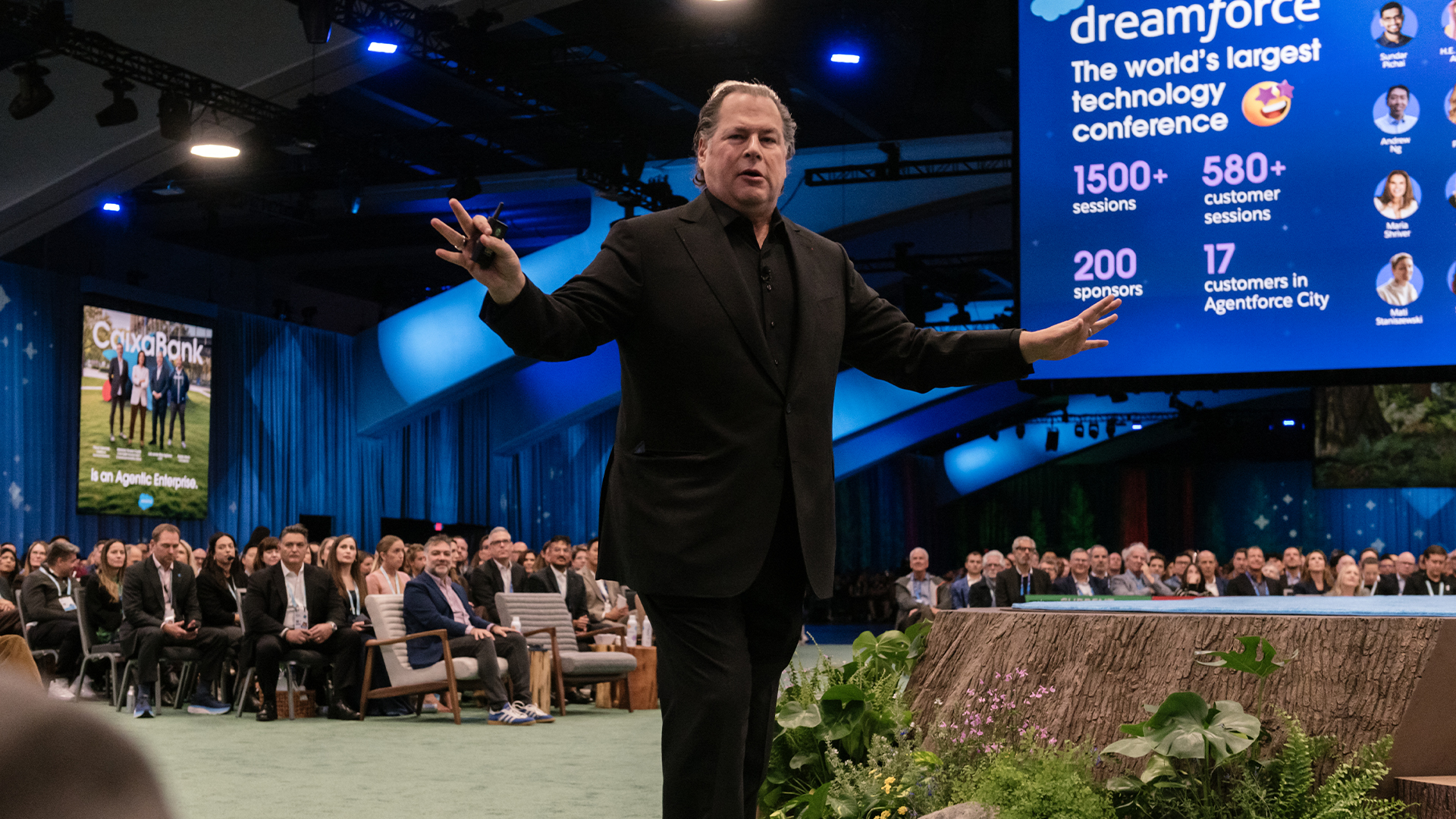
In the opening keynote of Dreamforce 2025, Benioff acknowledged that Salesforce has upended its pricing model to meet the varied needs of its customers.
“We realized there’s going to be a lot of different ways to deploy this technology, we might have to write you highly custom agreements,” he said.
“So we’ve introduced this brand new Agentic Enterprise Licensing Agreement, giving you unlimited Agentforce into your company, unlimited Data Cloud into your company. Or, you might want to have an action-based model, you might want to have a flex credit model.
“It’s clear, one pricing model is not right for every company in the era of the agentic enterprise, so we’ve had to radically shift our pricing, and we want to thank you for the advice you’ve given us.”
In the opening keynote of the London event, Bahrololoumi hailed how the AELA can help companies scale with Agentforce and remove uncertainty around the technology.
“We’ve worked really hard on pricing,” Bahrololoumi said. “We want to remove the anxiety, we want to give you the confidence to be able to scale with certainty and with trust.”
Rory Bathgate was Features and Multimedia Editor at ITPro until 2026, overseeing all in-depth content and case studies. He also co-hosted the ITPro Podcast with Jane McCallion, swapping a keyboard for a microphone to discuss the latest learnings with thought leaders from across the tech sector.
In his free time, Rory enjoys photography, video editing, and good science fiction. After graduating from the University of Kent with a BA in English and American Literature, Rory undertook an MA in Eighteenth-Century Studies at King’s College London. He joined ITPro in 2022 as a graduate, following four years in student journalism. You can contact Rory on LinkedIn.


 A spate of cyber attacks has rocked Japan
 Top takeaways: The AI tokenomics challenge

 ‘We have an ambition to be the world's most desired premium footwear brand’: How Dr Martens is working with Salesforce to create ‘agentic experiences’ for customers
 ‘We remain true to our mission’: Salesforce UK&I CEO Zahra Bahrololoumi talks up unwavering UK commitments
 How Tottenham Hotspur worked with Salesforce to create the ‘world's best experiences’ for fans
 Dreamforce 2026: All the big talking points from the annual Salesforce conference
 What to expect at Dreamforce 2026
 ‘We’re delivering a dynamic interface that thinks, reasons, and acts’: Three things you need to know about Claudeforce
 Salesforce buys Fin for $3.6bn
 ‘They’re more productive than ever’: Marc Benioff says hiring in software engineering is ‘mostly flat’ at Salesforce because of AI – but the company is expanding headcount in one key area


