Microsoft ditches its productivity tool, Wunderlist
The company will replace the popular app with Microsoft To-Do
Sign up today and you will receive a free copy of our Future Focus 2025 report - the leading guidance on AI, cybersecurity and other IT challenges as per 700+ senior executives
You are now subscribed
Your newsletter sign-up was successful
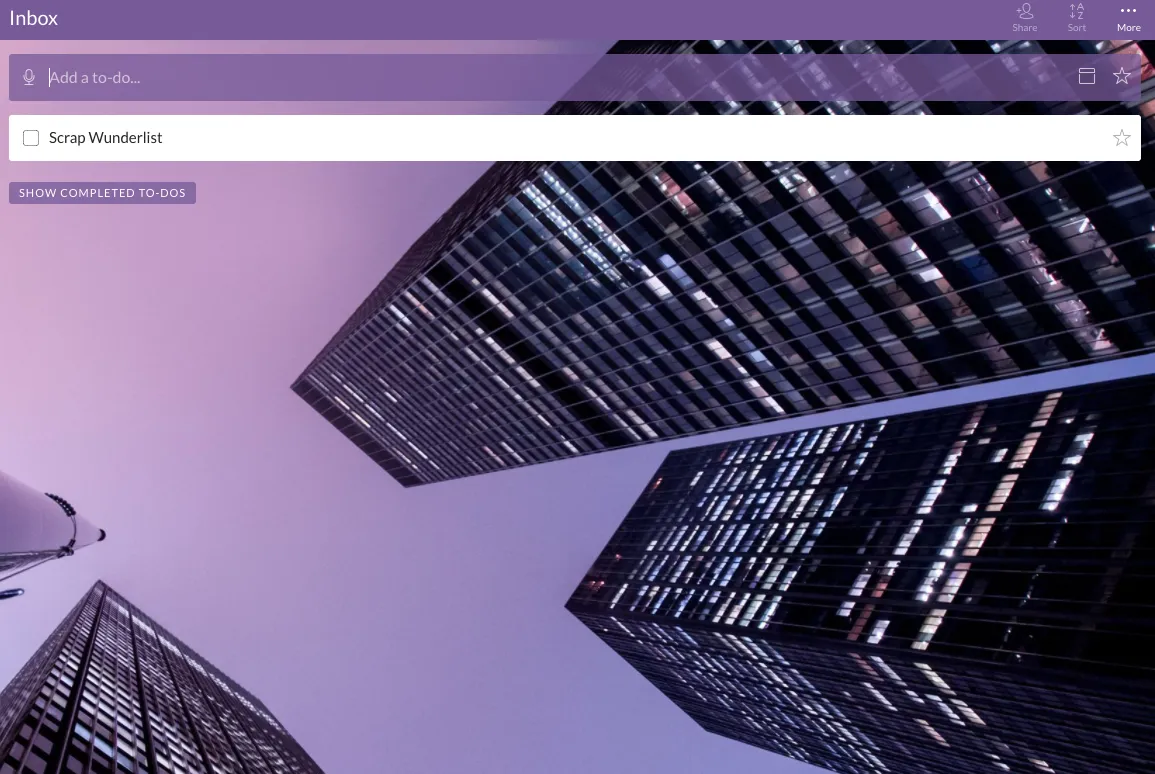
Microsoft has decided to scrap its Wunderlist productivity tool, instead replacing it with Microsoft To-Do, a task manager that "intelligently" organises your day.
Developed by the same people who created the Wunderlist app, Microsoft claims To-Do is better at helping people work out what needs to be done and when.
"Once we are confident that we have incorporated the best of Wunderlist into To-Do, we will retire Wunderlist," Ori Artman, general manager of Microsoft To-Do said in a blog post. "While the name and icon may change, the team that brought you Wunderlist continues on. We look forward to making To-Do even more useful, intuitive and personal."
At its core, Microsoft To-Do is a list-making app, whether you want to remember what to buy from the supermarket, you need to create a priority list for work or to keep your life in check in general. Each list can have deadlines alongside items, due dates and notes. They can also be colour-coded to highlight important tasks, for example.
Microsoft To-Do starts each day with a blank slate so you aren't distracted by yesterday's tasks. You can of course refer to what you were supposed to do, but it's not the first thing you'll see when you launch the app.
If there's a task the app thinks was important from the day before, it'll appear when you tap the lightbulb icon. Other things the app thinks you need to be aware of will show up too, based upon what the algorithm has learnt from the way you usually work.
Microsoft To-Do fully integrates with Office 365, including Outlook, so any tasks that need to be completed according to your email will show up in To-Do too.
Sign up today and you will receive a free copy of our Future Focus 2025 report - the leading guidance on AI, cybersecurity and other IT challenges as per 700+ senior executives
"As the only task management app built on an enterprise cloud, To-Do offers the advanced security that our Office 365 customers expect," Artman added. "Data is encrypted in transit and at rest, and To-Do is served out of our hyper-scale, global network of data centers."
To-Do is available in preview on iOS, Android and Windows, as well as the web. Redmond only bought the company behind Wunderlist, 6Wunderkinder, in summer 2015, paying a reported $100 million - $200 million.

Clare is the founder of Blue Cactus Digital, a digital marketing company that helps ethical and sustainability-focused businesses grow their customer base.
Prior to becoming a marketer, Clare was a journalist, working at a range of mobile device-focused outlets including Know Your Mobile before moving into freelance life.
As a freelance writer, she drew on her expertise in mobility to write features and guides for ITPro, as well as regularly writing news stories on a wide range of topics.
-
Security experts weigh in on motivation behind Stryker cyber attackNews The attack on medical tech company Stryker has severely impacted operations globally
-
The rise of PhaaS: what businesses should knowIn-depth With phishing as a service (PhaaS) on the rise, which new kits should firms know about and how can leaders avoid being caught out?
-
CEOs aren't seeing any AI productivity gains, yet some tech industry leaders are still convinced AI will destroy white collar work within two yearsNews A massive survey by National Bureau of Economic Research shows limited AI impact, but continued hopes it'll boost productivity eventually
-

IDC: The business value of IBM MaximoWhitepaper Integral to the transformation of asset management
-

Employee ‘task crafting' could be the key to getting the most out of AINews Tweaking roles to make the most of AI makes you more engaged at work
-

‘Always on’ culture is harming productivity, so workers are demanding ‘digital silence’ to get on with tasksNews Tired of relentless notifications, emails, and messages? You're not alone. Workers across a range of industries are calling for 'digital silence' periods to boost productivity.
-

The race is on for higher ed to adapt: Equity in hyflex learningWHITEPAPER Fulfil student and faculty needs
-

Practical ergonomics guide for educationWHITEPAPER Save energy, focus, and promote overall well-being
-

How to manage – and mitigate – performative workingFeature An increasing number of people are putting on a show of working, rather than actually getting on with it
-
The ultimate guide to 3DWhitepaper Creative boost breaks